|
|
|
|
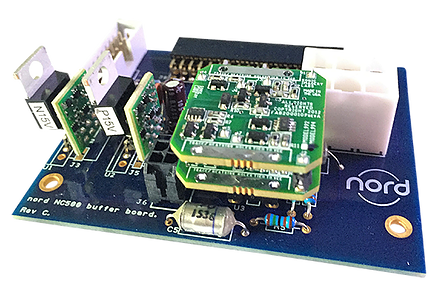
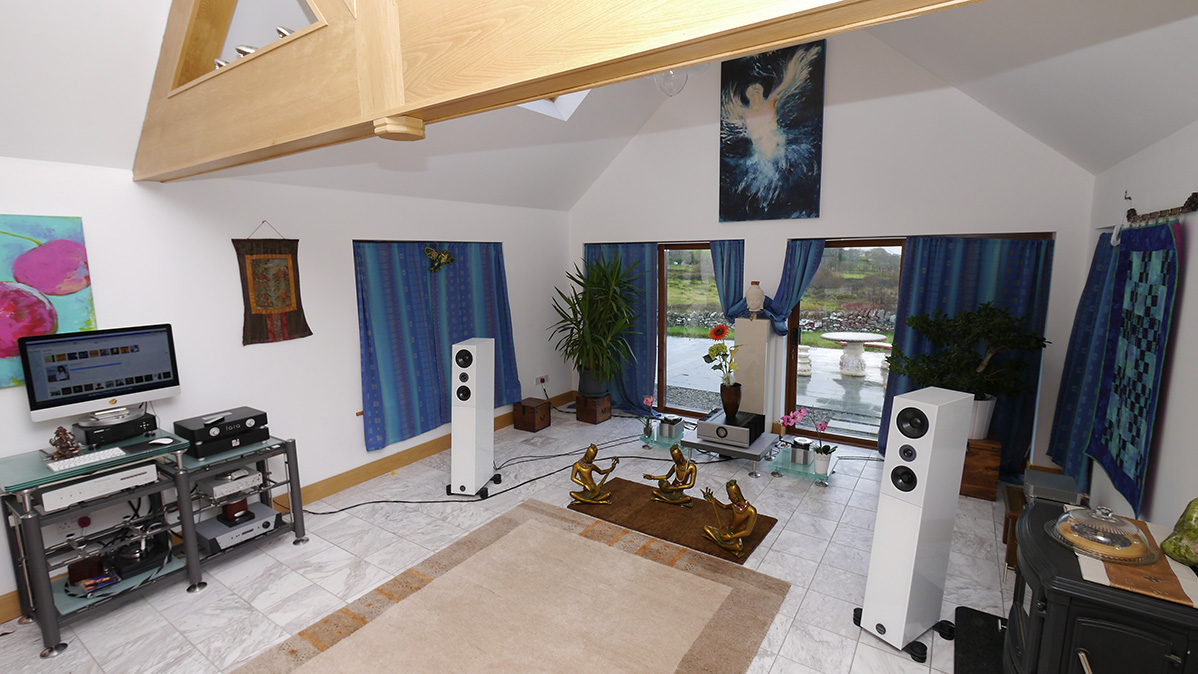
Round #1 (Formula, Lara, nCore 500, Codex). In our hardware/ear context, when I fit the socketed Sonic Imagery 994 not Sparkos Labs SS3602 discrete opamps to Nord's input buffer with discrete voltage regs, our class D monos emphasize subjective detail density but also set tonality to cool and cadence to somewhat clipped. Yet even with our essentially passive albeit actively buffered Wyred preamp, these qualities can work a treat into very meaty fiercely dynamic but hard-to-drive boxes like Mark & Daniel's faux-marble Maximus II monitors. Those rely on ultimate control to launch fully. They thrive on ultra-low output Ω and take class D's massive negative feedback in stride without drying out. Yet on our Audio Physic 4-ways, the same combo gets too lean and pedantic.
However;
when I'd replaced our usual Aqua discrete R2R DAC with hq audio's HQ9038—2x12AU7 I/V stage, 2x6922 balanced outputs—the powerful valve signature of the Vietnamese/Danish DAC had prompted a course correction from too cool to straight down the middle. This expertly avoided any thick or fuzzy tube-dominant outcome. Given that happy precedent, I expected that back to our Aqua converter, injecting tubular action into the preamp stage instead should net a similarly happy nCore/Codex marriage of amp to 89dB speaker. And so it was. Despite hitting desired levels at 7:00 where clients with similar conditions would surely specify attenuators with a far shallower taper, I had neither channel imbalance nor sonic signs of a mismatch. This included noise; or rather, the blessed absence thereof. Without signal but ear on tweeter, the first onset of subliminal power-supply hum occurred at ~2:00 which even at full tilt remained very minor. Considering the wildly excessive gain of my first chain, this suggested excellent circuit design. |
|
|
|
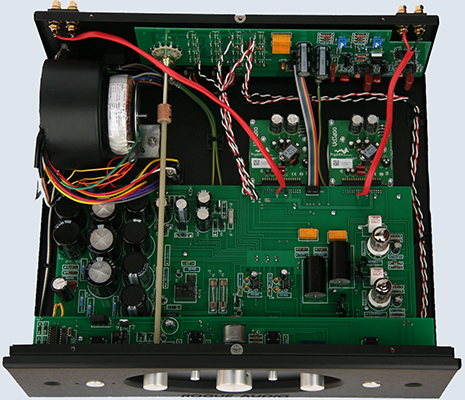 |
Unlike the late Terry Cain who happily tolerated how his favourite best-sounding tube amps all hummed into his hi-eff widebanders, I find noise unacceptable. Whether mechanically buzzing transformers or electrical power-supply surf, noise is the enemy of fine detail. As such it should have no place in costly high-end hifi. At the volume settings I actually used and well beyond them, Lara was dead quiet. With her one need make no excuses for listening to last-century tube tech.
This segues straight into the roguish accomplishment of my first round. Rogue Audio's Mark O'Brien has long since and very successfully packaged 12AX7 tubes with Hypex class D and linear power supplies. Consider his well-regarded Sphinx and Pharaoh [left] integrateds; or Medusa and Hydra stereo amps. For even more power and monaural class D, the same can be accomplished across three chassis. The requirement is simply a properly quiet valve preamp; and preferably one with true balanced circuitry since the majority of audiophile class D amps run balanced input buffers.
The functional advantage of such a combo is far higher power delivery than most all class A or AB amps can muster for the same coin. The sonic advantage is something closer to class A fullness than pure class D tends to. Finally, today's best class D offers 120dB or higher signal-to-noise ratios which might maximize whatever resolution advantages so-called hi-res files promise. The hybrid path of tubes+classD is thus an attractive solution to marrying retro with current tech. From my two recent experiments along those lines, I would highlight in particular excellent low-level listening clarity. Pretty much all competent hifi sounds impressive played loud enough as long as room and ears don't protest. At low levels meanwhile—the sort courtesy demands at 6:00 AM or 23:00 hours whilst neighbours or loved ones still or already sleep—most hifi systems are stuck in 'park'. |
|
|
The simple proof is our irresistible urge to grip the remote and prime the pump. True resolution with sonic fullness eliminates that twitch at the root. When everything is panoramically laid out in perfect visibility and full colour, at levels one could talk over, wanting or needing to listen louder just doesn't present itself. We're already satisfied. Traditionally this early-riser quality belonged to exotic 100dB widebanders and large horns. Whilst true, they just don't own it exclusively. Even normal 89dB boxes can do it if the preceding hardware allows for it. The Lara+nCore combo most certainly did. In my book that's a core requirement for enjoying music under typical domestic constraints, i.e. outside a few allowable hours not in the hermetically sealed basemencave or separate barn but regular leaky living room.
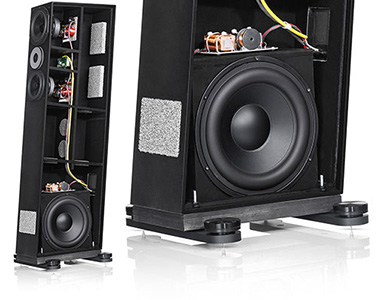
With nCore's superlative control of the hidden long-throw 10" Codex woofers, even ambient fare with its near infrasonic but musically essential beats needed no level boost to sound complete at such low volumes. Those who belabour how low bass intelligibility obscures whenever SPL cross a downward threshold also appreciate the sheer practicality and value when that doesn't happen. Should the type of music dictate when we may listen to it and enjoy it in full? If you expect less diva antics from your hardware, today's premium tubes into nCore class D into quality regular speakers are a very valid approach. The tubes handle the warmer sunnier climate with its riper tone fruit, the switching transistors are the masters of control and resolution. It's certainly not the only option to arrive but relative to the amplifier side, likely to be the most cost-effective.
|
|
|
|
|
|
|
Round #2 (Formula, Lara, Allegro, Codex). This merely substituted the nCore monos for our LinnenberG class AB ultra-bandwidth monos. Those the maker seems to have replaced since with 200-watt versions called Liszt which demand €1'000 more for quadrupling raw power. Financially my second round meant going up from £1'720/pr [ex VAT/shipping] for the nCores to €4'990/pr [incl. VAT] for the Allegros. On power, it meant going down from mega 400/700/550 watts into 8/4/2Ω to far more subdued 55/85/110 figures. On Lara's volume control, it meant moving up by another 4mm to reach 7:30. Sonically the previous gestalt of ultimate grip and control mellowed a bit. Bass impact softened its transient edge. Treble sophistication and decay lengths increased. Midrange textures in particular acquired a minor case of rosy-cheek syndrome. Otherwise things stayed put. Whilst certainly no major makeover, I prefer the Allegros. This explains why the nCores rarely come out of the closet now. Allocating such a surcharge for predominantly a gestalt shift obviously requires caring enough about it. Those whose primary diet is harder techno would likely favour the nCores not just on price. But to please my ears, I would call this second scenario my baseline to pit Lara against Nagra's Jazz then Wyred's STP-SE II and get specific by contrast and context. Proper props were simply due first to the Lara plus class D scenario. And for just a bit more gradated control over her volume, I set PureMusic's 64-bit software filter to 10dB down. ideally of course Trafomatic would revisit that aspect.
|
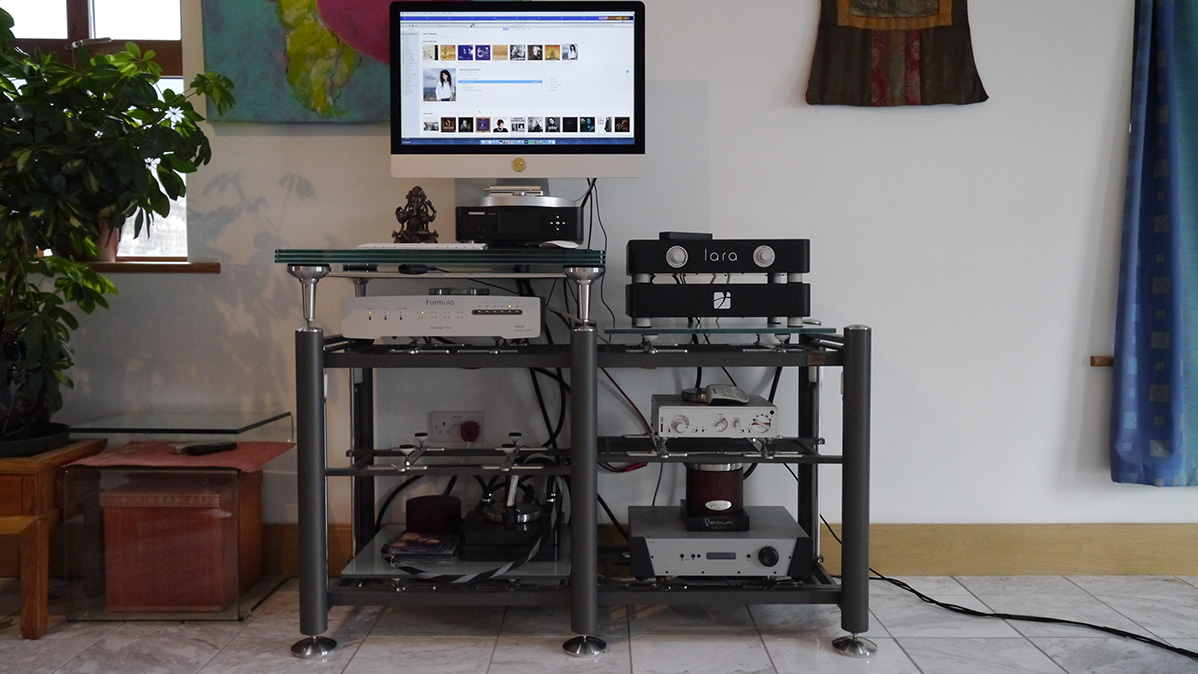 |
€9'100 tube preamp vs. €12'100 tube preamp vs. €3'549 solid-state preamp
|
Round #3: Serbia vs. Switzerland. With more creature features (0dB/12dB gain, balance, more inputs) and greater expense, the Nagra Jazz fitted with its optional i/o balancing trafos still is no balanced circuit. Hence Nagra demos traditionally run single-ended. But because Trafomatic's Lara was balanced, it seemed only fair to call that the default and also run the Nagra in balanced mode. This further juxtaposed 6H30 against 12AX/12AU7 glass; and in Nagra's favour, a far lazier volume taper to even in 12dB mode make for broader more useful range. But this was purely about sonics. And those differences played mostly to tonal perspective. The Lara built its palette from the bass up to act very chunky, saturated and vigorously dynamic. The Jazz had more top-end air and dug deeper into secondary details like fingering noises on frets, a woodwind's key clacks, the modulated behaviour on a reed's lip pressure. Judged on ambient retrieval and treble finesse like cymbal glitter and flageolet flashes, the Swiss had higher magnification. Judged on colour intensity and dynamic contrast, Lara had or did more. Especially her midbass crunch which had already served the class D nCores monos so well celebrated a welcome encore on the LinnenberG cubes. It's the bandwidth which most expresses virility and punch to perhaps be called the centre of grooviness when rhythmically taut tunes really lock in to swagger. Here Sasa's circuit execution expressed a very vital deeply tanned personality even on simpler tunes. Far from dark, this presentation simply looked at things from the bottom up. It felt very grounded and gravitationally weighty not floating. Separation was typical 3rd-order dominant THD, i.e. not feathered or blurry but with firm edging. The predominant effect of this grouping of qualities was intensity. Lady Lara played it intense.
|
 |
Round #4. Serbia vs. America. The US challenger added even more socketry and features like input naming whilst knocking down price by nearly 2/3rds. Sonically in its favour were further upticks of magnifying power and treble visibility over the Nagra; even more capacious staging and subliminal atmospherics; and a concomitant sense of quicksilvery adroitness. By the very same math, Lara's virtues now stood apart farther. Whilst the Wyred expressed obvious speed, the Serbian didn't sound slow or gemütlich by contrast. Its dynamic fortitude and very controlled 'bassiness' refused allowances for that. On colour temperature and weightiness, Lara simply loaded up the scales whilst her dynamic reflexes and strong outline control added vigor to the equation. This energetic feel probably reflected a balanced circuit's cancellation of 2nd-order THD, hence not even subtly cloying SETishness.
|
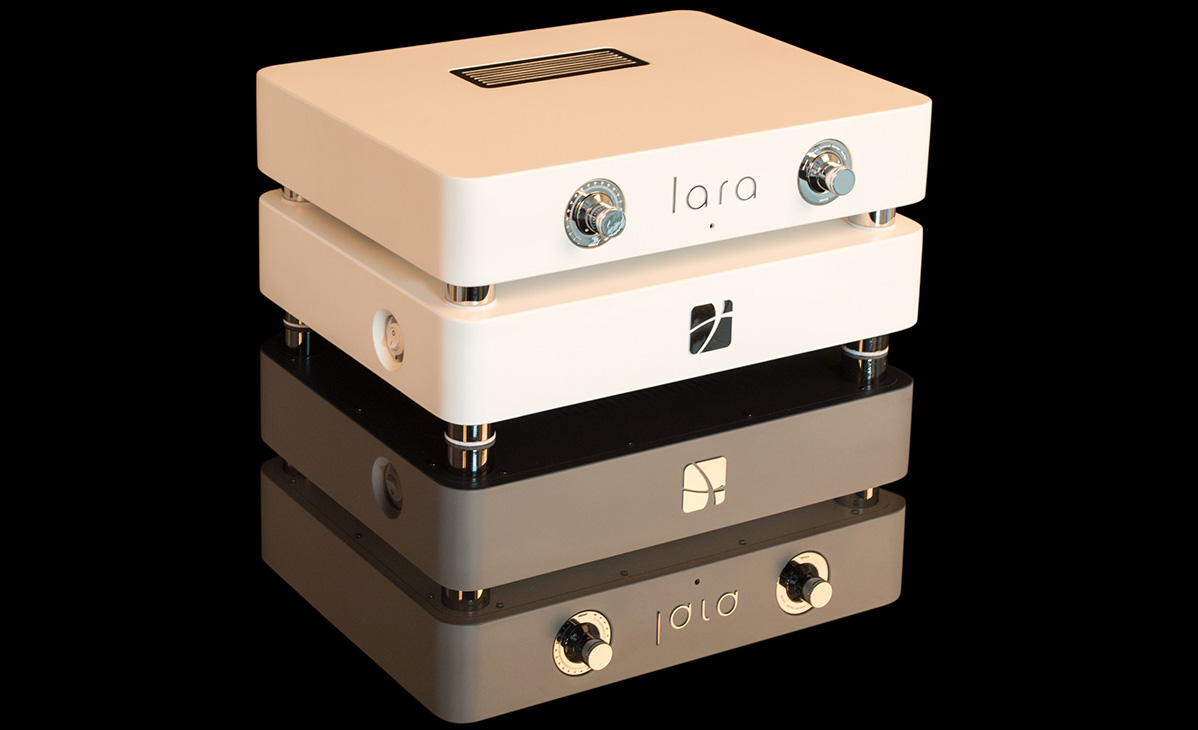 |
Adding it up. Sometimes not much needs saying or parsing. When something sounds this attractively right and plain works, repeating examples for why and how just gets annoyingly repetitive. Lara was clearly a tuber by how she tonally made the tunes pregnant and weighty. Yet coiled dynamics, controlled bass power and clean image outlines countered any sepia vintage notions. This played it feistily modern, hence perfectly adapted to bass-heavy rhythmically agitated music from the 21st century. Big tone, generous voltage swings, muscular power-region presence yet simultaneously clean, sorted and sober... whatever you call that constellation of attributes, it was the Lara preamp from Mladenovac. Running tubes fully balanced perhaps does exorcize them of certain behaviours which dedicated transistor lovers might otherwise find fault with? This double-decker proposition certainly suggested exactly that. A very fine showing that should appeal also to career solid-statesmen and women; and works like a charm for switching transistors. |
|
 |
|

|
|
|

|
|