 |
|
|
|
 |
|
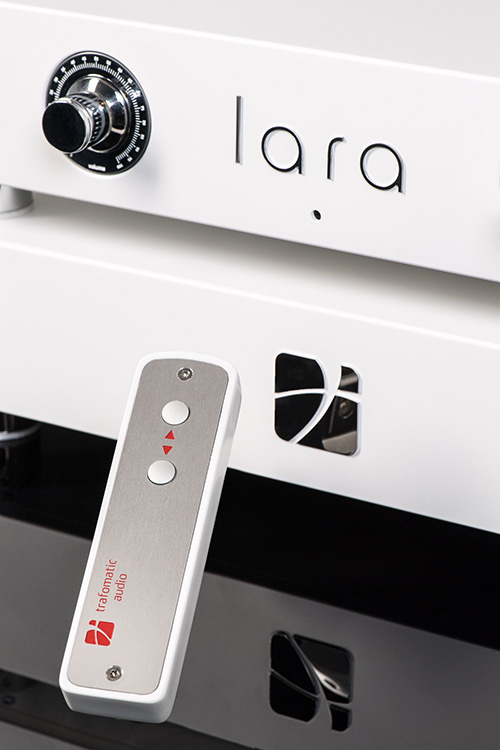 |
Delivered in a stout chip-board crate with metal handles and inner cardboard box followed by thick foam liners and protective cloth covers, the review loaner emerged in immaculate matte black paint. The red detailing on the remote control was the only concession to orange being the new black. A very recent minor cosmetic redesign of the control knobs meant that mine didn't yet sport the hair-line scale of the white unit at left. Since that's the final look, we'll go with the stock image.
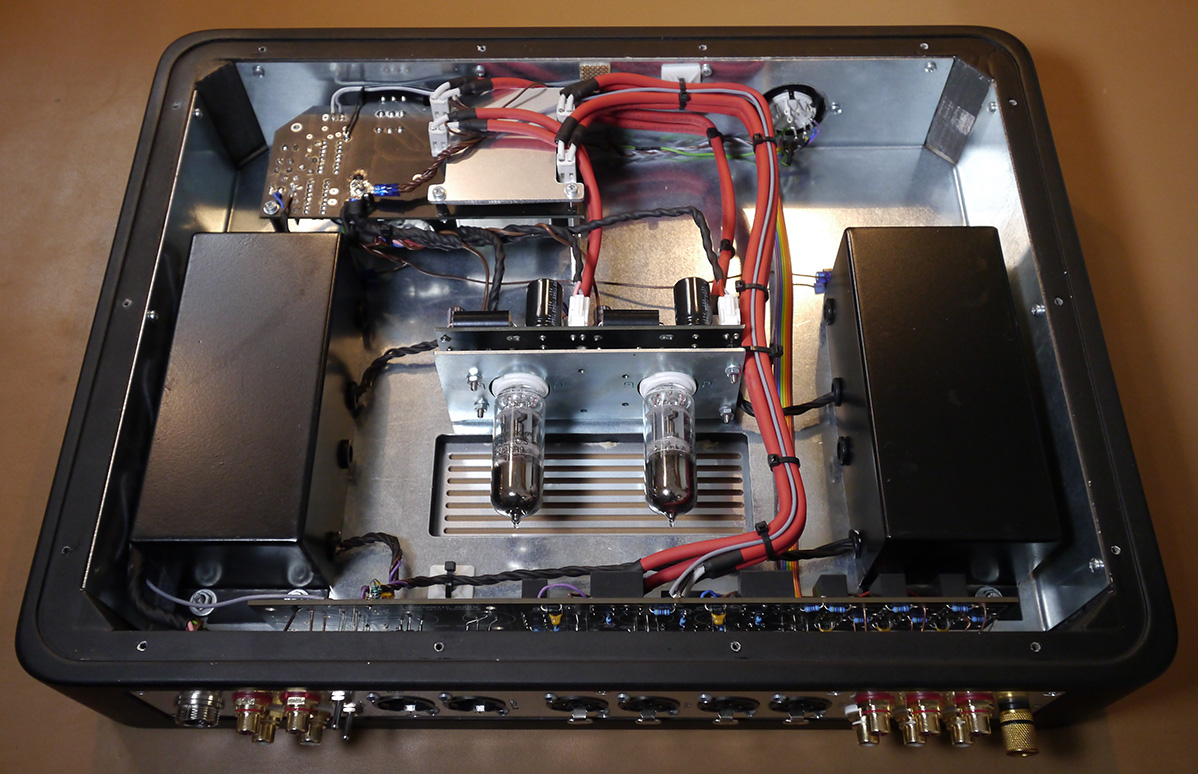
Once opened, ground wire connection between metal liner and bottom removed, the head unit's small input transformers and four-gang attenuator proved to be hidden beneath the inverted circuit board at the front. The potted massive chokes hid expectedly inside their canisters, with their in- and outgoing brown cables tightly twisted.
|
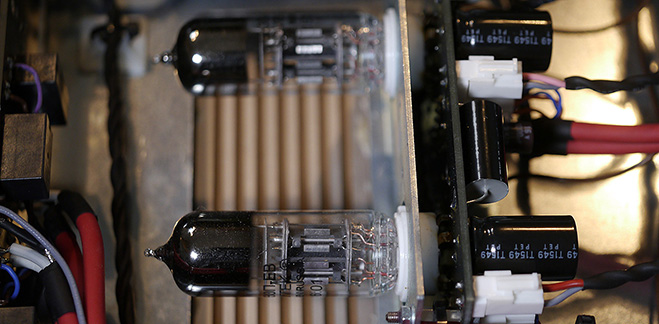 |
Mounted horizontal in military fashion, the tubes were attached to a solid metal brace whose back, via standoffs, hosted their matching circuit board. With the main signal cabling thickly insulated, lady Lara's undercoat was just as finely made as her outer garments. It's reasonably rare to find hifi components clad in a wooden chassis which here get fully lined in metal to conform with international radiation standards.
The four footers turned out to be solid metal cylinders finished off with thick black felt pads to protect the paint of the PSU beneath it since the short included umbilical mandates such a stacked placement.
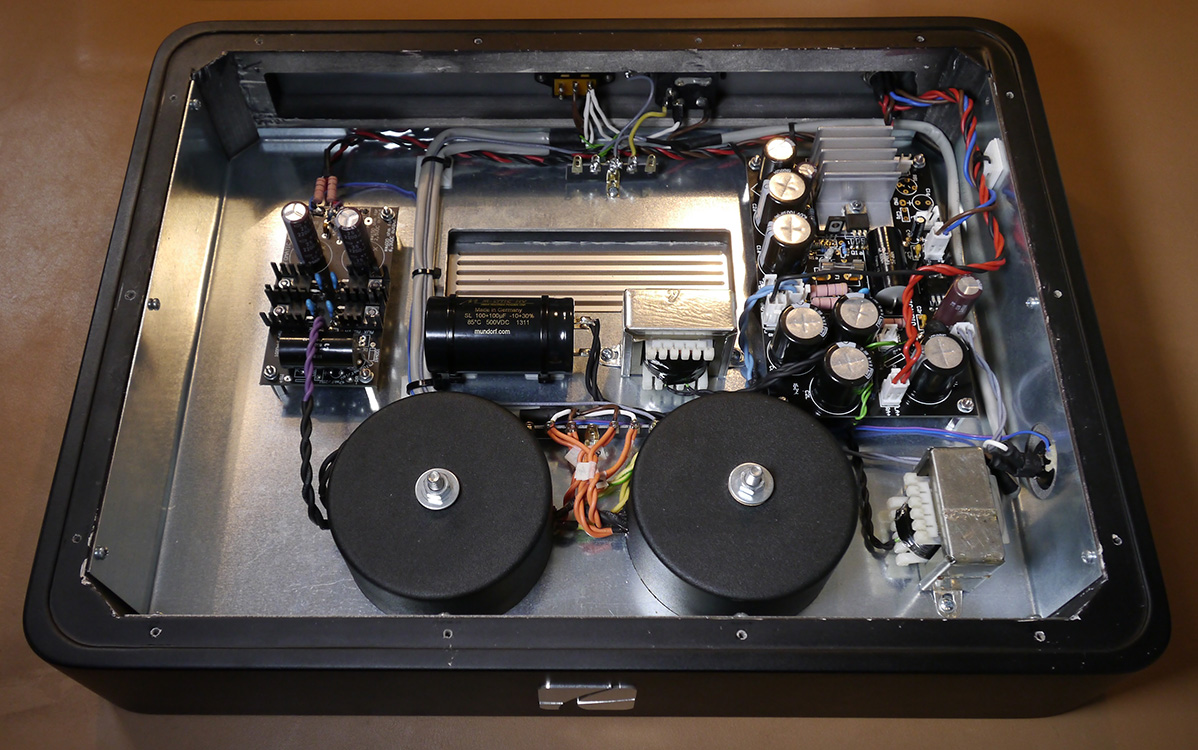
The power supply duplicated the same hybrid wood/metal construction...
|
|
|
|
 |
|
|
|
|
... with more chokes and sundry voltage regulators.
|
 |
|
As the name Trafomatic suggested in the first place, their balanced preamp would sport plenty of iron to get the job done. That's a very different approach from typical modern solid-state preamps.
|
 |
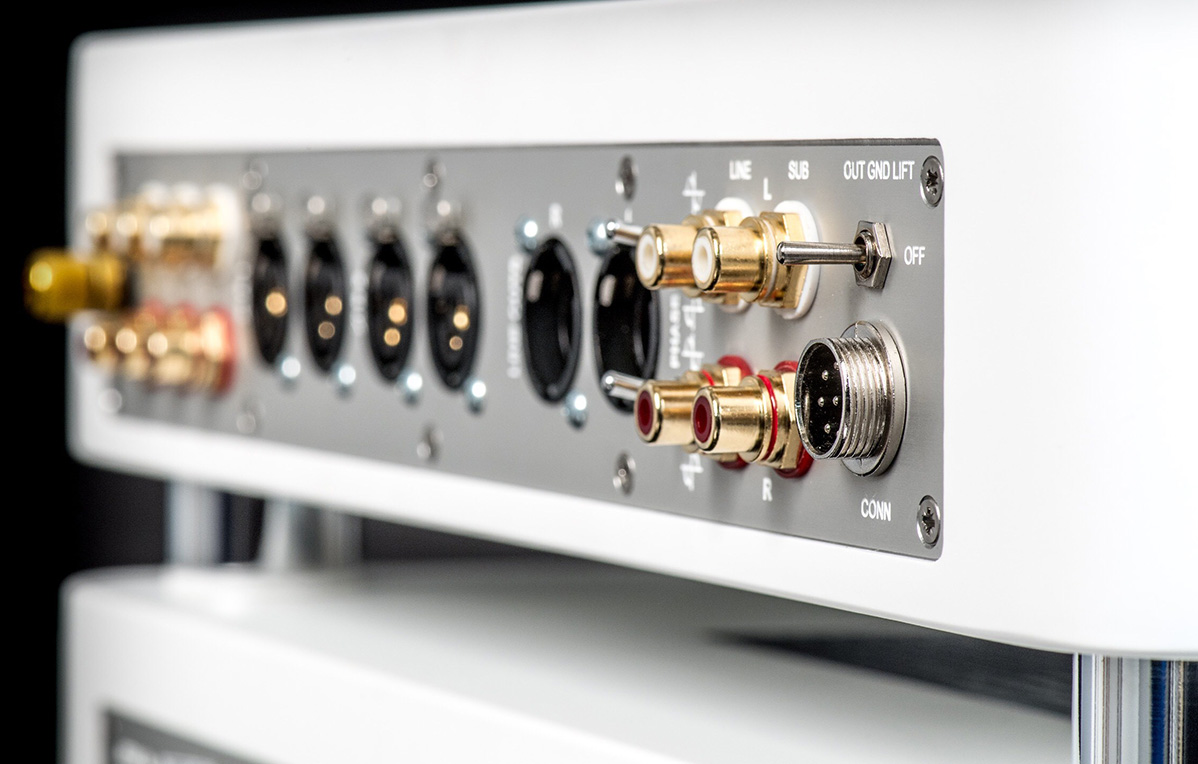
Here we see how the second RCA line-outs are labeled 'sub' but they could just as well be used for bi-amping with two stereo amplifiers; or to feed a separate headphone amp.
|
 |
|
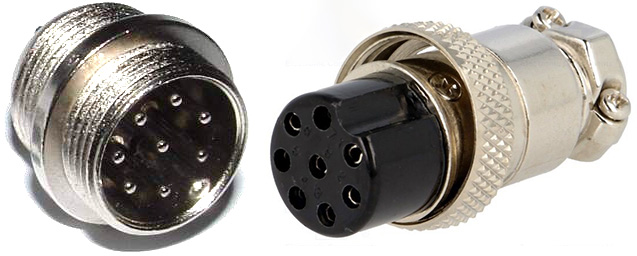 |
To get going merely required connecting the umbilical and flipping the power rocker on the PSU's left cheek. The recessed positioning nubs in the male 8-pin plugs were very hard to see but they were there to insure that the female ends of the cable would only enter in the one intended way.
Without any status indicators on the front panels, the lone visual reminder of 'on' was a small red LED below the side-mounted power switch for tastefully subdued operation.
After the preceding review of the two-stage tube-powered HQ9038 DAC from Vietnam which splendidly interfaced with our nCore 500-based class D monos, that's the first amplification Lara played to. With stout volumes attained below 7:00 on the dial and increasing rapidly from there to never make it to anywhere near 8:00, I had to ask Sasa about his circuit's gain. Either that was unexpectedly high; or the attenuator's taper very steep. After all, very few amps sport as low an input sensitivity as his 3.5Vrms Elysium monos. |
|
"Gain is just 20dB. Probably your source voltage is too high." That certainly was a possible answer. Another would be that a balanced preamp should be tailored to modern balanced sources, most of which output twice on XLR what they do on RCA to mean 4V if not more. Combine that with amps of 0.5-1V input sensitivities and a well-judged volume taper ought to allow one to gradually hit 10:00 before things blow up. All of this would be so much easier if core hifi specs were standardized. But they aren't. Now impedance and gain mismatches are very common. In our case, the balanced sources rate at 16V (COS Engineering), 6V (hq audio), 4.6V (Fore Audio), 4V (Auralic) and 3.8V (Aqua Hifi) whilst our balanced amps deliver full power at 0.7V (Pass), 1.5V (LinnenbergG) and 2.5V (Nord), all with roughly 26dB of voltage gain. In such scenarios, nobody needs a preamp for gain, just for source switching and volume. That a preamp can still sound better than a source-direct connection is one of hifi's mysteries.
|
 |
|

|

|
|
