 |
|
|
Getting connected. The review sample came with the server option. A bass management option is also available. This gets negated if you opt for the €950 (VAT incl.) extra power supply in addition to the standard outboard power supply. This second supply aims to provide a more robust independent feed to the server. The original supply is now dedicated purely to the converter section of the d1-core. The extra power supply can be ordered at time of purchase or acquired later when funds permit. Installing it then is simplicity itself. It just means disconnecting a cable jumper and connecting a new one while feeding through the supplied PS cable via the bass management slot [see below]. It took this electronics klutz all of ten minutes to do, no soldering required. This now makes for a three-box setup: the truncated main DAC with its smoked acrylic fascia (brushed aluminium available at extra cost) and, as supplied, with the optional nicely brushed aluminium top plate (painted bent steel is standard) and two smaller truncated pyramidal cases for the individual power supplies. Connectivity is superbly comprehensive. From left to right you have twin analogue outputs via RCA and XLR, a slot for an optional headphone socket (32-600Ω) followed by a bank of digital inputs with coax (BNC optional), AES/EBU, Toslink and USB-B (asynchronous Xmos). Towards the top of the back panel are slots for remote on/off and left/right bass management (unavailable if the additional power supply is optioned). Finally, the server connectivity sockets are grouped together with eSATA and two USB-A slots (support USB thumb drives and external drives, exFAT, FAT32, NTFS and Linux), a MicroSD card slot for firmware updates only, HDMI and lastly an RJ45 Ethernet socket. MPD, UPNP, Airplay and RoonReady are enabled by default via the latest firmware update.
|
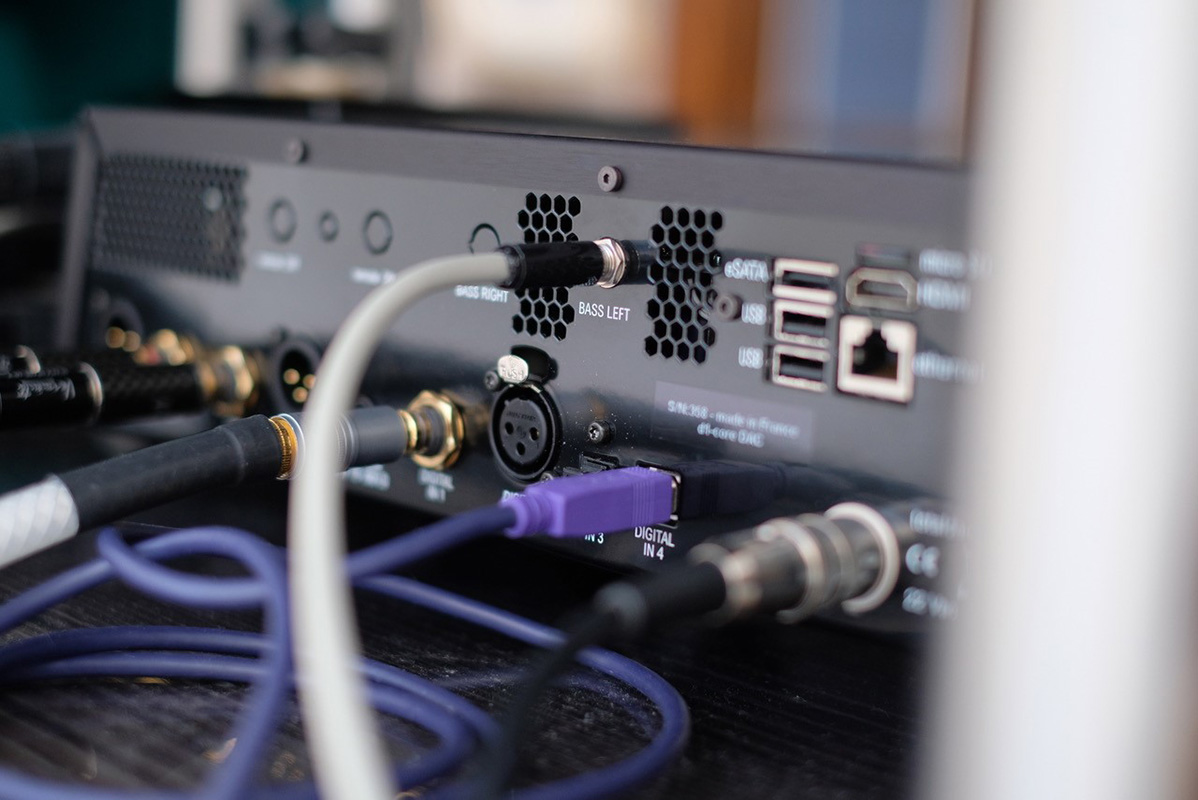 |
TotalDAC supply their d1 USB cable/filter/reclocker cable/small box which loops from the USB input to the bottom USB computer connector. As an added optional extra, TotalDAC also offer a high-quality €390/2m Ethernet cable of substantial weight which possesses a snake skin of what seem like a knot of filters around it. The d1-core supports a huge range of file types from lossy MP3 and OGG to lossless AIFF, FLAC, WAV and more. TotalDAC use a bank of 100 x 0.01% VAR bulk metal foil resistors from Vishay carefully selected to provide the sonic performance Brient sought. The d1-core is capable of 44.1 to 192kHz resolution at 16/24 bit depths. Optionally, DSD via DoP is supported on all digital inputs. The embedded custom clock features an 'anti-jitter' FIFO memory. For the d1-core Brient designed a new solid-state output stage among other refinements to the overall circuit topology.
|
|
|
|
|
The included remote control is plastic but comprehensive and controls all manner of functions including volume control, input switching, display/on/off, filter switching, polarity and more. The variable output means the d1-core can connect directly to a power amplifier with the volume settings controlled by remote. An Oled display is viewed through the dark acrylic fascia and informs the user on selected input, sample rate and numerical volume. Here anything below -25 starts the bit-stripping resolution-stealing downwards spiral but even with my high-gain Gryphon Antileon EVO, I always sat above -10; way out of the trouble zone. Phew, this DAC has got the goods on features and capabilities. I'm exhausted from the research… surely I missed something? TotalDAC have a great formula for balancing amount of functionality with cost of admission. You could just spring for the basic d1-core DAC for starters. Cosmetic enhancements such as the brushed aluminium fascia and top/side cover options made the standard acrylic/bent steel a cost saver to allow Brient to spend the production budget on the thing that ultimately matters: sound quality. When further funds permit, sure… choof up for the bling, the BNC or even the server option although I'd advice to get this right from the get. Not to preempt but that option is an indisputable winner.
|
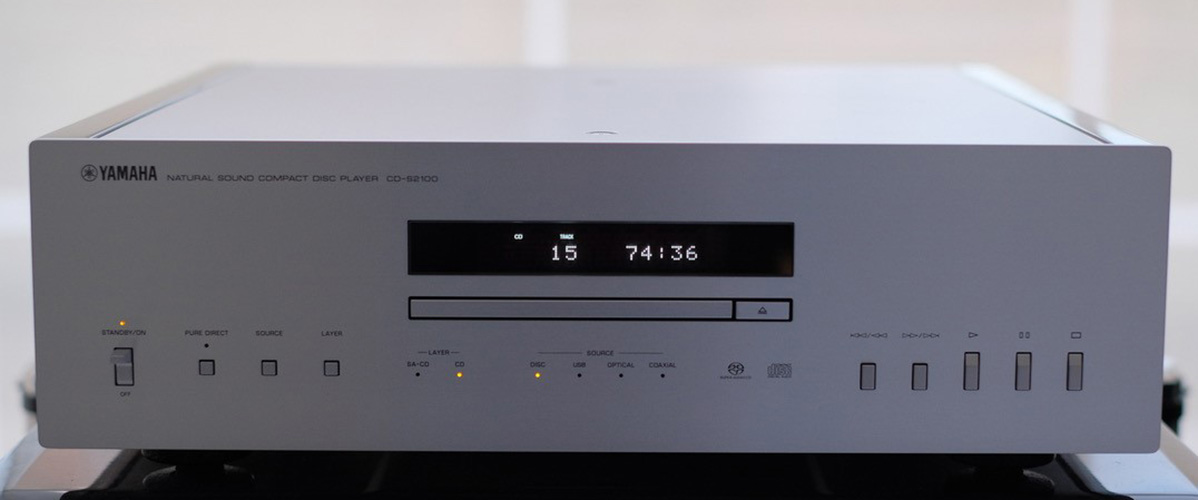 |
Yummy Yammi. I recently purchased a Yamaha CD-S2100 CD player. It's a monster of a unit, extremely well built, features a custom very solid transport mechanism made up of mainly steel parts (no cheap plastics) and its semi-retro styling is extremely attractive. Its superb mechanics make for a terrific disc transport (in my case its intended main use although the unit's USB implementation is superb and as a bonus it is SACD capable). My auditioning was based on 70% music playback via the CD-S2100 as transport but I also spent quite some time exploring the d1-core's other file- and streamer-based capabilities.
|
|
 |
|

|

|
|
