 |
|
|
To assess LF balance, I needed bigger musical weaponry. One personal favourite is the orchestral version of Albéniz's Suite Espanola with the New Philharmonia Orchestra under a young Rafael Frühbeck de Burgos. Decca's SXL 6355 pressing already 20-30 years ago was a demonstration darling with better hifi dens and Asturias on the B side remains a hot tip par excellence.
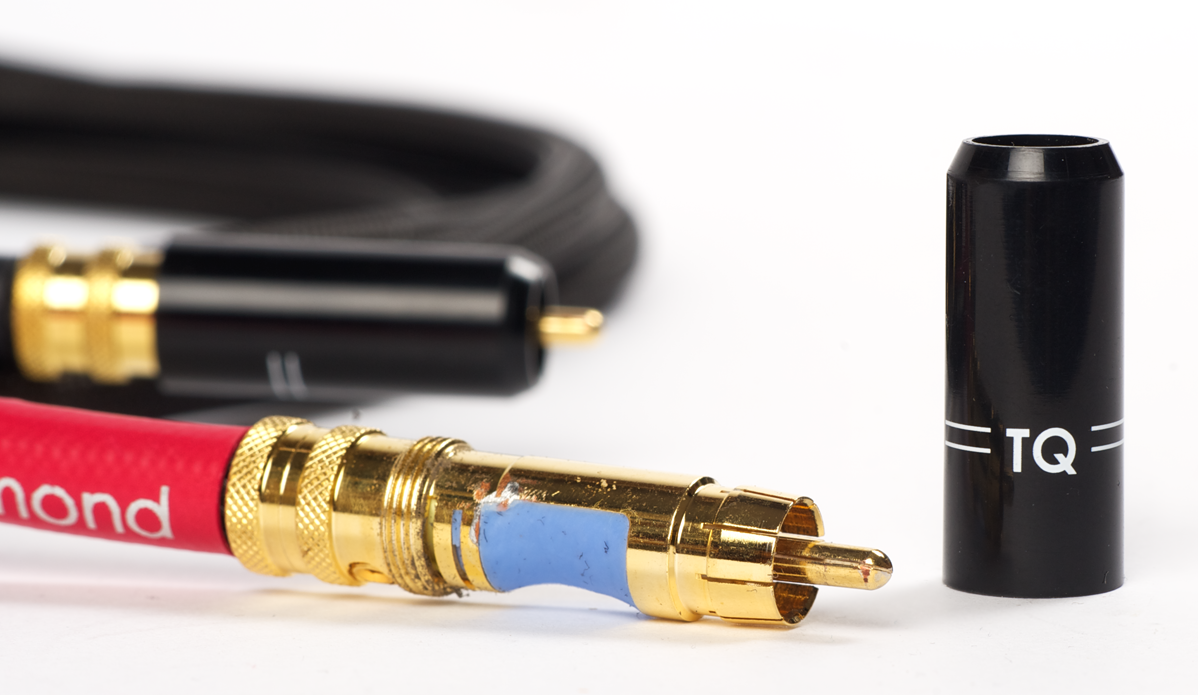
Shortly into the piece, there appear multiple heavily beating unison accordeons which soon find themselves augmented by low-tuned kettle drums. That combination descends mightily into the bassment and the listening room is allowed to flex a bit. If these impulses aren't rendered clean and accurate, bass textures soften up to undermine some of the intended drama. Not so with the Black Diamonds. The explosive tutti with the low drums appeared as though chiseled from granite and nothing wavered even with the very lowest notes.
|
 |
So even in the very first octave, the Black Diamonds maintained their broad-shouldered athleticism of powerful impulsive bass which refused to go soft no matter what. But was it neutral? Probably; if perhaps not in the most uncompromised puritanical sense. Fundamentally, I thought that these cables had both feet squarely on the terra firma of facts. The ability to dish out the lowest bass without complaints should be expected in this price class. All I'll say is that this final balance—neither too analytic nor warm—worked really well in my own system.
|
 |
In quick succession, Asturias settled the remaining question about dynamic fortitude since its orchestral tutti show off not only extension but get very loud very quickly and do so brutally hard. Which was a quasi issue for the Black Diamonds. By being less quicksilvery agitated and more settled than the NordOst Heimdall 2, the Tellurium Q approached dynamic swings with the ease and studied calm of a Sicilian mafia hit man who executes his last job prior to well-earned retirement.
|
|
|
|
|
Should you need balanced XLR cables, the company comply for an extra €270. On the XLR outputs of my Bladelius Gondul M, the balanced connection impressed again with those exceptionally black backdrops. Arising from such calm, Allan Taylor's voice on "All is One" from the eponymous Stockfisch SACD gained in redolence and intensity and the accompanying instruments were better sorted and outlined. The Black Diamonds held the reigns markedly shortly than the Magnan cables usually at work here and had a small advantage even over their single-ended stablemates with which they otherwise share most of what I've described already. This added tautness or control is something I've noticed before when I compared XLR and RCA leashes from the same stable and range.
|
 |
Symmetrical or not, the Tellurium Q Black Diamond aced the job and the price/performance ratio felt balanced when a sonically equivalent big Magnan Vi Signature gets €2'000. And sonically, the Tellurium interconnects had a clear lead over my now older but similarly priced Magnan Vi as well as the newer NordOst Heimdall 2. Here the Black Diamond speaker cable breaks out of the mold with a nearly €5'000 tag to mean that it has to battle the cream of the crop. Having experience with Straightwire's Crescendo, Magnan's Signature, the NBS Monitor 0 and my domestic favourite, I was curious whether the Tellurium Q had the right stuff.
In short, it did. In spades. The already pitch-black background got even darker and silkier, the already potent lower registers grew further in stature which my full-range capable LaCampanella speakers noticed and exploited with gusto. The fat techno synth bass of Sultan, a joint effort between Turkish percussionist Burhan Öcal and ambient ace Pete Namlook who passed away in 2012, now sadly sent my own speaker cables packing.
|
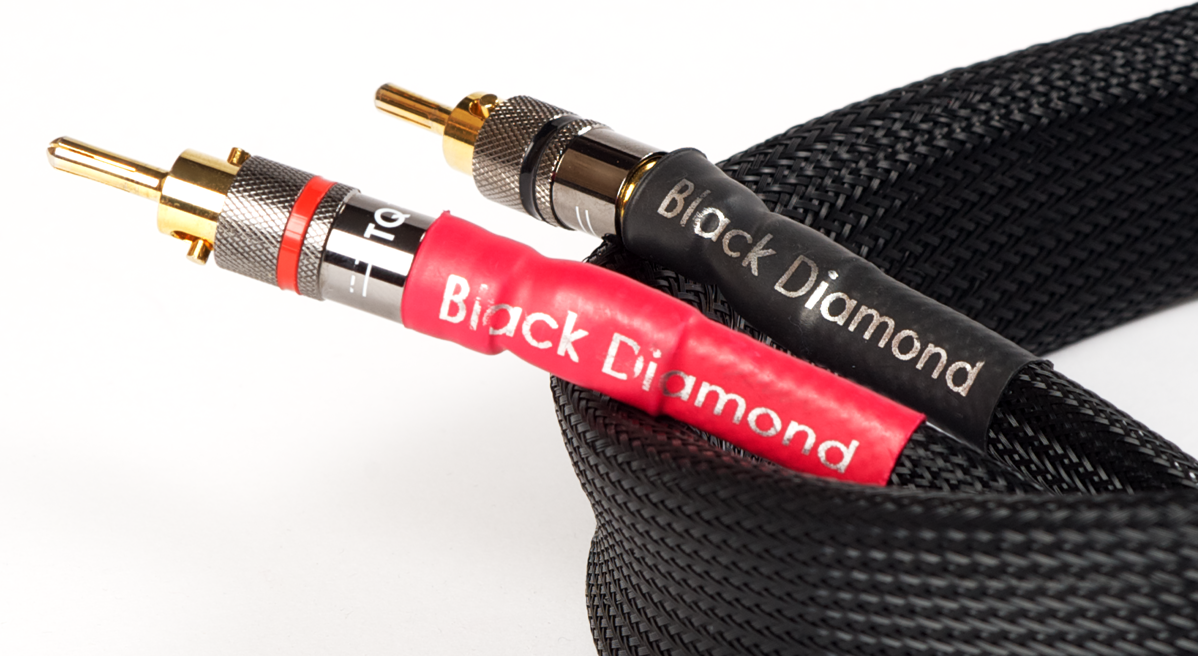 |
With the Black Diamond speaker cable in the loop, the already advanced level of soundstaging gained expansion and finesse. I thought the front-back sorting which began slightly in front of the speakers superb. The far corner stage lights added illumination. Everything came out a bit more generously sized than usual. Tonally the speaker leashes fell in line with the interconnects. Against the mentioned competition, the Tellurium Q impressed with pleasingly saturated tone colours, marked overall authority and an especially stress free natural treble. Beyond debate was the family gathering of a complete loom where the sum of the parts reiterated the 'signature sound' of the Black Diamonds.
Already a single cable can inject it into the system. Not entirely surprising, the strongest single effect comes by way of the speaker cables. Change out other connections subsequently and the sonic benefits accrue and intensify into the top echelon. The obvious danger is that the ambitious audiophile will soon want to recable the entire system with Tellurium Q Black Diamond. My advice for the budget-conscious who can't stretch to the speaker cable is to start with one low-level connection. That's easier on the wallet and accomplishes a lot already.
|
|
 |
|

|

|
|
