|
|
|
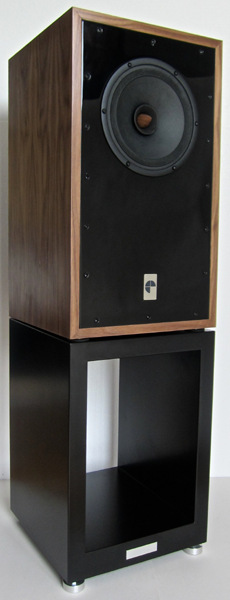
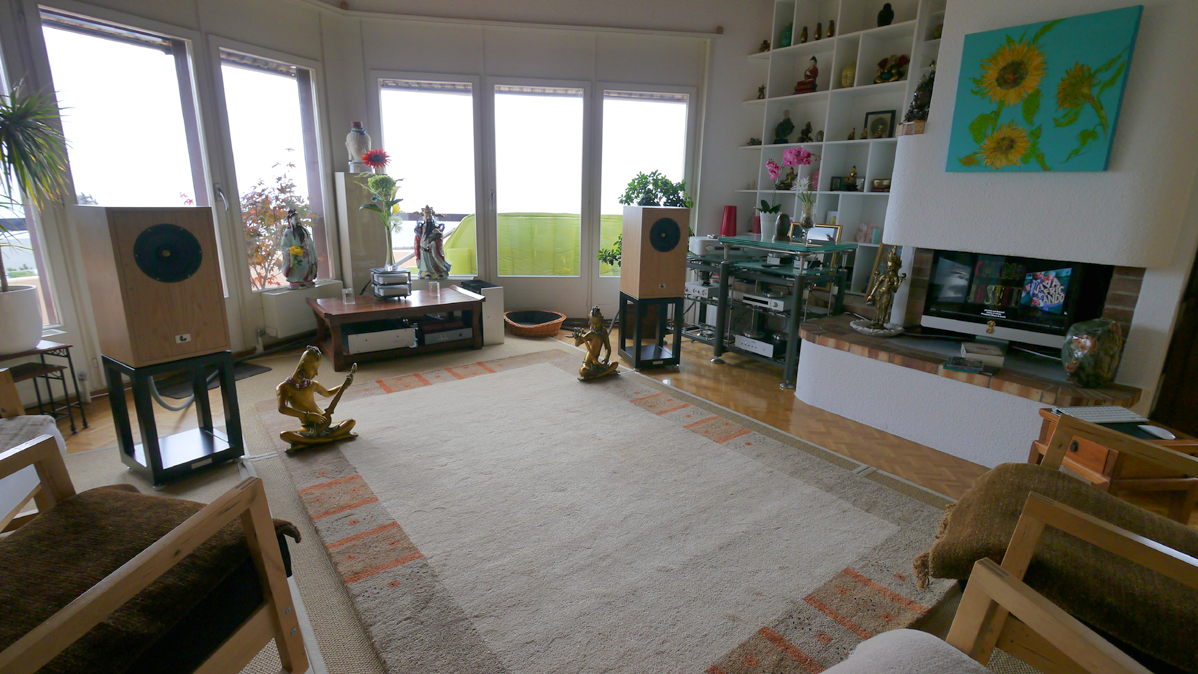
Separated not at birth but in transit, the bFly stands arrived singly over two days via Swiss Post. In a nod at amateur hour, these fully assembled stands weren't exactly ready for use. That's because they were packed without a plastic liner surrounded directly by nasty brittle styrofoam panels. Both stands needed the same soft-brush vacuum cleaner session to not only remove static styrofoam bits but also dust that had collected in transit. Those who like their new hifi toys to arrive shiny and spotless wouldn't have been impressed*. Though an open box-frame construction with four decoupling elements on top—dissimilar for the rear and front corners of the speakers and with a dome-shaped nut in the front middle to turn things into a tunable three-point contact affair—the base champions just three adjustable footers, two in front, one in the rear. To prevent tipping, there are two round-head bolts in the empty corners. The idea is to extend them far enough to just miss contact with the floor. A careless walk-by now will tip things but by just a millimeter or so. Simple but effective. There's also a slightly less costly version of the stand with closed sides for different cosmetics. In its open bottom section, my loaner might house a suitably retro lava lamp, plant, Amethyst geode or other decorative bits to soften the speaker/stand's boxiness a tad. The cork liners of the floor footers create built-in protection for exposed wood floors but will be less ideal for thick-pile carpets.
|
| ______________________________________________________________________________________________________________________________________________________ |
* "I wanted to inform you that meanwhile we have changed the packaging from styrofoam to plastic liners with additional plastic sleeves. Due to your comment, we now have a more professional package solution." - Reinhold Schäffer
|
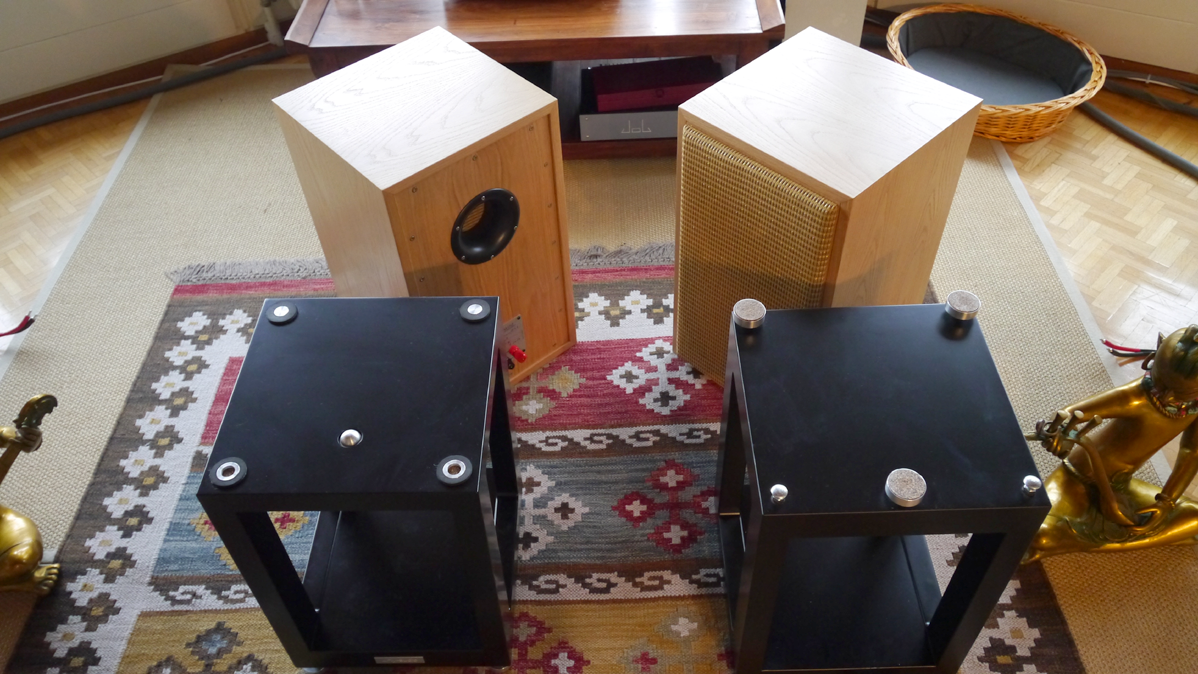 |
Reinhold Schäffer of bFly had some more info about his two stand options: "The semi closed Model 1 is €1'950/pr, the open Model 2 I sent you €2'250/pr.
I know that these are high prices. But the production including the painting is very expensive too.
That's because my stands are monolith. They aren't painted first, then bolted together. Instead they consist of many layers of properly bonded permanently joined MDF which must be painted as a complete assembly including the insides.
But with their adjustable absorbers, these are more than just stands."
|
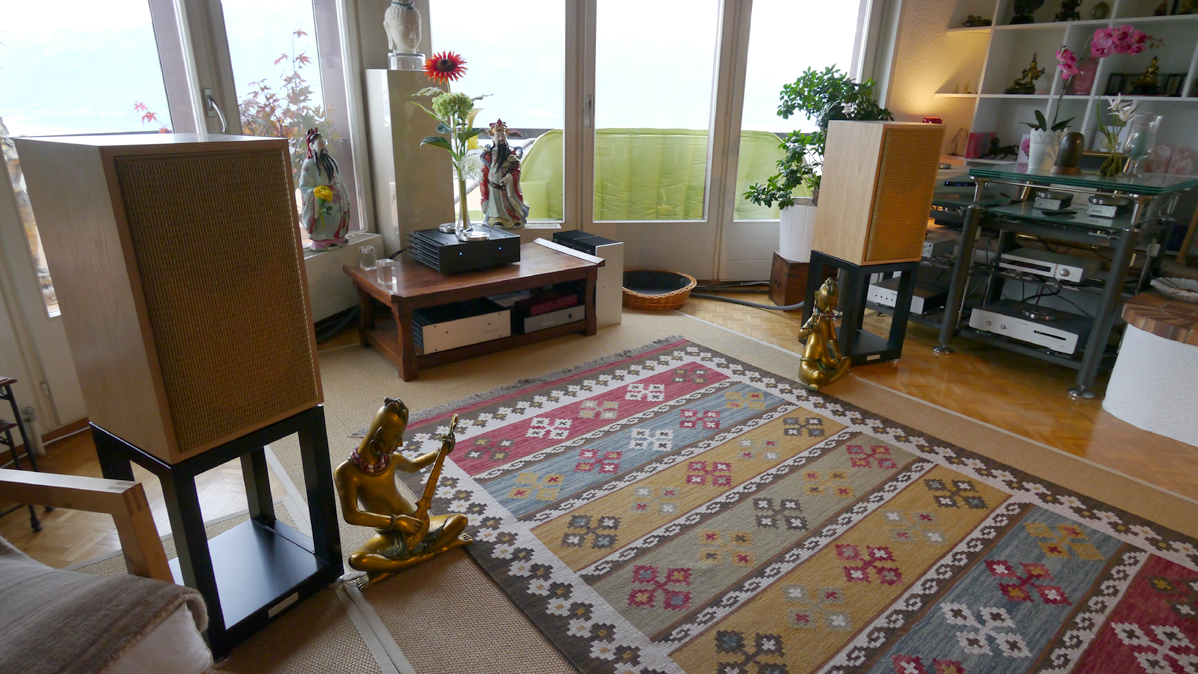 |
For my first get-to-know-ya session, Aqua Hifi's superlative La Scala II DAC ran into the Esoteric C-03 preamp set to zero voltage gain to drive the FirstWatt F6. Like the retro cosmetics, I felt instantly aged by at least 10 years. Clearly bandwidth limited particularly in the treble, the Puls in this context turned the less-is-more credo to mean that less treble equals a richer midrange. Compared to the 2-way transmission-line Accuton-fitted Albedo Audio Aptica floorstanders it replaced, this sound had shifted up gears and lowered RPM. This was a rather less sporty far more cushy ride. This was all about comfort and a plusher suspension with an overly generous dose of midrange saturation leading to autumnal colours and overdone thickness that obscured transparency and separation.
|
|
|
|
|
|
As all experienced audiophiles know, plonking a new component—particularly a speaker—into a system that's been finely tuned to quite different hardware is very rarely a recipe for instant success. Nearly always some nip'n'tug is required to recalibrate the balance. It could be as basic as different cables or power cords. In this instance, rather more was needed to regain speed, incisiveness and top-end lucidness. Over successive stages, this meant out with the grills, out with the Aqua Hifi DAC in favour of the Metrum Hex, out with the FirstWatt F6 to try the Job 225 and Crayon Audio CFA-1.2 and FirstWatt SIT2 amps instead, then out with the Esoteric C-03 altogether and finally down to the Metrum Hex run directly into the 15wpc ultra-wide bandwidth super-charged Bakoon AMP-12 with passive pot.
You might say I was on a kind of strip search: searching where and how to strip off weight and mass to minimize body/warmth and inject the right counterbalance of crackle and snap.
If you belabour the preponderance of undernourished fashion models in ads; and similarly skinny twenty-something gals playing high-ranking TV show FBI agents and coppers with decades of experience but nothing physical to show for it... then the Puls has your number in capital neon signs. Not even a deliberately PRaTty system with no single glowing bulb in evidence could turn this speaker into a pale anorexic. It's tonally voluptuous per se. It's a stand-in for that famous Stereophile cover of 20 years ago which had both a Cary CAD-805 valve amp and a transistor Krell KSA-300S. If one of those was right, mustn't the other have been wrong since they represented such opposing concepts and sonic aesthetics? Juxtaposing them on the same cover was a crafty discussion trigger. For our review subject, it means that if the Puls has it right, most of what goes for high-end speaker sound at trade shows has it all wrong.
In your mind, combine the standard close-mic'ing with its unnatural near-field perspective of attack vs. decay—direct vs venue sound—with fêted concrete-bunker style speaker cabinets, ultra-hard drivers and digital front ends which are tuned for maximal detail and separation. The result far exceeds live performances on pixel detail and contrast. It's what a speaker like the Puls criticizes and attempts to correct. In that it isn't alone. In the US, Zu Audio for years have championed a sonic rebellion against the same status quo. That they would pursue it with a very similar type of driver is probably no coincidence.
If we paint a broader picture in admitted generalities, we would say that analogue media like vinyl and tape were weighted toward tonal bloom, bass mass and dynamic chunkiness. Digital media focus on the leading edge, speed, separation and microdynamics from superior S/NR. Then many modern speakers pursue a treble that's hotter than you'd hear live. That's perhaps due to a predominantly male audience whose age reduces HF sensitivity.
Then there's the matter of bass frequencies interacting with a room's geometry to trigger standing waves. Audiophiles allergic to boom tend to deliberately downplay bass heaviness and extension to avoid issues. That often means that true low bass is missing whilst the opposite frequency extreme is overdone. Of course many audiophiles favour a very visual presentation—soundstaging, imaging, outline sharpness et all are all visual terms—which gets sharper with hotter HF. Hence a tipped-up balance is often favoured and pursued quite deliberately. This plays yet further into digital's attack-heavy style which is lighter on the development of full tonal bloom, colour and realistic weight.
At left, with Model 1 bFly stand. |
|
|
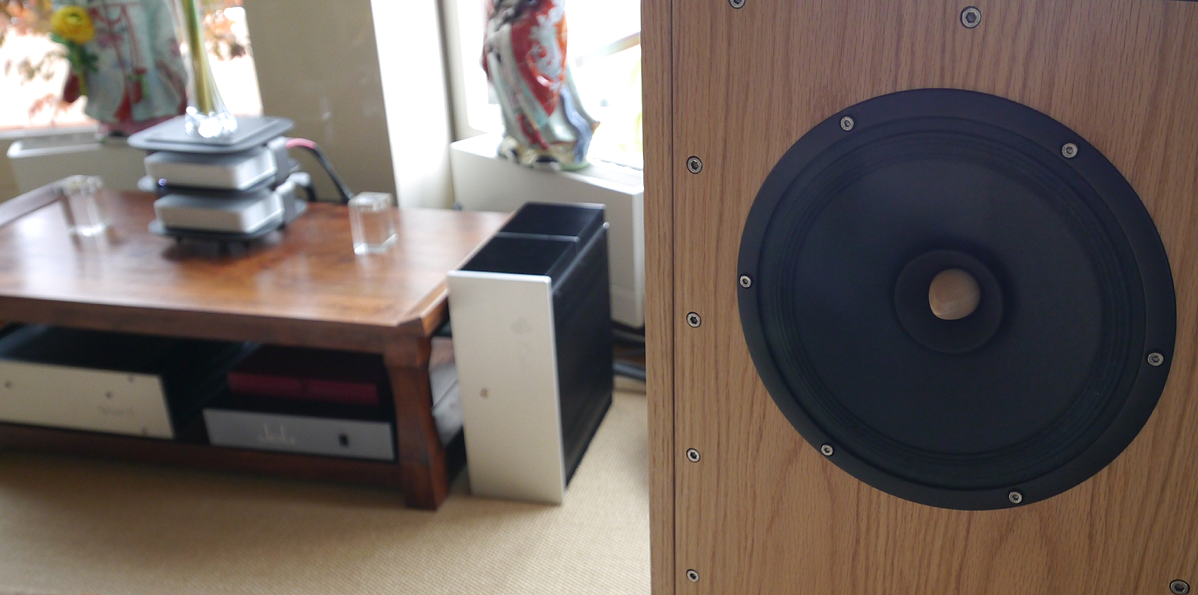 |
With a speaker being literally the final element of the playback chain, just turning down its treble will already move things a bit into the analogue vintage direction no matter what signal you feed it. If you then reproduce your vocal and HF bands with an unusually large driver made of paper, you hang considerably more meat on its bones. It's why Tannoys with dual-concentric 12" or bigger mid/woofers are still very popular amongst Japanese cognoscenti. It's simply not a sound you can get from a ceramic 4" midrange and 1" Beryllium tweeter. By not pursuing 100dB efficiencies like equally paper-based widebanders from AER, Lowther, Rethm or Voxativ, the Enviee's paper needn't be as light and thin. That enables not only a larger overall diameter but also bigger excursions. Add ported loading and a tailored amount of box talk to enrich the lower midband and even without hearing the Puls, you should have a fair mental image of it. That'll be a good base line for my comments to follow.
|
 |
|
 |
|
|

|
|