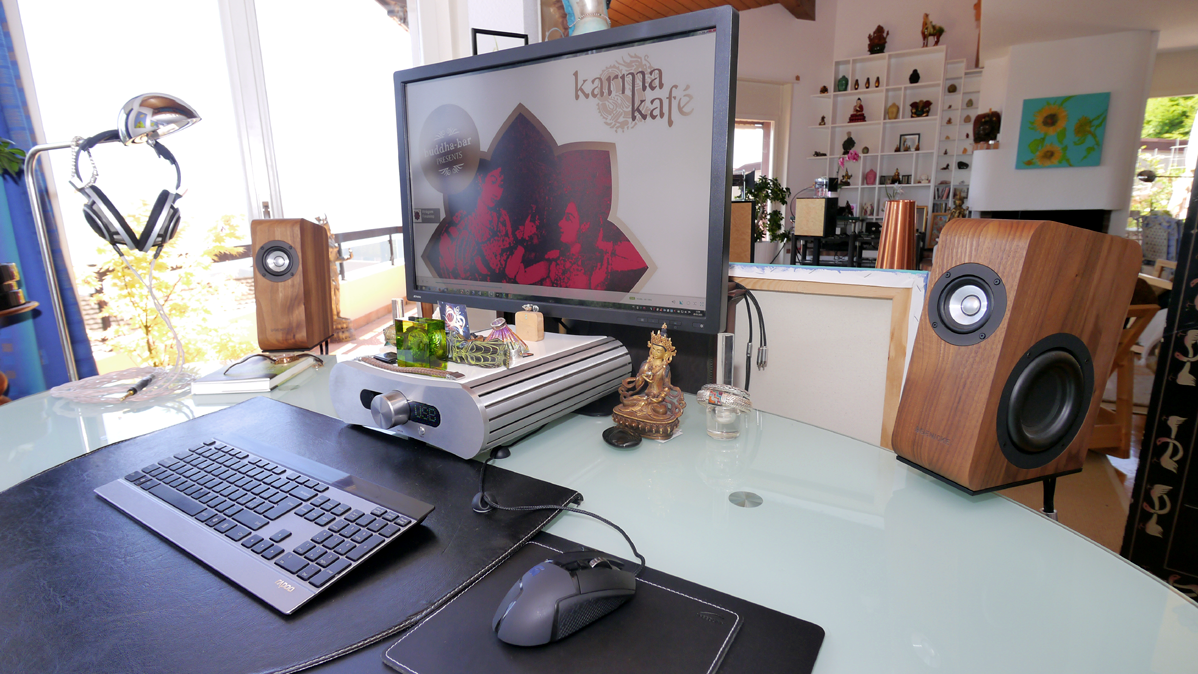
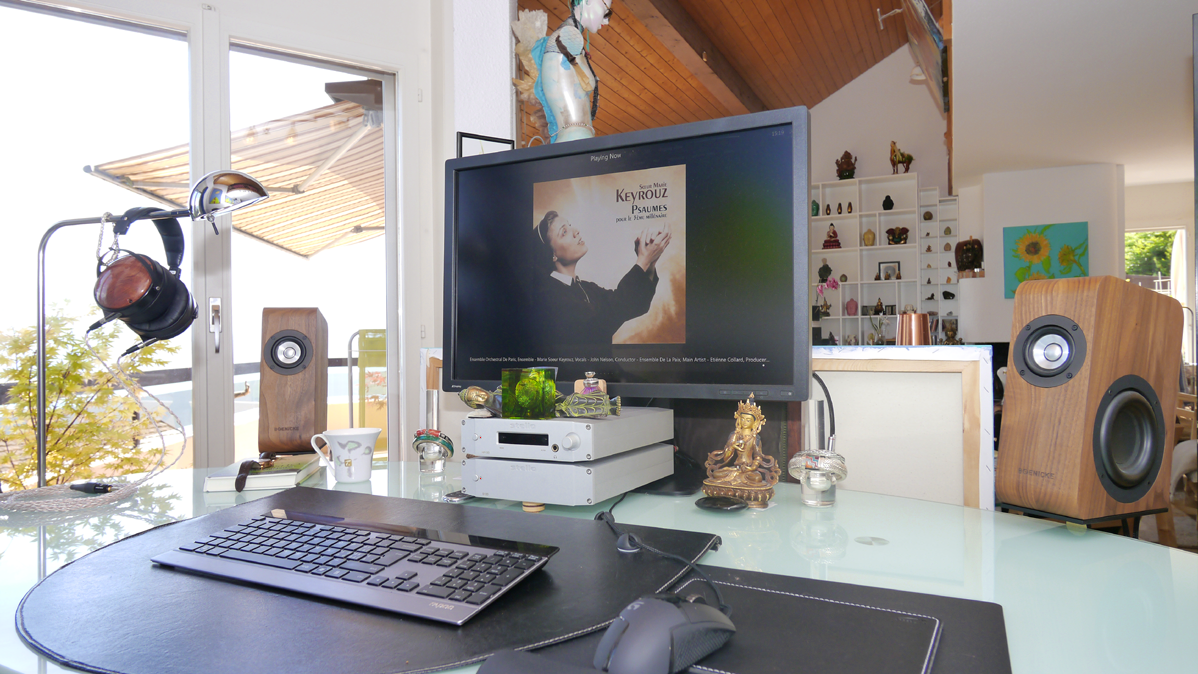
This desktop shot is clearly from before the S100's arrival. Do you see why I needed the Stello sisters? That perfectly fabulous ALO-rewired Sennheiser HD800 hanging in ripe readiness off the Ikea lamp needed a proper ¼" hole. Gato Audio's DIA-250 has none. Yet I wasn't keen on adding a separate headfi amp. Space reasons. Stacked Stellos would be shallower and narrower and still fit well below the 30" monitor's edge. More space, more features, less money. My Korean jindo dog would be a good hunter. I already knew how the headfi path was mostly equivalent to my Eximus DP1. Its purely analog bass boost marked filter as though DSP works great on the Senns. It moves them closer into Audeze turf. On paper, the Danish cat had the fancier converter mated to its 250wpc modified Pascal power module than SImon had in his 24/96 USB-only HP100MkII. Why was plain with the new Stello DAC. Whilst the Gato pumps out 5 x the power, my Boenicke W5se never get to 30 on its dial. This is the civilized nearfield for music, not a master blaster gamer den. Plus, the solid Walnut boxes sit within arm's reach. They get loud quickly. For this app, even the S100's power was excessive. Which left the question. How did the $2'500 Asian stack joined via XLR do against the €3'250 Scandinavian uni-boxer streaming full-rez Qobuz or Tidal? That plus the occasional Spotify+ or YouTube are mainly what I do here. I might follow a rare CNN or BBC news report. That's it. Anything above 16-bit/44.1kHz would be wasted. DSD? Are you kidding? True, the younger Bülent Ersoy had a great voice. But like Yannis Parios, things degenerated badly later on. Keep it real. Call a spade a spade. Same for my usage here. DSD and DXD would be a complete no-show. Next. |
|