|
|
|
Whilst my Windows PC already had plenty of XMOS drivers from prior reviews, none of them proved compadre. I had to hit up Soulnote's download page to grab the proper .rar file which unzipped as version 9.20.0.0.
|
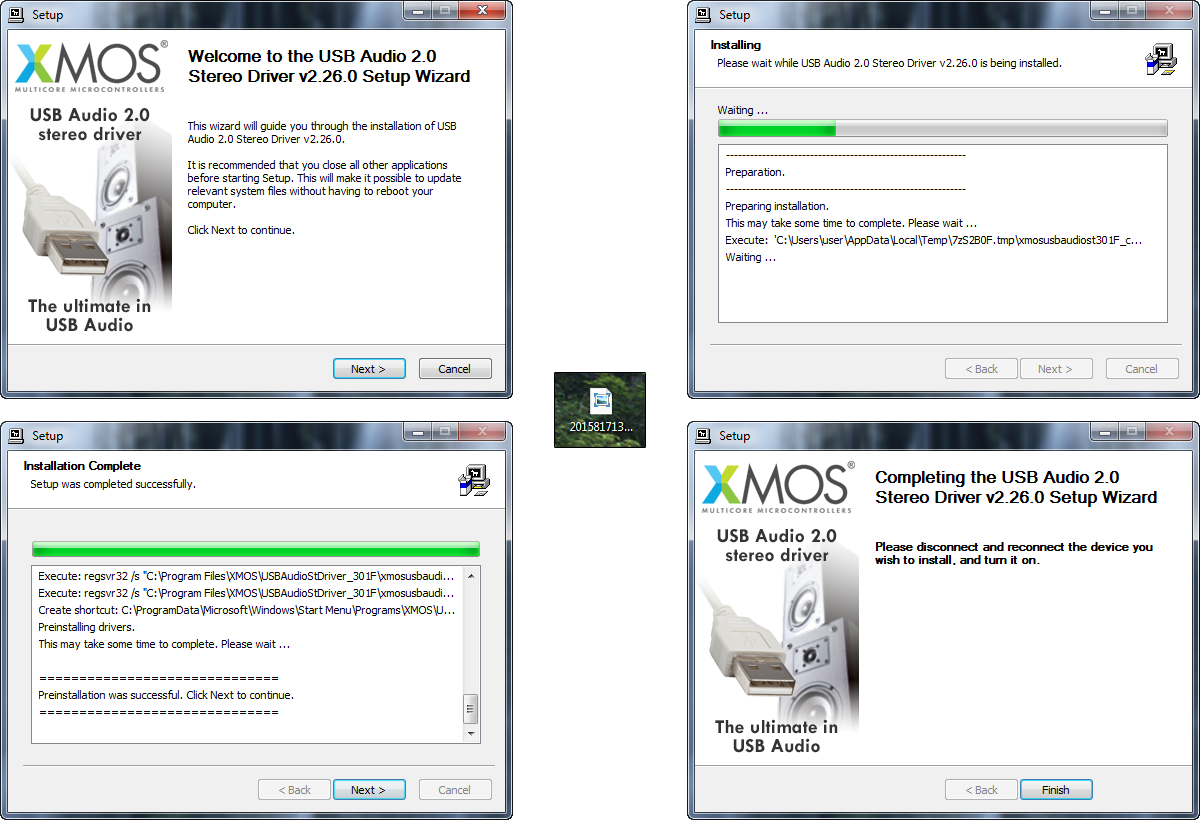 |
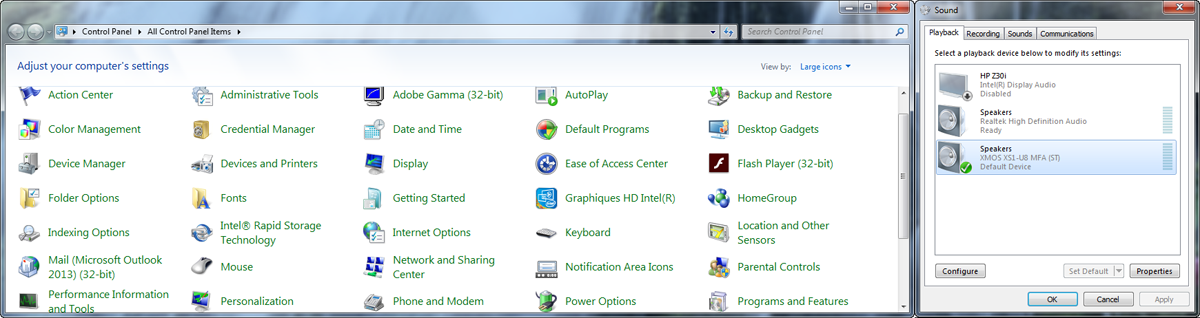
Once installation was complete, I set my Win 7/64 PC's sound panel to XMOS XS1-U8 MFA(ST) as new default. A relay clicked and PCM44.1k appeared in the display to show signal lock. To check on handshake timing, I powered my Windows machine down, then back up again whilst the SD300 remained on and in USB mode. As soon as power hit the HP workstation—i.e. well before Win 7/64 booted up—the display went from USB unlock to USB PCM44.1k. This XMOS driver was hyper efficient. I was ready for break-in running a Tidal playlist on endless repeat.
|
 |
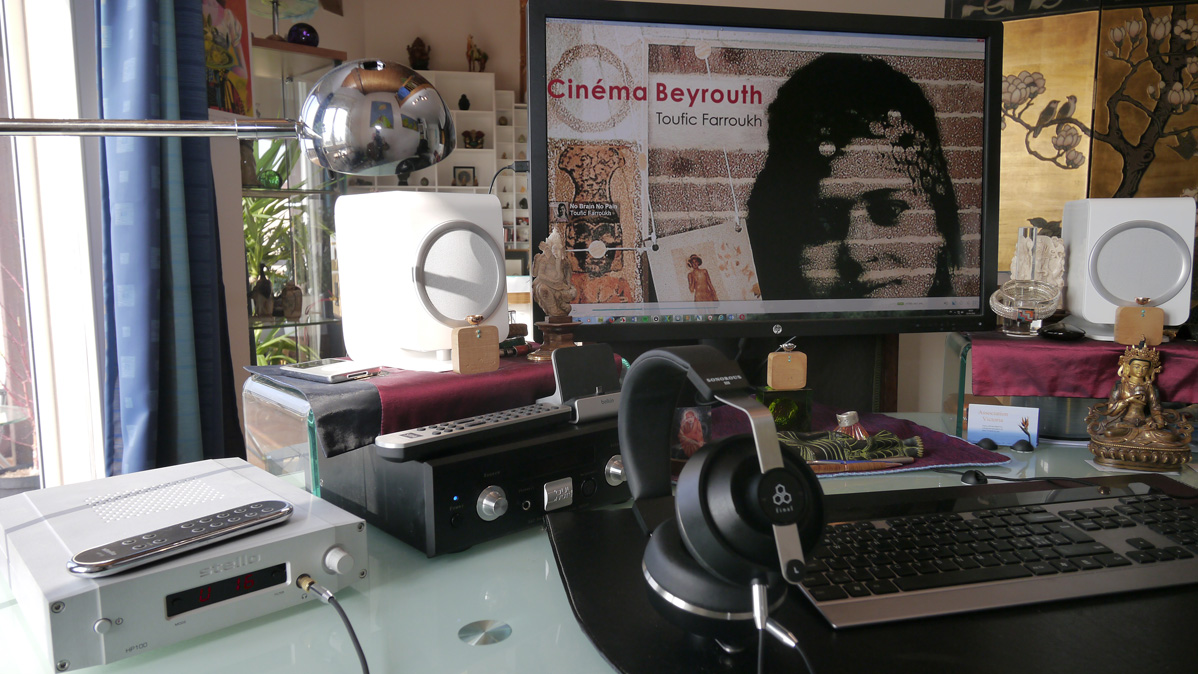
Whilst that went on, I trawled my grey matter for SD300 competitors and came up with Furutech subsidiary ADL and their 4-in-1 Stratos as perhaps the closest match. In our crib, I had Simon Lee's April Music Eximus DP1 and its smaller Stello HP100MkII. The latter would be my A/B anchor. Priced comparably, the South Korean dumbs down digital connectivity to a simple 24/96 USB port and limits headfi to 6.3mm. Sonically however, it and its matching S100MkII power amp make up my favourite compact 'budget' separates. Unlike a number of joint headfi/preamp propositions where the second function isn't as strong, the Stello is a wonderful remote-controlled preamp. Its size/simplicity conceal great sonic significance; and it has a rare analog-domain defeatable bass boost for headfi. With its Neal Faye-designed thick aluminium clamshell casing, the Stello also wears the clearly snazzier threads over the made-in-China (though designed in Japan) Soulnote.
|
|
|
|
|
Headfi and the SD300. I started with Final's Sonorous III as a dynamic budget-reference headphone from Japan streaming Qobuz 16/44.1. Tonally, these DAC/amps were two peas in a pod. They shared the same warm robust perspective; the same seemingly unhurried attitude. Rather than pushy, such a sound even on lit-up dynamically agile headphones is pleasantly relaxed and easeful. That avoids a sense of eventual stress which can set in when snappy reflexes of sharp transients and explicit treble combine. Not here. Even the Sennheiser HD800 notorious for ~6kHz peakiness were well behaved and unusually gentle. Where the SD300 had a small advantage was on crunchiness. If you apply fresh cornflakes to contrast—how crisp sounds arise against silence—the Soulnote's cornflakes had just a bit more crunch. Those of the Stello were just slightly wet, hence softer. This might well have been a function of the SD300's more sophisticated USB 2.0 converter. Where budget hi-rez often has the raw specs but still sounds thin, nervous and edgy, this didn't. Be it blistering Flamenco runs on Paco de Lucia's final Cancíon Andaluza album or close-mic'd female Pop vocals, the Soulnote played it unruffled, easeful and from the bottom up just like the Stello. That meant bass anchoring and with it, strong black values and proper colour saturation. Talking in generalities to convey the main point, this was the flavour of Mosfets, not bipolar transistors.
Whilst Soulnote's styling mirrors what you'd get with a typical black Onkyo or Yamaha box at a big electronics store, the level of sonic sophistication hiding behind its 6.3mm socket rather eclipsed what one tends to get from equivalent ports on equivalently styled receivers. Instead of ultra resolution and top speed, it's about handling the fundamentals with maturity to tick off tone, density and groundedness. It's a discipline Simon Lee at April Music excels at. Apparently the circuit designers of Soulnote went to the same aural academy to listen to the world of playback through very similar ears.
|
 |
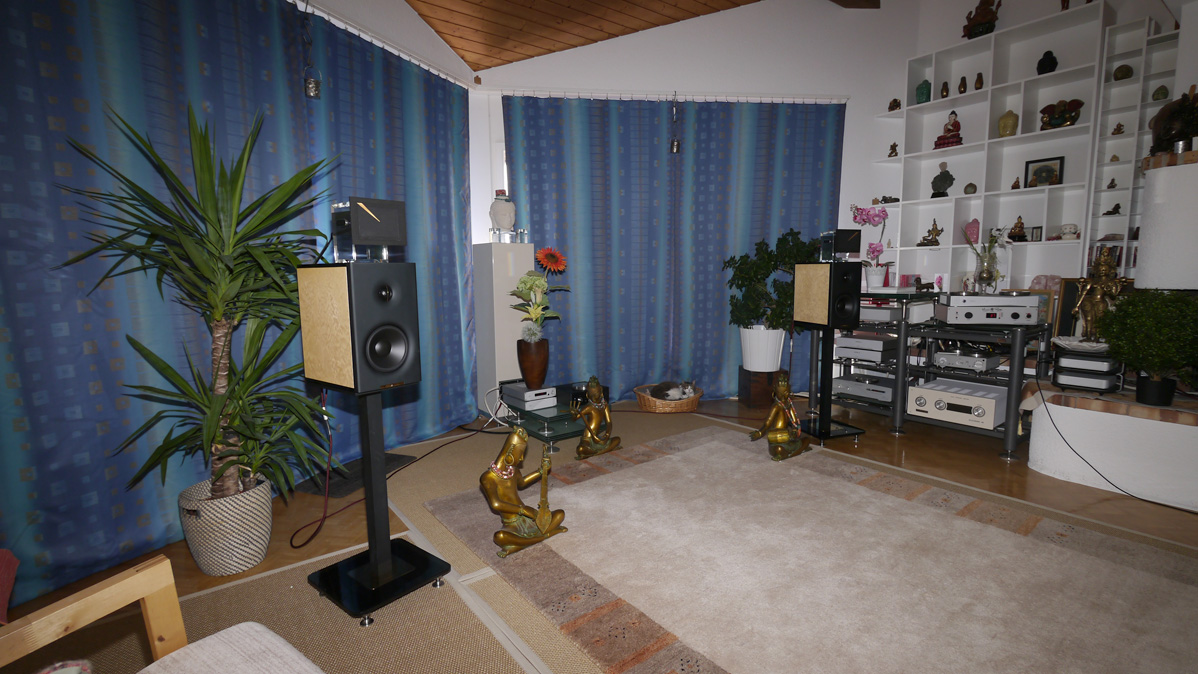
Moving the game into the main listening room confirmed it. The Soulnote was nearly as convincing a preamp alternate for the Stello when both drove the Stello 50wpc stereo amp from their XLR outputs via analog input signal. Here the SD300 simply ceded its prior headphone advantage to have the HP100MkII lead it on very similar counts. Perhaps because the Stello twins were designed as a pair, their combination moved ahead on grip and bass solidity. As a result, the amp acted a tad bigger and beefier. Saying it different, I thought that as a headphone DAC/amp, the Soulnote edged out the April Music whilst clearly belonging to the same school and class of sonic sensibilities. As a dedicated preamp fed analog, the April Music came ahead for similar reasons if by a somewhat larger margin. What costlier preamps like the Vinnie Rossi Lio or COS Engineering D1 add above and beyond this picture is even more scale—more dynamic shove, more depth—higher separation and greater airiness. To tap all of that fully of course also requires an amp that can parlay those advances; and appropriate speakers.
|
 |
Again, the Soulnote impressed me by building its house on a firm foundation, not on the flimsy posts of lean flat whitish budget gear. If pricier stuff builds itself a taller house with bigger views, that's to be expected. What's important for more affordable gear is not pretending at greater than actual heights by cheaping out on the ground floor and its basement. Here the SD300 struck me as having been voiced by a team who value exactly this first-things-first philosophy. Without it, playback soon betrays empty calories. It's lack of real nutrients. Ultimate detail without convincing bass weight or a fleshy midrange soon tires. Top speed for mega impact and slam gets exhausting if not accompanied by tonal substance. Yet flip that coin and less speed, less top-end air and less separation power do not tire or exhaust. In fact, they are easily embraced and essentially forgotten rather than noted as lack or loss whenever the true fundamentals are in place. To my way of thinking, that's as good a definition for proper 'budget' gear as any. Accordingly, this Soulnote was proudly proppa.
|
 |
Returning to its double-trouble proposition as a one-box DAC/headfi amp, this benign grounded voicing and civilized gentleness on attack and treble detail make the SD300 a good choice for lit-up fast dynamic headphones like the Sennheiser HD800, Beyerdynamic T1 and Final's Sonorous range and drier performers like AKG's K702. By the same token, if to you most planarmagnetics from Audeze to Oppo could stand some caffeine injection and top-end window cleaning, you'd favour a Questyle or Bakoon amp. Tube fanciers will relate when I call the SD300 more 300B than 45. Those familiar with the core flavour of paper versus metal driver sound will understand why I'd call the SD300 a ScanSpeak cellulose not Accuton ceramic flavour. Which begs the question. Why aren't Soulnote more familiar to us Westerners already? If my interactions with their Japanese contact are any indication, it's entirely down to lack of proper marketing support. This has no bearings on the product's quality at all. But it very much does on whether you'll be able to hear it anywhere near you anytime soon...
|
|
|
 |
|
|
|
 |

|
|