|
|
|
Feckin' eejit? That's proper Irish for bloody idiot. In Galway's tourist shoppes, it can be had on T-shirts and bumper stickers. It's what they'd call us, for being had by fussy speakers. Their lot only gets by with very specialized electronics. Even then it can be super choosy about software. Whilst it might sound tremendous then, the road to bliss could involve endless escapades before one beds the right hardware combo. Who needs that drain on patience and portemonnaie? Isn't it a design flaw to be so picky? It's the gist of a recent email string, with a colleague who struggled with a small purist widebander. It refused to sound like it had at a show, being instead hollow, lean and sans dropped bass balls. It finally deigned to fill out only with a costly valve amp he scored before giving up; a reversal of the road to hell being paved by good intentions. His road to heaven was paved by 'bad' amps and no clear map on how to avoid more. He then mentioned another maker—of a very big single driver rear horn—who also was hard at work to actively augment then shrink their current sarcophagus. "How many of those did they think they'd ever sell?" my guy wondered laconically just as had I whilst writing them up. Here's the rub. Avantgarde's earlier models with active bass demonstrated that combining ultra-efficient horny tops with boxy bass cabs of middling sensitivity can betray disparate MO. Along an audible fault line, easeful ultra-dynamic gush factor stares down lumbering brute force. Just tacking a long-throw heavy subwoofer onto a light-coned widebander guarantees no happy ending. It's why Voxativ's 9.87 isobaric dipole subwoofer works at an astonishing 99dB. It runs two 96dB pro woofers which Holger Adler rebuilds with new motors and suspensions. Being already a decade deep into this trench, Jacob prefers woofers whose diameter and general makeup mirror his mains; and which he then uniquely loads. There's more to successfully activating a widebander than a cheap 'n' cheesy plate amp and beastly woofer with fat rubber-roll surround. The Bhaava not only demonstrates how to do it of a piece, itself a key feat. It also overcomes a minor critique I remember from my last Rethm assignment: insufficient upper bass kick. Perhaps because this HQ48002P main is less efficient, two woofers were more easily matched to it? Whatever true cause, this speaker's dynamic range felt more linear across the bandwidth. It's back to an earlier observation of surprising punch just below the midband, despite a bass system which hits the listener purely via reflections. Quite the trick, that!
|
 |
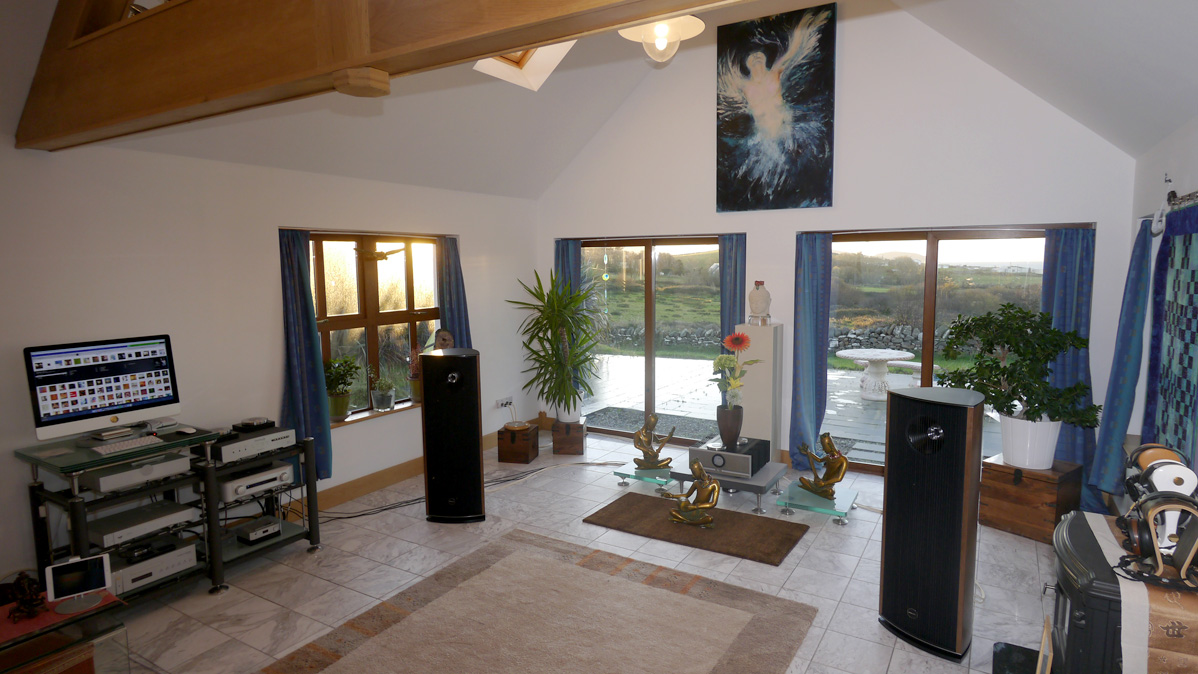
From the cosmetic angle, our household also found the Bhaava the least polarizing Rethm yet. With our ears and eyes, it could easily find a permanent home on looks and sound. That too must list under this model's overall accomplishments. Finally, having in the review queue followed a €20'000 contender—yes, six times costlier!—Ivette and I both categorically preferred the Indian. Though preferences are deeply personal, at some point of fiscal divergence they do become quite the immovable rock. Of course just because high-end's mad pricing ascendant keeps shifting what seems reasonable or fair doesn't suddenly render three grand any less. It's about relative value: competing with or exceeding sound that elsewhere demands a lot more. On that score, the Bhaava is a very good relative value!
|
|
|
|
|
At this juncture of a review, a writer asks herself what question or possible objection wasn't yet covered. Putting myself in the shoes of a purist widebander fan eager to spend possibly years chasing the perfect amp and expecting the likelihood of single-ended valve ownership - I'd want to know how much the Bhaava's friendlier fuss-free nature leaves under the table. Having owned Voxativ and listened to all their models at a wealthy friend's with quite the exotic amp collection, I have a clear answer: resolution and speed. The Bhaava is a more comfortable than racy ride. On that front, one might call it widebander lite. It'd mislead however once lite was misread as bass and booty lack. That's exactly where Rethm's budget model eclipses the majority of this breed already. Instead, lite means both mellower; and a smaller portion of typical high-efficiency virtues including their weaknesses. That's key. By essentially eliminating all liabilities, the Bhaava comes out ahead for the majority of regular users. It's only the dedicated aficionado of the breed willing to go the extra setup and tweak miles who'd consider this speaker somewhat of a beginner's choice within the narrow widebander options. In Rethm's catalogue, more speed and resolution await with their costlier models. But for much modern music that's not recorded so hot—actually, overcooked—the more affordable Bhaava could actually be Rethm N°1. Bhaava balaclava against frost bite? If you can forgive the cuteness, true enough. Let's also put it another way. With his high-level industrial design chops and very good ears, if Jacob George operated out of Western Europe not India, not only would Rethm be a far bigger brand by now. The Bhaava would be priced considerably higher. Being obscure and literally handmade in a small furniture shoppe to show in small details... that's the price you pay (and then don't) when acquiring this accomplished Southern Indian singer.
|
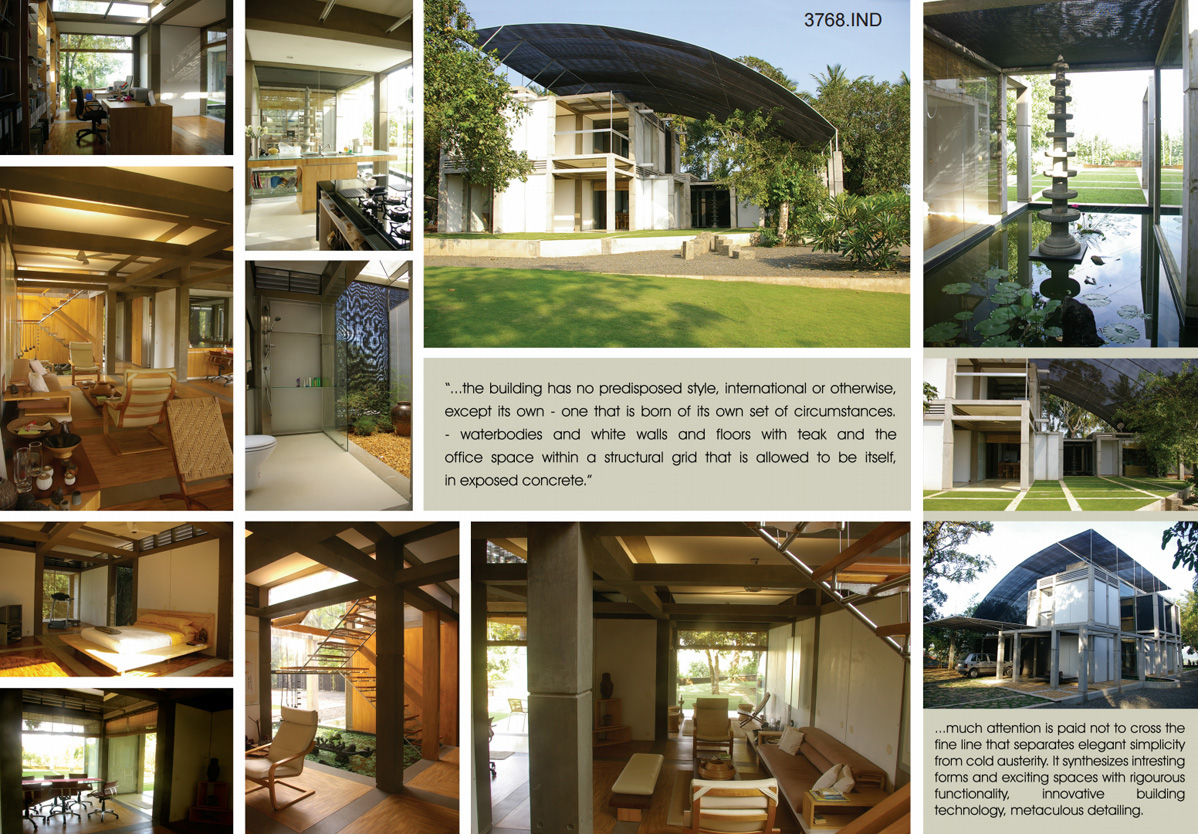 |
If you believe that a man's home reflects his values and personality, these published photos of Jacob's tell all. The same aesthetic values and concerns are alive in Rethm; and the Bhaava is a bona fide Rethm from concept to execution. What a lovely addition to the genre - and one with quite unexpected ultimate potential as the perfectly counterintuitive Bakoon interlude chronicled! Jacob explains his ongoing commitment to widebanders: "I would say that after all these years of listening to my own speakers plus lots of the others, the one thing that continues to be central in my quest for good sound is the wideband philosophy. You already alluded in your review to the fact that there is a fundamental difference in the way widebanders present music when compared to other speakers with multiple drivers and crossovers. Whether that difference is good, bad, better or worse is for individual listeners to decide. Rethm continue to champion the widebander concept not because we see a business opportunity. Quite the contrary. It has been an uphill battle. Nor because "that's what Rethm do". After 15 years, I can say with greater confidence that Rethm do widebanders because we hear the difference and to our ears, the music just sounds more like music. The 'wholeness' one perceives when one source reproduces everything from 100Hz-18kHz goes beyond flat frequency response and other audiophilia. A lot of my reading and searching has led me to the possible reason: psychoacoustics. The one reaction I get from most music lovers as opposed to audiophiles who hear Rethms, even the more resolving and dynamic higher-end models, is "it sounds so relaxed". I believe this is due to the fact that our brains don't have to work as hard when we mustn't make constant adjustments and compensations to 'reassemble' everything that was separated by multiple drivers inside the brain. It is an important point which I don't think a lot of people yet appreciate."
|
 |
15 super-quality watts with a passive attenuator - expensive bliss the size of two MacMinis for perfect Bhaava maximization.
|
Wholosity revisited. The very next €12'500 speaker assignment had a 12" sealed three-way with compression tweeter and 8" cellulose mid replace the Bhaava. This swap's discontinuity was no trifle. With its 8+12 front-firing displacement, the 88dB Ubiq Model 1 is a clearly big bore expression of limitless output and wall-of-sound mass. It also loaded the room differently. But two things it didn't do went to the heart of the widebander ideal: whisper excellence and suchness. Those interlink. Whilst the first was covered already and as a concept is perfectly self-explanatory even if folks don't have the actual experience of it, suchness seems more abstract. Jacob's explanation points at what might cause it; less psychoacoustic processing by our ear/brain. But what is it? The difference between standard playback and a real-life noise like shattering glass. The latter suffers no obliqueness whatsoever. It's a most instantaneous shock to the nervous system. Obviously music consists not of machine gun fire, slamming doors and breaking glass. We must transpose their core immediacy to music which, whilst having plenty of percussive action, also includes many legato elements which in musical notation is signified by an arc linking two or more notes together. Just so, their unbroken showing up in time retains the same essence. It's arriving at our senses as one, at once. When that happens, a subtle timing distortion stops. Figuratively, it turns off a brook's running water so we may see the rocks beneath it standing perfectly still. Switching from Rethm to Ubiq turned that water back on. Even though that's a transparent effect to make water work by example in the first place, its constant motion makes perception of what's underneath or behind less direct. Even if that imagery remains a hobbling explanation, in the actual A/B it's an acute sensation. If you're tuned into that, the Bhaava plainly has it over mainstream competitors at its price and well beyond. That advantage was pressed to the max by an amp of Bakoon AMP-12R calibre and type. Wholosity explained? Fat chance. To truly get it does require personal exposure with an audition. If you're wired to make the connection, the likelihood is high that nothing from the mainstream will ever do again.
|
 |
|
 |
|

|
|
|

|
|