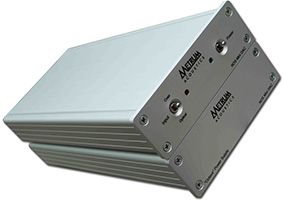
My Metrum converter coverage began July 2011 with the Mini NOS DAC Octave at left. Today it includes the Hex, the Musette, the Amethyst, the Pavane and the Adagio (I've also covered the Aurix and Forte amps). This journey's first small step was all of €668 ex VAT. In the intervening six years, the currently final step of Adagio is ten times bigger. Though still diehard Dutch where frugality is virtuous and a date pays for her own meal, widespread acclaim for the brand meant that to secure matching distribution, Cees was forced to embrace flash. Dealers wanted posher full-size chassis; the kind that looks right in racks filled with other shiny toys. He also was to outgrow being a source-only guy. Dealers like to package multiple components from the same brand. With the Adagio/Forte twins, Metrum have filled those bespoke shoes. Now our man could return to the f-word of frugality and split the bill between old first and currently last step. Voilà, a plain 3/4th width chassis with no analog inputs but still fully balanced operation and that trick variable gain. Anyone worried that success cut Metrum off from their roots would have to swallow their protest. Jade and Onyx are clear efforts not to trickle but flood down Pavane/Adagio qualities to more within reach. Again, it's quite the deal when you consider retail and importer margins, build and operational costs, serious in-house R&D and what Metrum actually net from each Jade sale in the end. Not so much. In this age of €20'000 DACs that drive stock Sabre with fixed outputs, variable Jade does more for less. And she still splits her 24-bit converter register into two halves to process the less/least significant bits like the more significant bits (at higher amplitude for better linearity) before resetting the lower half to the proper lower values in the analog domain; a scheme Cees calls error forward correction and handles with custom FPGA code.


Given our due diligence, I didn't in the main hook up the 1MHz LinnenberG Allegro monos but the Pass Labs XA30.8. One 6-metre Zu Event XLR did that job. Incoming digital signal was either USB off our music iMac or AES/EBU from the Soundaware's SD card reader. The latter's 4-hour .flac playlist would run on endless repeat for a few days to exorcise any break-in gremlins. In use Jade proved perfectly common sense; no manual required. A press on the right front panel or top remote button shifts out of standby into AES/EBU. Each subsequent press moves one input over to the left before it cycles back to standby/mute. Prior to signal lock, the left LED lights up red. With signal, that goes blank. Now there's only a blue LED above the selected input. Pressing the remote's mute button instantly returns the volume pot to zero. Unlike conventional mutes which resume with previous loudness, this one can't. There's no memory function. Having to reset prior volume after any mute is the very small inconvenience any Jader pays for ownership. That's it.


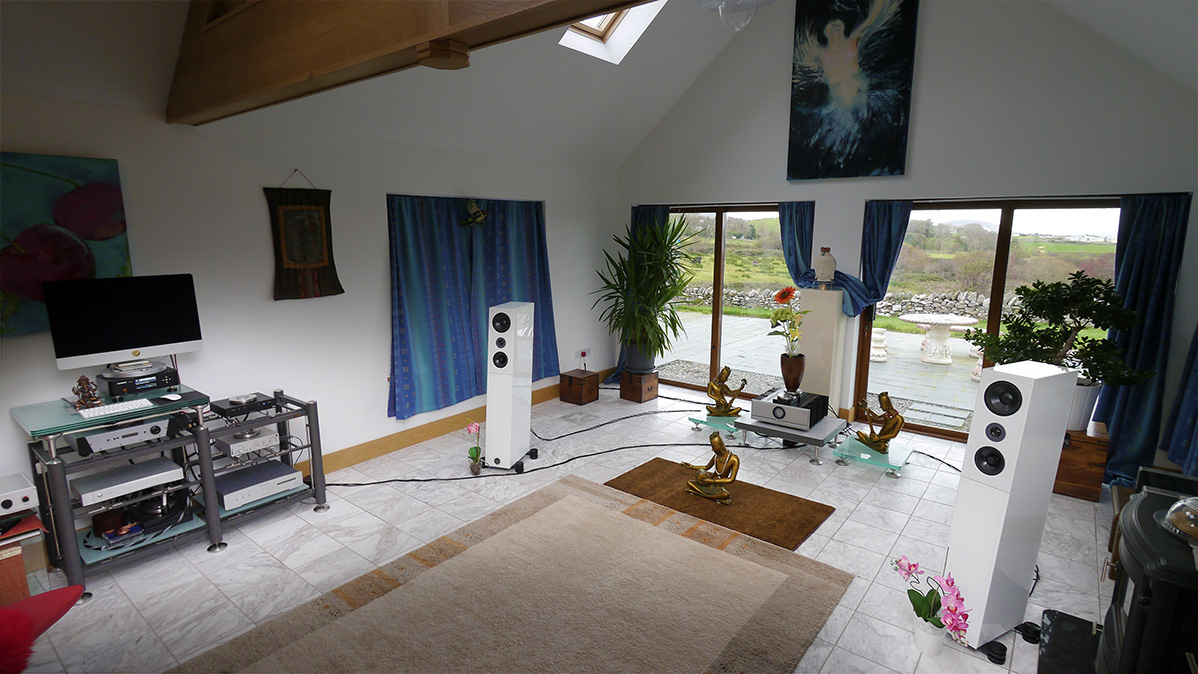
Running a subsequent swap to the LinnenberG amps confirmed expectations. These hi-speed DC-coupled class A/B circuits off the Metrum were most crystalline and resolved but a bit bereft of juicy fleshiness. The beefy Pass Labs amp recalibrated the cool value on the thermometer and the lightweight impression on the scale. Woe any opinionator who works with single samples in any component class. Sooner than later it's bound to misread when a quick substitution could have been an instant course correction. So the above chain was it. Subtract from the Spanish Artesania Audio rack the Wyred and Nagra preamps and Aqua and Fore Audio converters. Those weren't needed. For volume in hi-gain balanced mode, I couldn't exceed 10:00 on fare with up to 20dB of dynamic range. The Pass develops full power (26dB of gain) from a 0.7V input. The Audio Physic are 89dB sensitive. Our room is ~100m². The listening chair is at ~4 metres. For most intents and purposes, Jade really should have plenty of gain to get the job done well before its knob hits the stop. With all housekeeping boxes ticked, what about sound quality?