|
|
|
Speakerphonia. Amethyst's volume control covers headfi only. Piping directly into a speaker amp runs full throttle regardless of setting. A preamp or integrated are thus required mates; in case you misunderstood Metrum's entry-level status to already mean Jade or Adagio functionality. And unlike Onyx and Jade, Amethyst features no balanced outputs. For that, you move up in this line. But then you sacrifice headphones. Amethyst's identity and target audience are thus cleanly defined.
|
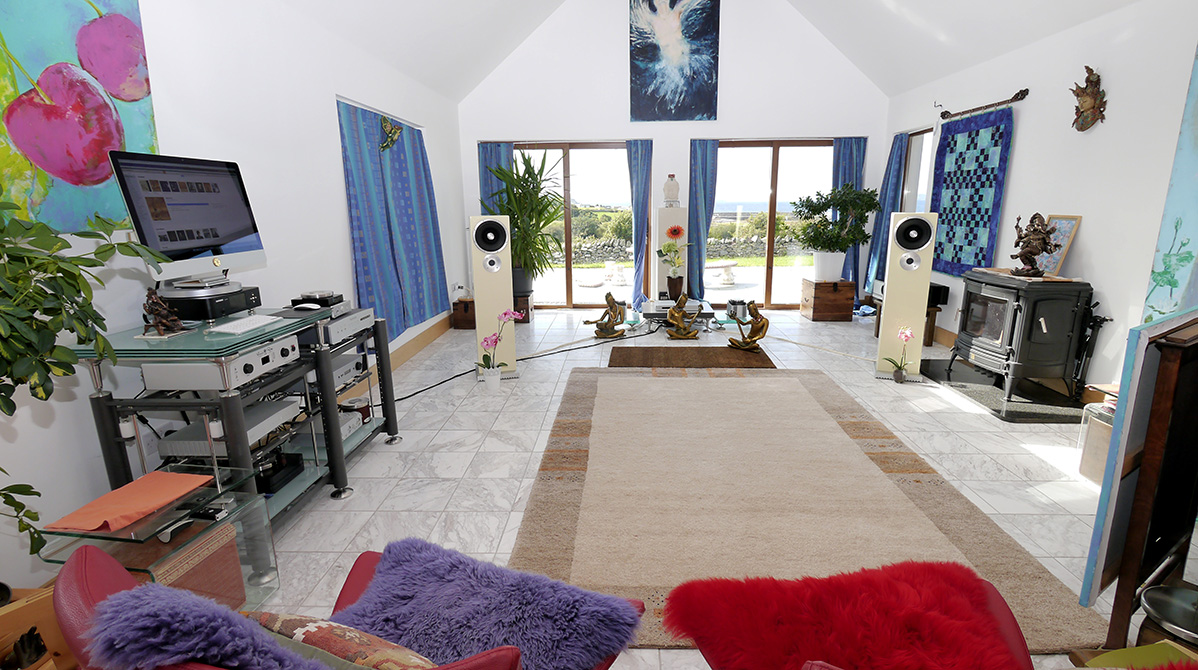 |
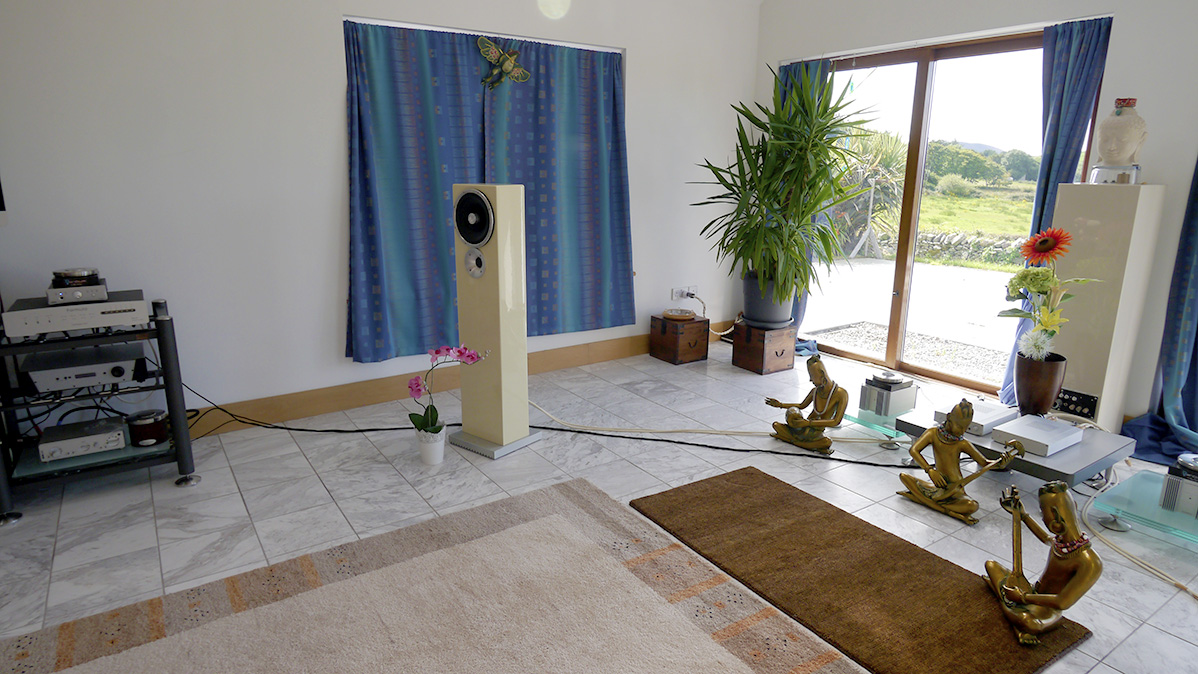
For big-rig heat, I wanted reasonable context. Alas, as reviewers get on in years on their beats, that becomes challenging. Each component category now is likely represented by premium and costly fare. Those are the spoils of self gratification, collected strategically over a long career. For occasions like today, I obviously prefer 'earlier' examples. Storage space and the need to liquidate items to afford replacements simply work against holding on to all, especially speakers. Here Zu's Druid V was my sanest example. For a pre/power combo, I had the perfect thing: Simon Lee's April Music Stello 100MkII twins at $2'500/pr. With his new company SAG, those positions will be represented by a CDP/DAC and 50wpc integrated. For remaining <€5'000 DACs, I only had AURALiC's Vega left. When new, it sold for $3'500. Just so, this became my most real-world hardware context. As it happened, that worked in Metrum's favour. Having sneaked a few sonic peeks with the prior setup of Wyred4Sound STP SE Stage II preamp and Linnenberg Allegro monos (an $8'550 not $2'500 combo), things had been a bit lean; just a touch threadbare. That's the handicap of a premium quasi passive preamp with 1MHz minimalist amps and silver cabling. Their combinant speed and transparency can drift into the haggard if the source is too lightweight.
|
|
|
|
|
| Simon Lee's genius is knowing how to get very mature powerful sound from simple ingredients. It's something he shares with his former friend Mark Levinson whose ears if not business ethics he always admired. Rather than bling pricing for the chosen few, Simon prefers down to earth for regular folk. It's why he lives in Seoul, not Venice. When spares had to go, I sold them all off or gave them away except for his compact twins. Though modest on papery specs, I could easily live with their sound if economics demanded that all the ritzy stuff depart. These separates with the single power Mosfets per push/pull half wave excel at rich soft textures which hit an ideal warmth that's dry not humid. Not as down-to-the-bone resolved as what it replaced, this setup had better density, chunkiness, colour and emotional persuasiveness. In short, into this naturally endowed not minorly ascetic setting, Amethyst bedded beautifully. This made immersive not spectator music. On raw detail retrieval and clarity, Cee's dedicated DAC far eclipsed the basic USB-only converter Simon had stuck into his baby preamp. This whole thing made heart, head and wallet sense.
|
 |
But reviewers dare not leave it at that. They're expected to parse and analyze. Enter the Vega, here tapped RCA not XLR to simplify A/Bs. Colour saturation went up, rhythmic perspicacity down. In a sense, it mirrored going from DSD to PCM. To my ears, the former is softer, fuzzier, less informative in the treble but often spatially more texturized. Amethyst took up the counter position of PCM. This meant more articulated transients, more focus, better top-end visibility and depth specificity but all of it at a lower colour intensity and with leaner textures. Like DSD vs PCM, both were equally valid. And like DSD vs PCM, my personal preference, in this system, was with the latter.
|
 |
The more relevant thing clearly was on-the-level performance for, despite usual inflation, ~35% of the ask. That flavours would shift was absolutely expected. That it would be merely about sideways not downward shifts might not have been. What I took away? Digital over just the last five years really has progressed. That includes the ears and brains at Metrum Acoustics. They now offer even more than they did with the accoladed Octave and Hex of yesteryear. Just how much more would rely on a direct A/B. That more includes headfi anyone just reading knows without listening. Whilst Schiit get more press, I find Metrum just as interesting for unique R2R D/A conversion. Given its feature set, price and desk-top-happy size, Amethyst feels especially interesting. Yes it's only Metrum's entry-level deck. But what's entry level at this Dutch firm others would package blingier and charge a lot more for; if they even had the juice to roll their own R2R solution, not bolt on off-the-shelf chips with their basic application notes. On a whole, that's very doubtful. It makes the semi-precious Amethyst quite a sparkler!
|
|
 |
|
|
|
|

|
|