 |
|
|
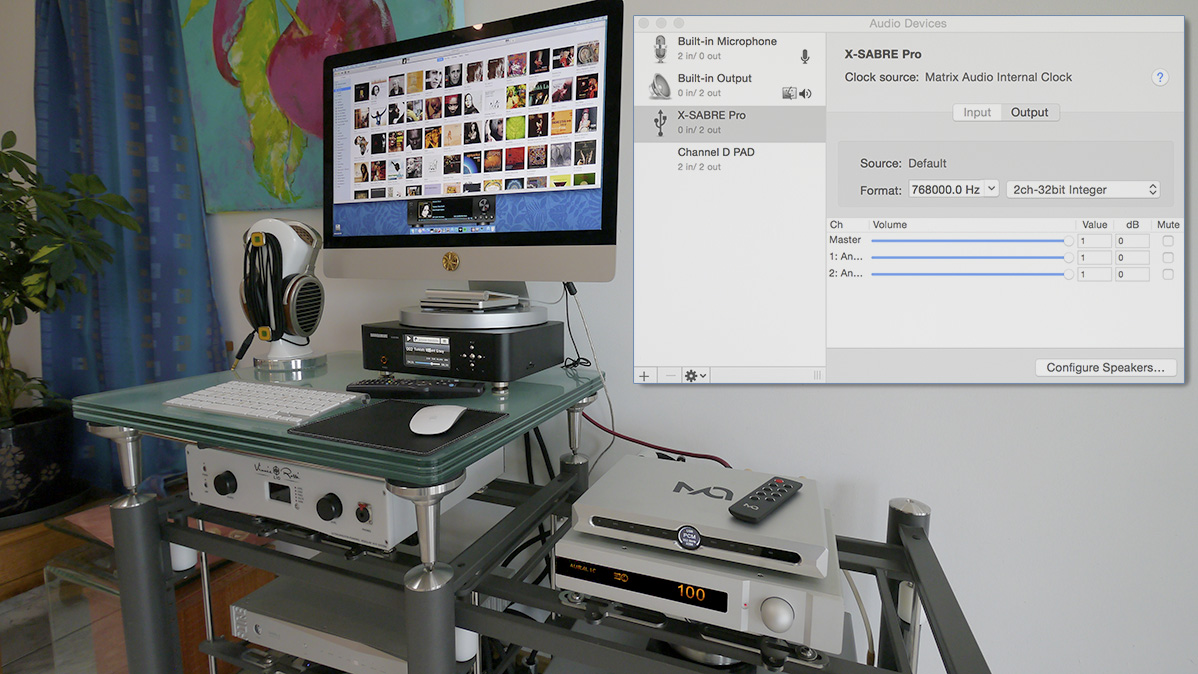
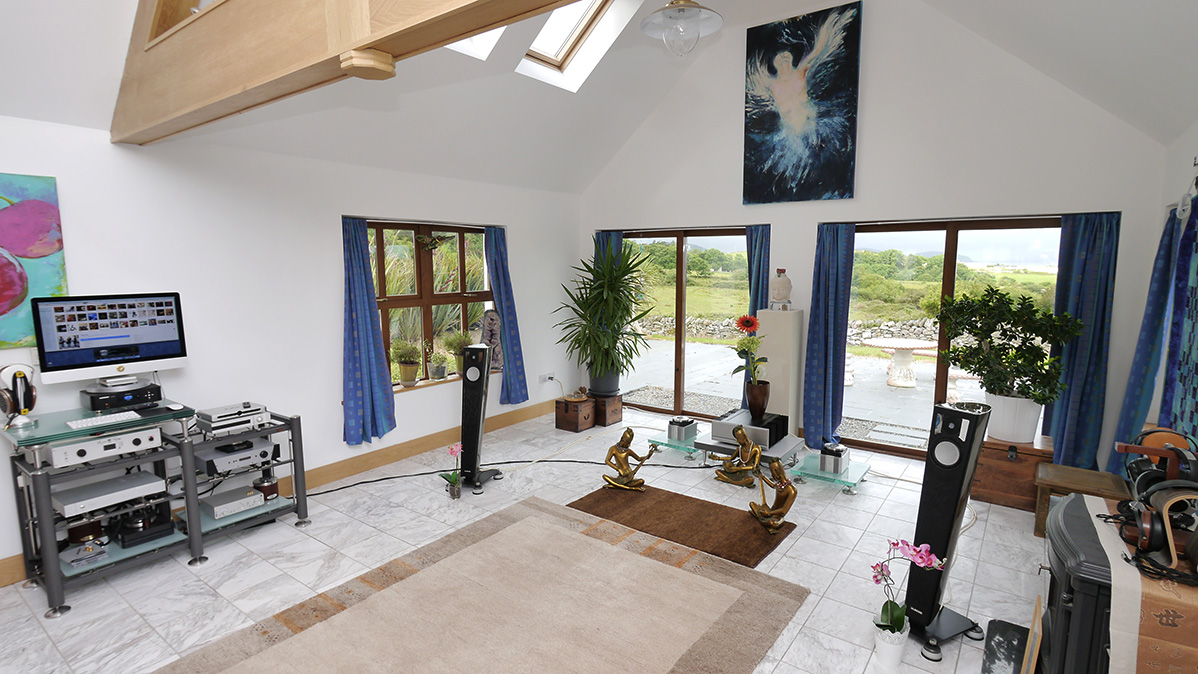
Did I already say that X was small but beautiful? Okay, moving on. For reasons unknown, it and our usual double-header red KingRex USB cable weren't compadre. I had sound but garbled as though behind water. Swapping in the included USB cable with woven silver shield and ferrite clamp cured that. In PCfi, one learns to take such mysteries in stride. Elite's Mark Cargill confirmed that in their shoppe, they'd had similar weirdnesses with some earlier AudioQuest USB cables. To not review in limbo, I set up AURALiC's original Vega. Selling for $3'300 at the time, it runs an older Sabre chip with custom digital filters; and a class A output buffer modeled on the famous Neve recording console. Cosmetically, my eyes felt that the half-priced Matrix ate the Vega's lunch. Segueing into sonics, either connected balanced to the Wyred4Sound STP-SE Stage II fully balanced preamp to bypass the lossy on-chip digital attenuator. From there the signal moved via XLR to our new Linnenberg Allegro monos. Those drove our usual Albedo Audio Aptica speakers suspended atop Hifistay's gyro-tension footers. Digital transport duties fell to either a Soundaware SD card reader via AES/EBU; or our music iMac via USB and the most current versions of PureMusic or Audirvana handling signal routing.
|
 |
In certain light-deprived cul-de-sacs of audiophile 'knowledge', Sabre chips sound bright, steely and thin. If converter chips made any sound of their own, such statements could, perhaps, be made. But since they categorically do not—they at least need a power supply, I/V and output stage—other variables redress whatever their own balance might be. More open-eared listeners have long since grasped that Sabre-toothed DACs from various vendors do not sound alike. Often the margin of difference is unexpected. Still, this belief that chip identification predicts sonics is so deeply engrained that many makers no longer publish whether their silicon sand comes from the Sahara, a Baja beach or the Mongolian desert - well, AKM, ESS, TI, Wolfson & Bros. Being sabre'd, the Matrix will have its work cut out in those dark judgmental alleys. Most of course will approach it without any preconceived ideas. As a very well-regarded deck, the Vega almost universally had reviewers agree on its nearly Technicolour tonal intensity; very much contrary to biased notions. Though recently superceded by the Vega G2, the original's popularity and widespread coverage still made it a very good reference for the upstarting Matrix challenger. Plus, it was the only competitor in-house not priced from 4 to 10 times higher.
|
|
|
|
|
On sound, the Vega played aural elder as its higher sticker should have. The Matrix was more matte and muted. This meant lesser shorter ambiance. To visualize the difference, see two identical marble sculptures. Their pedestals sit in water. The lighting is such that the water barely factors. Now imagine that on one sculpture, some slightly coloured oil begins to seep down to disperse into the water behind and around it. Suddenly the oily coloured traces on its surface make the water visible. That's ambiance. Translated into three dimensions to not just float on the water but light up the whole area behind the sculpture, they illustrate how sonic ambiance spreads out behind/around recorded musicians. This atmospheric cloud becomes audible space. It's slightly more than a completely silent empty nothing we'd not hear. It's very fine reflections; miniature echoes or acoustic/artificial reverb. Those place the main sounds into spatial context; and create subtle haloes around individual tones.
|
 |
With its slightly dimmer treble, the Matrix's "colour traces on the water" weren't as visible and didn't travel as far. The same milder overtone content also reduced the Vega's tonal gloss. In the low end, the Vega exhibited slightly more weight and mass, possibly reflecting a more substantial output stage. On the flip side, what by contrast were slightly softer frequency extremes for the X meant that subjectively, its midband felt just a tad richer and warmer. Reduced ambient recovery also made the overall feel slightly more distant because inherent energy was a bit dulled. If this reads quite different to how I described the Resonessence Veritas which introduced the 9038 Pro to the world at large... indeed. Implementation trumps parts identity. This includes older vs. newer chip given how the presumably technically inferior 9018 of the Vega actually acted more lit up and energetic. Papa Shakespeare keeps reminding Hifi Horatio of that famous Hamlet line and the things our science dreams of between heaven and earth. In audio, little need be as it seems though being exactly as it seems happens just as often. In this instance, the X Sabre refuses to slot in line with popular expectations. It proved to be a gentler mellower beast, an ideal mate perhaps for those cost-effective class D amps in its price class which veer into the opposite.
|
 |
|

|

|
|
