|
|
|
The Lumin M1 of course is a rather different proposition. If you buy one, what you'll hold in your hands is a fully integrated product including one of the best network player available; plus higher build quality than generic Chinese imports, with decent posts for audiophile cables properly spaced, hence no risk of shorts which was distinctly not the case for the cheap boxes. Perceived build quality with the Lumin is a lot higher and finally their very sophisticated control app makes all the difference.
|
 |
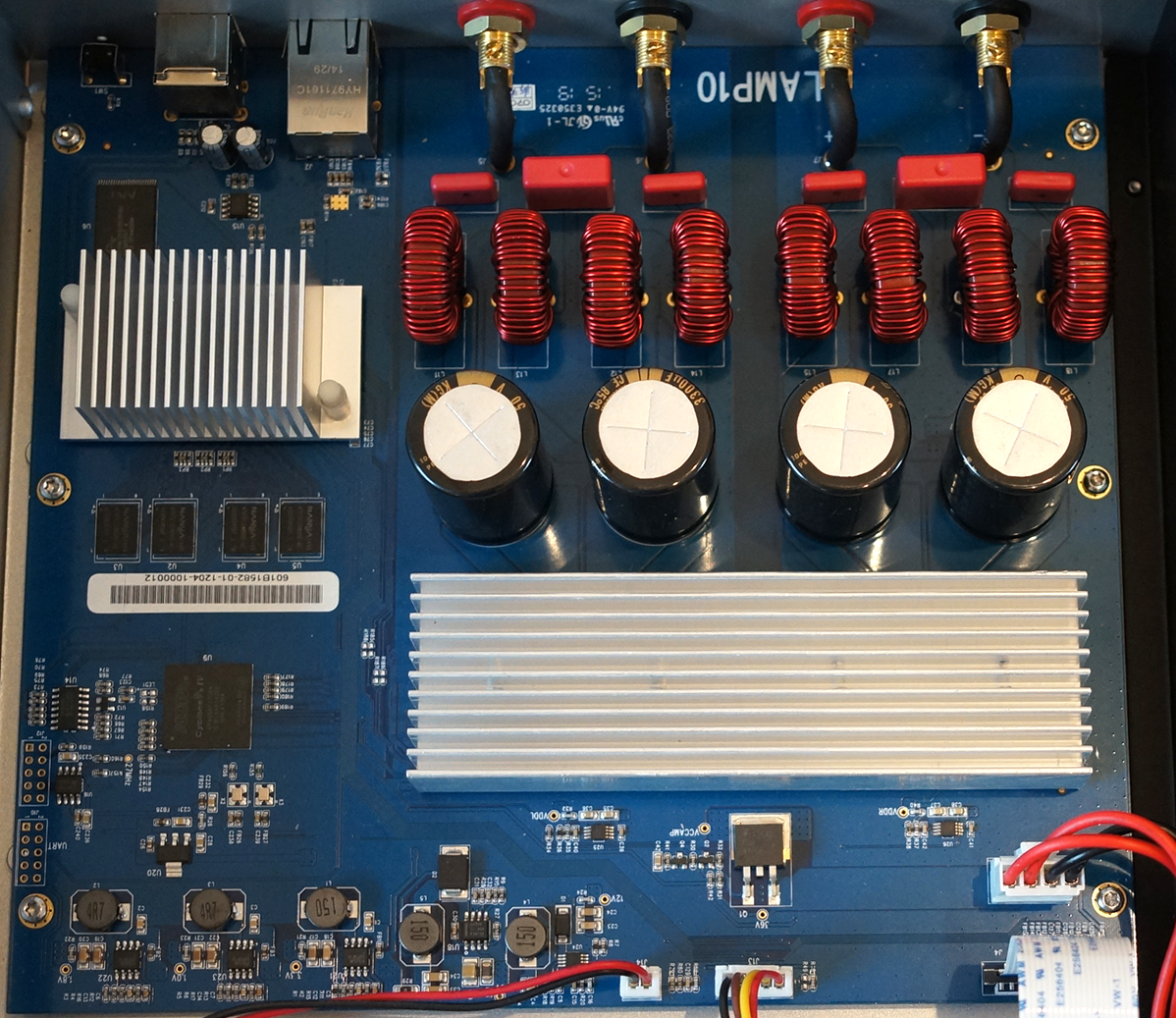
By contrast to their flagship units, all signal-path circuitry inside the M1 is concentrated on one motherboard. The power supply stands aloof beneath its fully shielded sub box to avoid EMI/RFI but it occupies the same chassis. Concerning specifications and measurements, Pixel Magic communicate nothing much in particular. One must canvas the Texas Instruments website to learn of theoretical dynamic range for their PWM processor chip as better than 105dB, with THD+N of <0.1% (0–40kHz). For gain processing, TI show 0.025 % THD at 1W into 4Ω, S/NR better than 105dB, 90% efficiency at full output and max power of 150 watts into 4Ω stereo. Lumin limit that to 100 watts to avoid 10% distortion at 150W and 1% at 125W. In short, they operate the TI chip set in its comfort range.
|
 |
|
|
|
|
Sound. Here the M1's sonic fingerprint differed as well from the low-cost Chinese digital amps. Those tended to deliver a very detailed sound with a kind of brightness that could cause listener fatigue. Of course it's always possible to modify one's setup to reduce digital brightness by playing with cables. But my impression each time was of a lack of harmonic development and a typical harshness which limited long-term listening pleasure despite very impressive transparency. By contrast, the M1 had far better tonal balance and even more detail due to its lower noise and complete source integration. Indeed there was more of an analogue sound, closer to a good turntable than SACD player. Whilst I wouldn't describe the result as particularly warm or earthy, I had the impression that high-frequency noise filtering was far more effective than it had been with other digital amplifiers I sampled. In terms of power efficiency and vividness, the results were frankly astounding. The M1 drove my Giya with extreme ease even when compared to many more powerful amplifiers which I'd previously used. It provided a very open soundstage with robust bass, demonstrating how 60 efficient watts from a well-designed power supply were enough even for big full-range loudspeakers of reasonable efficiency and with a friendly impedance curve. With more demanding speakers featuring impedance drops below 4Ω or 3Ω, the M1 will meet its limits. Hence Pixel Magic recommend speakers with at best a 4Ω nominal impedance.
|
 |
Reviewing small surprising gear is often a difficult exercise as it requires the right balance and terms to describe the qualities of such devices. As impressive as the Lumin M1 was for example, I would not sell off my Luxman M800/Coincident/Lumin S1 combo. My reference system still provides more density, tighter bass, better treble extension, higher PRaT and a slightly wider soundstage. But, I must admit that the M1 scored perhaps 90% of each and every criterion. We all know how the devil is in the details and that 10% difference is significant. But what the Lumin M1 nets for the price is simply outstanding. It's the only all-in one device I know of that is able to compete with a high-end chain for a fraction of its cost. When ecology and energy savings are an issue, this small fully digital amplifier from Hong Kong is the best compromise of sound quality, user friendliness and energy efficiency.
|
|
On Rodrigo and Gabriela's Live in Japan, the M1 demonstrated very good dynamics and effortless speed. Low frequency impacts were reproduced with accuracy. There was not as much weight on individual notes nor as impressively dark a background as with my personal system but the ability of the digital amplifier to deliver tight bass was nevertheless impressive. Considering how the two lateral woofers of my G1 are not particularly friendly to many amplifiers and normally need a good amount of raw power, the ease and control demonstrated by the M1 were clearly unusual.
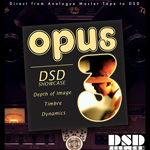
I dislike too much treble emphasis especially on guitar recordings. I am rather sensitive to tonal string accuracy and here the little Lumin M1 achieved solid performance. The sole weak point compared to my Luxman combo really was a lack of harmonics to sound a bit dry and less deep. But at the same time the Lumin avoided the typical digital glare which to my ears sounds so unrealistic. On the Opus 3 Swedish record company's DSD sampler album DSD Showcase 1, "Black Beauty" featuring the Thomas Örnberg Blue Five and Swedish Jazz Kings has been a good way to compare pure DSD through my usual playback chain against DoP through the Lumin M1 in DSD64 and 128 flavours. |
|
|
|
 |
|

|

|
|