|
|
|
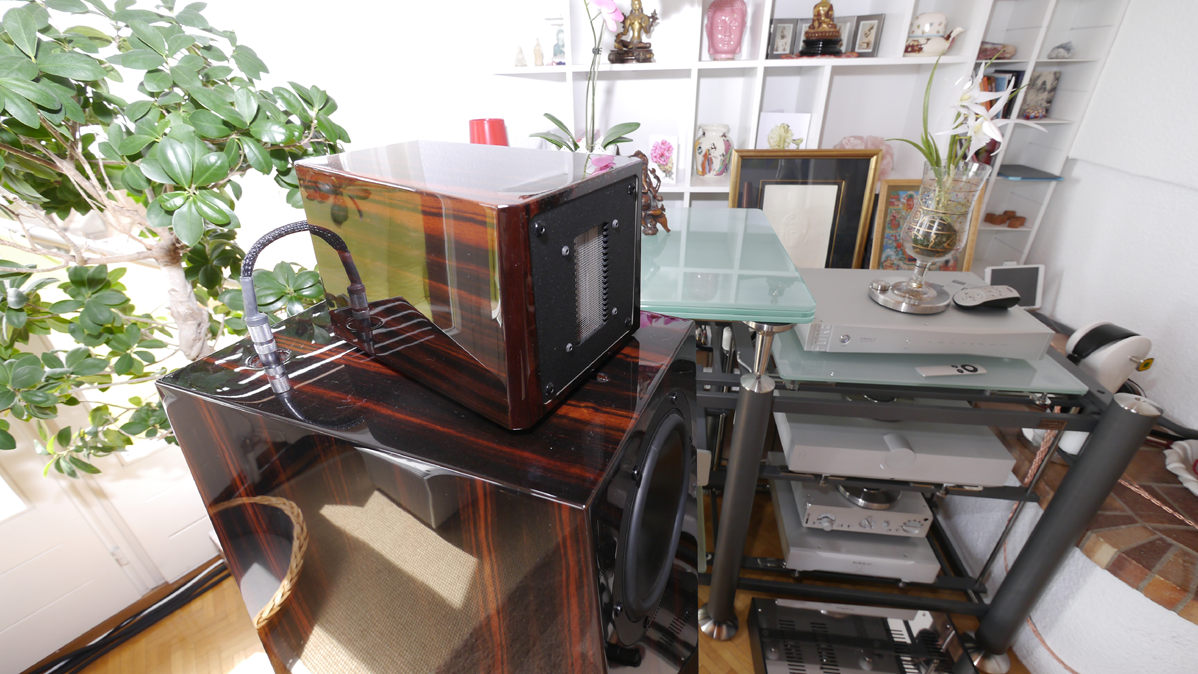
Before this begins to reek of propaganda, swap the Pass Labs XA30.8 in to learn how radiation-sourced warmth plus warmish very buxom class A circuitry can conspire for perhaps too much of a good thing. And before that statement sets itself into stone, move our resident Albedo Audio ceramic-driver Aptica into position. You'd notice how that again favours the Pass if one pursued a very similar sound. As much as one might like to, drat, there isn't a one-size-fits-all recipe. To arrive at the most honest and practical statement in this context as based on having now reviewed two of their three models, I'd call Kaiser's sonic aesthetic the ideal playground for 'turbo-charged' amps. It's the very fast super lucid type which on typically lean bright speakers wouldn't be satisfactory and too anorexic. I thought that the XA30.8's undeniable bass prowess coupled to the Classic's prodigious LF power and quite possibly my lowered tuning from the Spanish footers made the combo too dark. I also thought that the truly terrific ribbon tweeter had the most refinement and gossamer decay trails when fronted by the cooler very lit-up class A/B Swiss cubes.
This tracked with our preference for running our upstairs German Physiks HRS-120 omnis Oppo 105-direct off Crayon's CFA-1.2 sans preamp.
It likewise mirrored why my desktop Boenicke W5se work very well with leaner class D amps like the Helios modules of Lindemann's music:book models. What all of these speakers have in common are radiation patterns which diverge from classic front-firing arrays. They play the room more than most. This favours fast lit-up electronics.
|
 |
|
 |
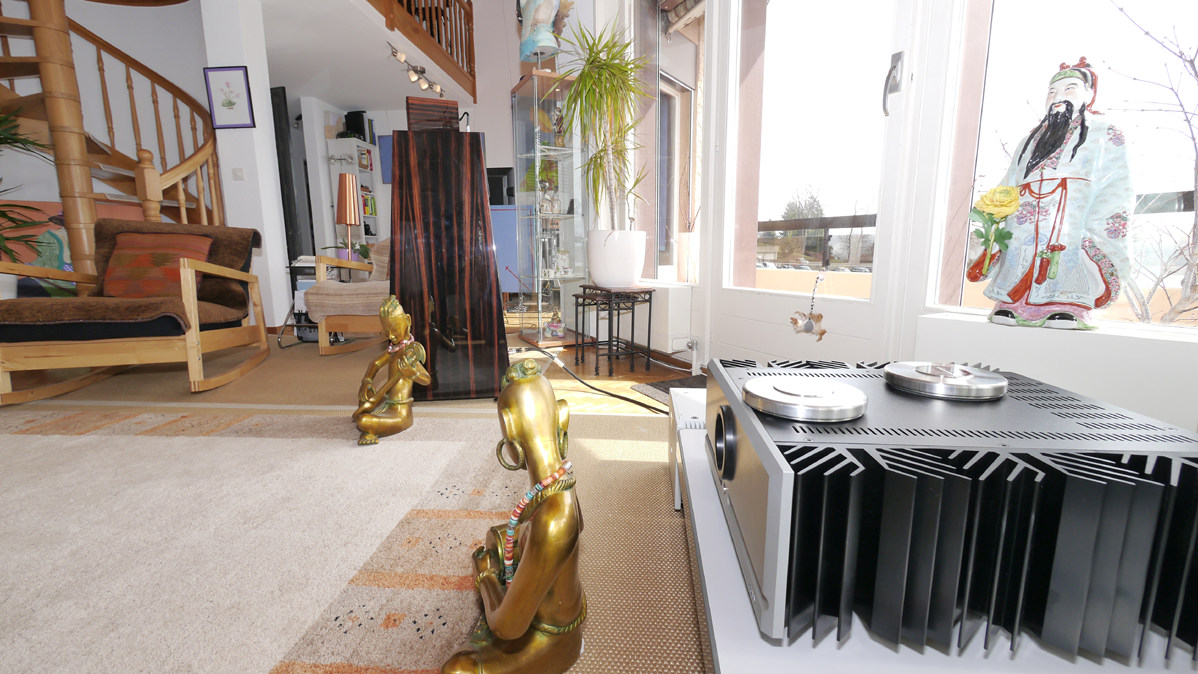
In a room of our size; and with a listening bias which considers 70dB median SPL plenty loud, with an extra 10dB for peaks... did the Classic's wildly more grown-up sticker justify itself over the Chiara? Given aural memory and the absence of a direct A/B, possibly on two counts, certainly on one. This particular Raal ribbon and its transformer are superior to the Mundorf AMT and even the Raal in our soundkaos Wave 40. That's the certainty part. It's a rather astonishing quality to get from a speaker which otherwise plays it this meaty. Having two low woofers rather than only one—the 12er in our downfiring Zu Submission subwoofer to ready the small monitor speaker for true competitiveness—meant that certain fare had more robust LF. However, this really wasn't a function of reach or amplitude but in-room presence. Given that it wasn't a constant advantage and even then not that significant, I will call this the possible bit. Of course once money enters the equation, you already know what I'll say: that the Chiara (plus a subwoofer for bigger rooms) gives you very comparable sound for a lot less. This reiterates my belief that Rainer Weber made the Chiara rather too good for the raw sake of business. Audiophile belief simply doesn't (believe it) to matter naught. But it also explains why, in an interview elsewhere, Rainer singled out the Chiara as the model he's most proud of. In certain ways, it really does 'impossible' things for a compact monitor.
|
|
|
| |
I won't have to add that it took three grown men and plenty of groans to manoeuvre the flight-case delivered Classics up our three outdoor flights whilst I can handle a Chiara all by myself. |
|
|
|
|
|
Summary summation. The segment of not outrageously sized if still outrageously dear tower speakers is flush with contenders. Conceptually closest to the Classic perhaps are the smaller Canadian Verity Audio three-ways. In this class of literal heavyweights which play musical counterpoint to the 'singing cabinet' cadre of Harbeth, Spendor & Co, Magico and YG Acoustics promote aluminium, Crystal Cable do glass, Wilson push ultra-dense composites. With Panzerholz, Kaiser Acoustics are the solitary voice. Even LessLoss discontinued their tankwood-encased FireWall conditioner because raw build cost meant a no longer workable sell price when the usual multipliers were applied. Twenty times the cost of raw MDF does add up well before machine-shop curses and dealer/distributor margins. Purely by weight, the Classic is stuffed to the gills with this stuff.
As syndicated German contributor Ralph Werner put it in a recent review, "it'd be far too easy to tag a speaker like Blumenhofer's Genuin FS1 M2 as an eccentric: high efficiency + horn + monster woofer = madness. No doubt, it's a bit insane, starting with even considering a speaker in this price class. That alone speaks to an obsession with music and sound, wouldn't you say? And it's true. All of it. Yet the Blumenhofer isn't some narrow individualist aka extremist. It's a bona fide does-everything of the highest calibre. Then it throws in an extra dose of speed, timing, dynamics and resolution as bits which are probably available at this level only from exactly such efforts. Whether that's to everyone's taste is irrelevant. I'll simply say that once exposed and used to, it's tough to do with less."
|
 |
For full-on balls-out extremism, there is this option of an all silver Duelund crossover in an outboard Tankwood support.
|
| With a bit of rewriting, that paragraph dovetails nicely with the twice-priced Classic. Tankwood for armoured cars? That's insane when others drive MDF. Insane too are Duelund crossover parts, verkackte labyrinths and such exotic drivers. Starting at €54'208/pr is the mad king's ransom. Except that here it's easy to track where the money went. It's not marketing or the cachet of a mystical brand name. It's not inflated margins to curry favours with distributors catering to the nouveau riche in Asia. It's right there in the parts and uncompromising build. Where the extra dose beyond a do-it-all goes, here it's a full-fat sound based on a high-protein meatarian diet. This diet simply doesn't rely on anything outside the speaker. It's primarily a function of radiation pattern; and secondarily, I guess, cellulose-based drivers as good as they get plus small most strategic response tweaks. If you favour a firmly full-bodied sound but don't believe in seasoning with electronics—in short, your electronics are ultra-low distortion, ultra-low noise, super-wide bandwidth and direct-coupled—the Kawero Classic delivers as is. This opens the doors to elite gear like Bel Canto's Black system which Joël Chevassus on staff recently described as the ultimate in transparency.
|
 |
The decisive difference of such an approach is that it doesn't 'flavour' until the signal is no longer on the path of the electrical signal. It's already out of the tin can and deep inside the wild blue yonder of the room. Now it's about how our liberated signal transforms in this encounter with a three-dimensional acoustically reactive environment. That becomes the co-creative interaction which Rainer Weber exploits with great cunning. Because he doesn't really do anything to the signal 'as' the signal, nothing is lost in his trademark warmth. All the details are there and teased out most finely. It's simply not skeletal, sterile or bereft of tonal oomph. That this tactic doesn't require augmentation from the preceding electronics says perhaps more about competing speakers should those sound comparatively anaemic on truly neutral maximally resolving gear. Whatever your final perspective on this might be, in the very best of modern FaceBook tradition, the Kaiser Acoustics Kawero Classic friends top resolution and realistic warmth to an unusually high degree!
|
|
 |
|
|
|
|

|
|