|
|
|
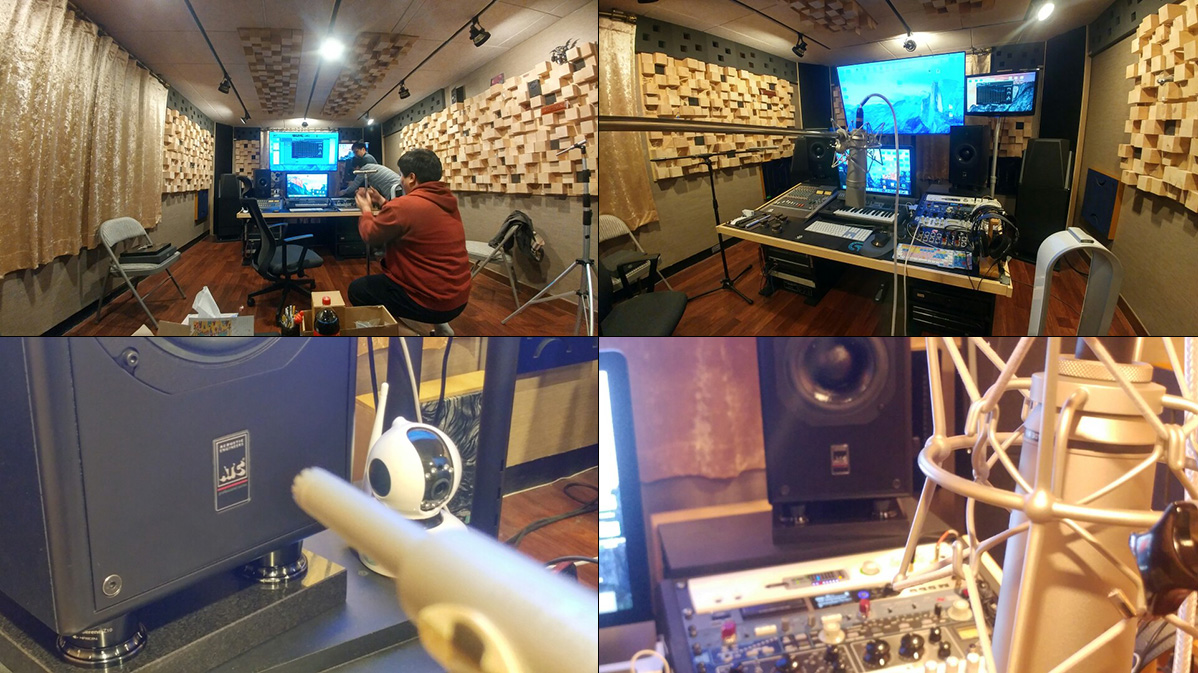
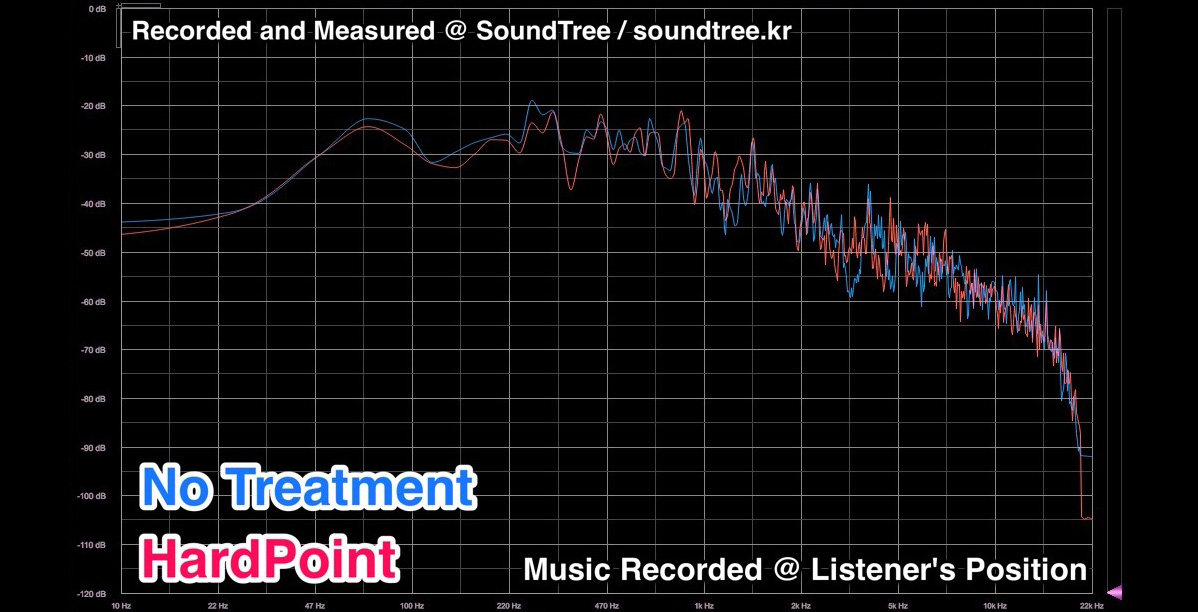
To prove the measurable difference they make, inventor Naiwon Pyun supplied results from a test conducted in this recording studio.
|
 |
His graph shows a difference. I'm simply uncertain how many would call it an unequivocal improvement. Depending on frequency, the performance is actually worse. Between 2kHz and 22kHz, the red and blue lines keep flipping. Anyone expecting a profound linear reduction will be disillusioned. Without exception, everyone will wonder how this graph translates at the ear. That's the problem with many a measurement. It clearly shows something but understanding what it signifies is a very different thing. Still, kudos to Mr. Pyun for attempting to qualify the action of his devices with hard measurements. Very few companies in this sector publish any; if they even take them to begin with.
|
 |
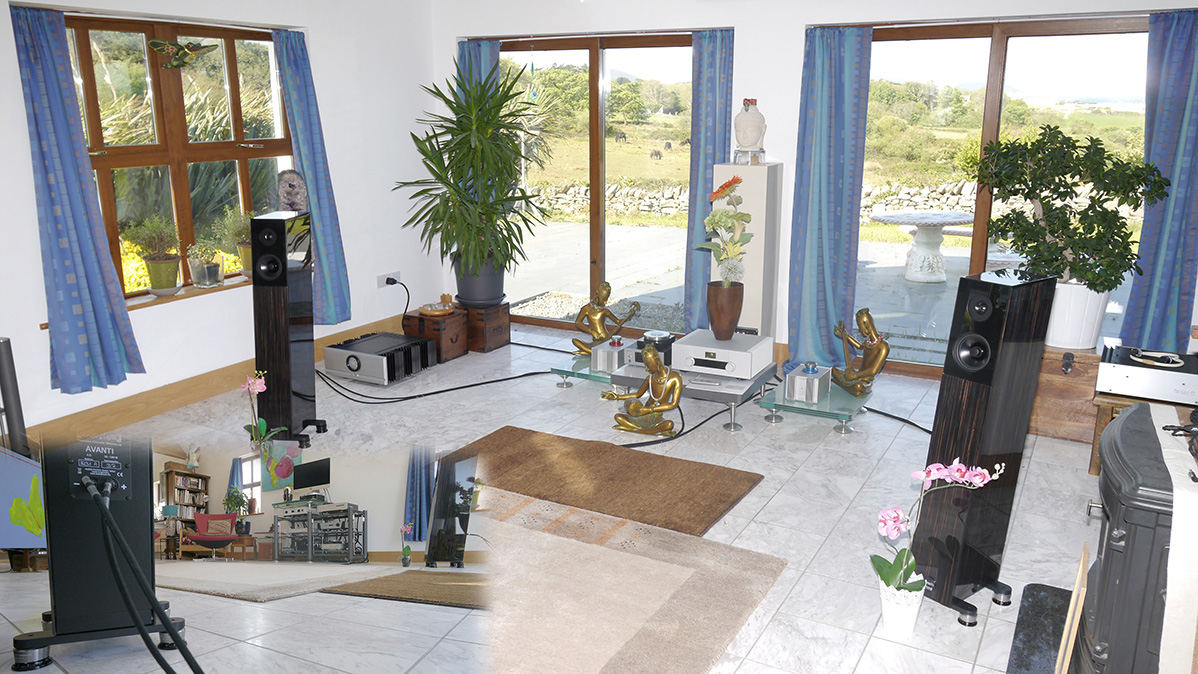
Beneath Audio Physic Avanti speakers which they fit to a 't', the effects were less uncertain. At 29kg, these boxes didn't exceed the weight rating even in glass-panel trim. Once set up, they behaved as though dangling from Boenicke's SwingBase except for settling quicker when bumped. Obviously Hifistay have models dedicated to receiving speaker spikes. In my trials, I simply used the HardPoints in lieu of spikes underneath the Avanti's outriggers. With our customary Albedo Audio Aptica which also run metal plinths with spikes, I use Hifistay's gyrotension Vega footers whose top-plate dimples seat their spikes. With that speaker's asymmetrical weight distribution—heavier in the back—I must adjust the number of rubber-band loops to arrive at proper tensile support. As the Gyros do, the set'n'forget HardPoints bested the spike-to-floor alternative by honing up bass articulation and due to it, midband lucidity. It's a bottom-up cleaning effect.
|
 |
|
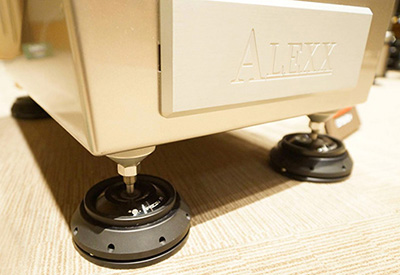
The Avanti corpus hides a long-throw 8" woofer in its own miniature box which exits through a slot behind the front baffle. As such, this speaker's metal braces are actively energized. It's easy to notice vibrating metal whilst touching it during play. That gave the HardPoints something to work with. Audio Physic themselves sell a magnetic footer upgrade for exactly this purpose. Decoupling speakers from the floor works better than spiking. Hifistay know this well enough. At right we see heavy Wilson Audo Alexx speakers on their biggest isolators. A video on the site shows how easily the entire assembly shudders gently when the speaker is pushed by hand.
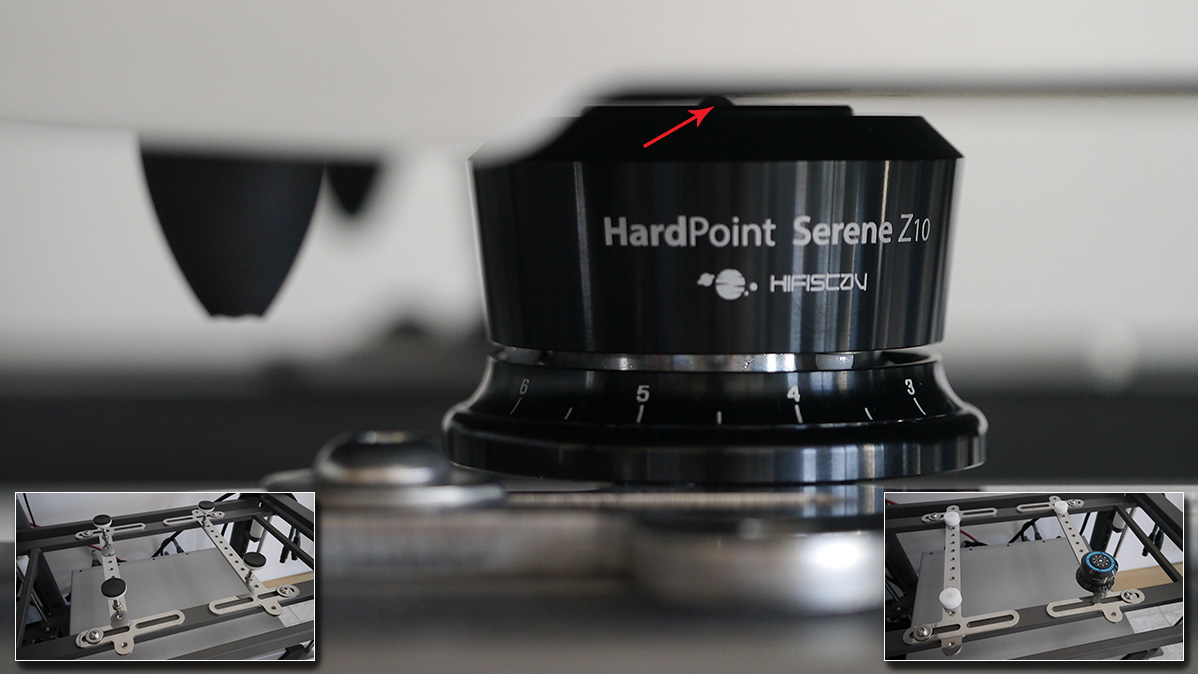
Whilst inarguably playing on the far side of ROI and deep in the dark forest—a set of eight is $3'840!—if your piggy bank needs crashing to chase a few percentage points with your otherwise finalized system, the HardPoints stand at attention. Having satisfied myself that they were mechanically very sound and worked just as such devices should, I abandoned this employ. I proceeded to what I feared would be chasing unicorns: adding them to our Artesania Audio rack whose entire inner skeleton suspends from the outer frame. Then it uses Neoprene washers, minimum-contact interface needles and spikes for a multi-stage anti-resonance address that's very heavy and properly engineered. I frankly didn't think that my audiophile neurosis and hearing abilities were up to stacking a few more tiers atop it and hearing that tale. And I couldn't do endless quick A/B since it involved unbolting interface bits. |
|
|
|
|
|
|
Once installed, the Aqua Formula DAC and Wyred4Sound STP-SE Stage II had proper Red Bull jitters. Unlike with Artesania's footers, they now also slid around quite easily on the four ball bearings finishing off the HardPoints. After redressing cables, I had to square off these lighter components. They'd gone sideways during the operation. As to sonic benefits, I thought that perhaps the HardPoint-kitted version was a tad less bloomy, hence marginally more sorted. Mostly I felt lost in my dark forest of ignorance. Where I could tell clear sonic benefits on the floor, in the rack I was less certain. Apologies to Hifistay who will have hoped for a more decisive result.
|
 |
With Artesania providing their own chassis dampers which I use atop Verictum EMI traps, I removed those on my Dharma run. Same difference; none. Truth told, the same goes for the Artesania discs. I use them only because they came with the rack. They wouldn't do as drink casters. The Verictum stuff has a different effect as described in its review. But with the Dharma I had no karma. Or perhaps I had no component chassis live enough to benefit? No rack position between speakers where it's in a high-pressure zone? I marvel at the hearing acuity of folks who start out with gear of Vitus calibre, then spot the effects of not only a Dharma but where exactly on the chassis to put it. Frankly, I don't pay membership dues to their elite club.
|
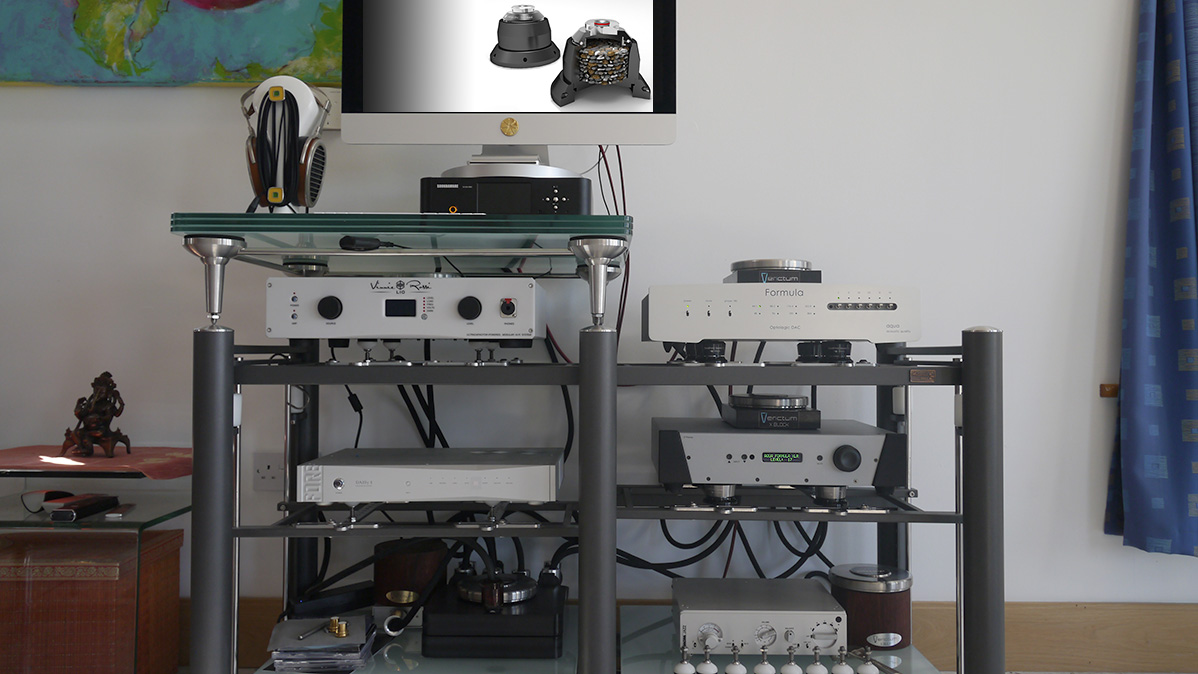 |
That said, I am very much sold on the efficacy of speaker decoupling/flotation/isolation. The bigger the room to want higher output; the more bass extended the speakers; the more this benefit accrues. Whilst not the intended application—Hifistay have models based on the same tech but adapted to the weight ratings and spikes of loudspeakers heavier than what I used—the gorgeously made HardPoint still worked in this app; period. As such, I'm certain they'd do exactly the same for components not already beneficiaries of as advanced an equipment rack as our Artesania Exoteryc. In hindsight, I probably should have refused the very insistent butifull01; or asked for Hifistay's dedicated speaker decouplers shown in the iMac insert. Sometimes being amenable and accommodating has unintended consequences. But there's no doubt whatsoever that Naiwon Pyun's Hifistay product is well engineered and superbly crafted. That it's also overkill in the wrong context wouldn't be a first for high-end audio, would it?
|
|
 |
|

|
|
|

|
|