|
|
|
|
|
|
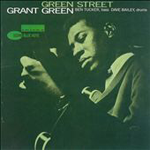
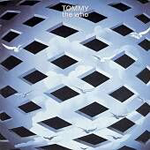
Micro detail helps to increase a sense of ambience. If it does so without being too hot on top, you’ve got a winner. I noticed right away that there was more air in SACDs. Dave Bailey’s cymbals on Grant Green’s Green Street, a gem in the treasure trove that is Analogue Productions, seemed larger and more textured. The clock bells on Pink Floyd’s "Time" from Dark Side of the Moon were eerily present. Cello and viola de gamba timbres became possibly the most woody and realistic I’ve heard in my listening room. Nylon strings on guitars were immediately recognizable. In general acoustic guitars seemed more lit up and they glowed without grating. I found this to be a key difference between the darker Compact 7 and the more revealing Super HL5 Plus. I had the same reaction to The Who’s Tommy, a concept album or rock opera whose lyrics seem sillier and more juvenile with each passing year but whose musical brilliance will steel it against the ravages of time and middle-aged critics. The great John Entwistle’s bass playing was the anchor to this album. Consider the pulsing beat on "I’m Free" or "Sparks". But the key change I noticed with the Super was how Pete Townshend’s acoustic guitar gained some weight and became more vivid and present than through the Compact 7. |
|
|
|
|
|
|
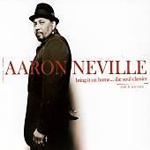
I didn’t hear much difference in vocals with Tommy or other discs; the Compact 7 seemed just as able. Grain, sibilance and shout are the things we can do without. You won’t get a trace of them with either. You’ll get all the eerily realistic presence you get from a fine single driver like the Unity Audio Inner Soul I had on review at the same time but without a touch of etch. On the contrary, you’ll get intoxicatingly smooth and lush vocals. If Aaron Neville had not done that horrible duet with Linda Ronstadt during my high school years, I might have become a Neville completist a long time ago. As it happens, I have only just forgiven him for that monstrously syrupy sell-out and am starting to search out his old recordings on vinyl. Neville’s oeuvre is so rich, how could he have done that! Neville’s 2006 Bring it on Home: The Soul Classics is to me something of a classic,as he takes over the deed and full ownership of old chestnuts like "Rainy Night in Georgia", "Ain’t No Sunshine" and "Stand By Me". Neville’s remarkable range--is it possible to go from falsetto to baritone in the same breath?-- was also a showcase for this brilliant loudspeaker. Neville was in the room.
|
|
|
|
Perhaps, compared to the Compact 7, the Super HL5 Plus is better at revealing layers of vocal tracks. The two voice tracks on Agnes Obel’s haunting "The Curse" were more readily discernable. The SHL5 Plus certainly did a better job of delineating instruments and unearthing the various layers of the soundstage with complex music. And it was generally a faster sounding speaker. Stanley Clarke played with a fierce urgency on the title track of Return to Forever. The Super HL5 Plus had no trouble keeping pace. On "Crystal Silence", Clarke’s bass was firm and solid while Chick Corea’s Fender Rhodes seemed to melt into air. The contrast is striking. You want Fender Rhodes syrup served up slow with shimmery shine and tremolo? You got it. Before you can melt into your chaise lounge, how about a manic fret-walk with Stanley Clarke? A serving of deep dry articulated piercing bass on the one hand versus buttery smoothness on the other, all served up in a seamless feast. |
|
|
|
|
|
|
Corea’s Rhodes was so delicious, I had to have seconds. Out came Marc Cary. Don’t ever tell Cary that the Rhodes is an electric instrument! He’ll go on a long disquisition on its true physical nature versus the artifice of a standard electric piano. Cary’s Rhodes Ahead, Vol. 2 is a modern masterpiece by today’s maestro of the Rhodes, with considerable backup from the brilliant Tarus Mateen on electric bass, Sameer Gupta on tabla and half a dozen others on violin, guitar, trumpet and djembe. With the Super HL5 Plus, the slurred legato of Cary’s Rhodes had the effect of melting notes before me. Even as the Rhodes was blaring away along with electric bass and electric guitar, several acoustic instruments didn’t get drowned out in the mix. I’ve heard this disc collapse inward on itself through much pricier loudspeakers but not once in my sessions with the Super did I hear compression or congestion with complicated music like Rhodes Ahead, Vol. 2.
|
Esa-Pekka Salonen the man is humble, short and wafer thin but the conductor coaxes a brash and towering performance from the Los Angeles Philharmonic. Mussorgsky’s Night on Bald Mountain was full of concert hall ambience. Tympani shook my walls. Strings floated effortlessly with a burnished glow. Stravinsky’s The Rite of Spring (1947 version) is a good test of a speaker’s grunt factor, a surefire way to separate the men from the boys. I cannot see how this speaker would fail to fill any regular-sized living room. With the volume to the max, the soundstage was Magnepan-like but tonally denser and fuller. The speakers disappeared. The string section swirled like an ambulance siren at the opening of Bartók’s The Miraculous Mandarin. Horns grunted in primeval fashion. The scale of the music is staggering and the Super HL5 Plus was equal to the task. I felt like David Letterman velcro’ed to the wall.
|
|
|
|
 |
|
|
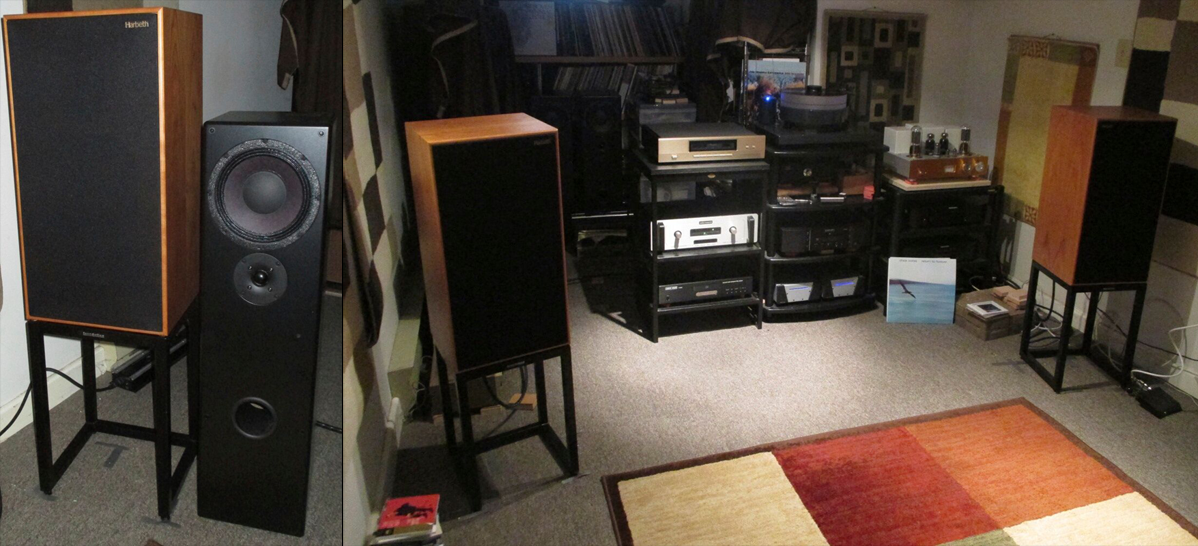
The Harbeth sound is ravishing with rich true timbres and exquisitely long decays. If you play the piano or guitar, consider auditioning this speaker. I wonder if the thin-wall design with real wood veneers serves as a sort of tone board or soundboard. The fullness of Emma Johnson’s clarinet was staggering, with lifelike images in my small/medium room. Very few loudspeakers will sound as good as the $6’800 Harbeth in a 16 by 24 foot (5 by 7.5 meter) room or smaller. Those dimensions describe a typical North American hotel room at an audio show; and a typical living room as well. Harbeth have spent decades tuning their speakers to rooms just like this. Steadfast and true to their philosophy, Harbeth have resisted the temptation to deviate into the audio jewelry business. According to some critics, the hyper-complicated devices offered by the audio and time-piece industries represent solutions in search of problems. A growing church adheres to the less is more approach: nothing against your 6-way orgy of drivers but we’re happy with a good old two-way or even going it alone with a single driver, sometimes with a subwoofer allowed to participate from behind the curtains. A minimalist movement is emerging also in the watch industry. The world’s most accurate moon-phase complication on a wristwatch comes courtesy of Lucerne-based Ochs und Junior. Their complication requires just five pieces and will in theory be accurate for over 3’400 years. The price is very similar to the Harbeth Super HL5 Plus.
|
|
For those of us who live in average sized homes with average-sized listening rooms, the Harbeth takes us close to the best money can buy in the monitor category. There is no such thing as a perfect speaker, only good matches for one’s room and tastes. With the Super HL5 Plus, we have a loudspeaker that will please most people most of the time. It commits no sins. The Super HL5 Plus isn’t the very best at this or at that but, within the limitations of a modestly sized box, is very close to the best in every category and with no obvious fault, rises to the very top. The Super HL5 Plus is understated, standing in the anti-bling camp. Here is one of the most tonally accurate cohesive loudspeakers I have heard. It’s seamless from top to bottom. It costs $6’800. Mortgaged over 25 years, that’s a small price to pay for a timeless classic and a lifetime of enjoyment.
|
|
 |
|

|
|
|

|
|