|
|
|
|
|
Thierry's Anita Live! album betrayed no breakup but on low bass content, I mostly heard first harmonic, not fundamental. A Mercan Dede cut on Cheb I Sabbah's twofer benefit album Samaya (at its release, he'd been diagnosed with stage 4 stomach cancer and no health insurance) confirmed what the tubes left unsaid. Substituting the Clones Audio settled the difference conclusively. Once you reference proper transistor bass even via a modest chippie of an (op)amp, the Block's version becomes compromised for much modern music. |
|
What I urgently needed was a speaker that wasn't designed for the damping factors most modern specimens presuppose as being on tap. Enter the Voxativ. For now flip the page to specialty cables. In Samuel Furon's Ocellia solid-core silver wires enclosed in two grades of fine quartz crystal powder then sleeved inside kautschuk tubes, I had something that didn't get fully along with my transistors and mainstream speakers. The soundkaos eggs meanwhile adored the Ocellia leashes (of which I only had a complete power cord loom plus speaker cables because his custom RCAs weren't ready yet). Knowing Samuel's penchant for valve amps, it was perhaps little surprise to learn that with the Block amp in the driver's seat, even my Aptica speakers embraced his cables without bickering. |
|
|
| |
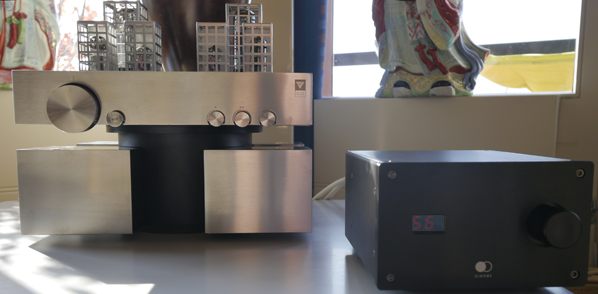
The HongKongian's 56 on the dial (it goes to 64) shows the padded voltage gain of the Block by contrast whose control (12:00 = mute) sat at 5:00 for equivalent SPL. |
|
|
|
|
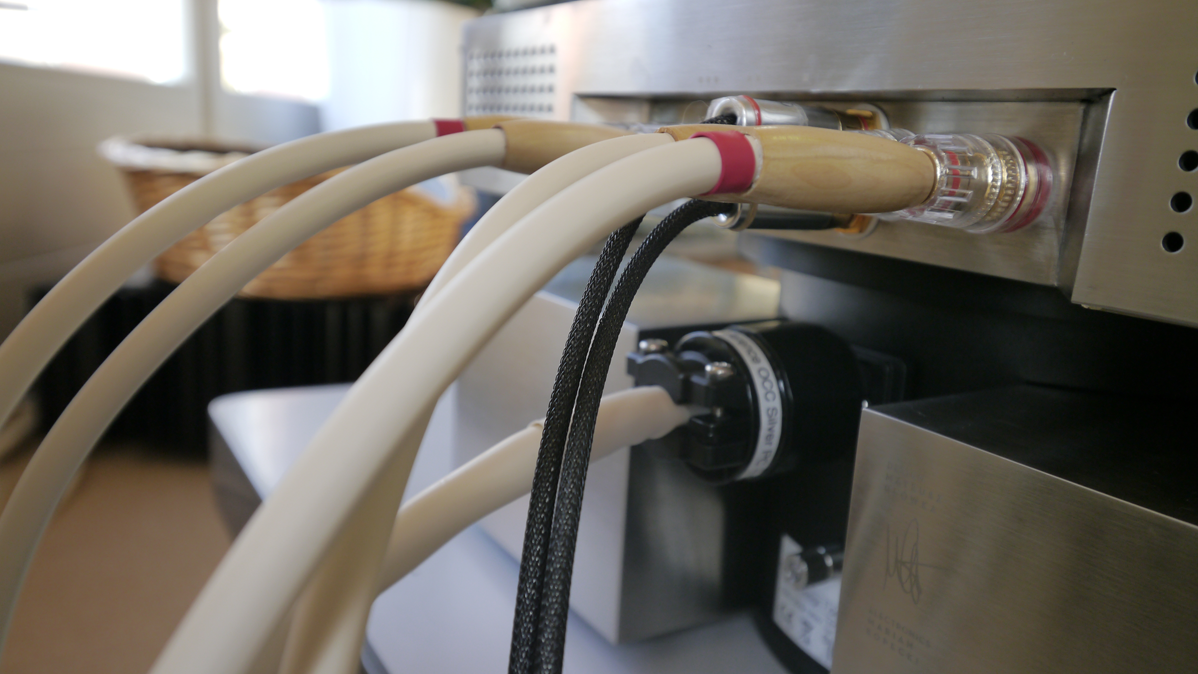 |
Rather than tipping up and getting steely, bright and hard, Samuel's anti-MDI recipe of non-synthetic materials—MDI stands for micro discharge interface distortion and is neatly referenced in this Swiss Cables PDF—enhanced spatial cues, in-room presence and speed by minimizing the subjective sensation of sound coming from cones and domes rather than just manifesting without associated technology. Though in hindsight I shouldn't have been, I was still surprised that the Accuton drivers didn't misbehave on this unusually lit-up energetic cable. With my usual solid-stage gear, they certainly had before. This was descriptive about the Polish valve amp and how the absence of presence-zone zip and bite not only welcomed such wiring but benefited from its cross-disciplinary strengths. Being thoroughly reluctant to let the Block dictate my musical selections to shine, I now had to revert to my original plan. I had to get with the high-eff speaker program. There strong self-damping from ultra-light membranes associated with massive flux densities in their voice-coil gaps wants minimal amplifier damping. Provide such speakers with the usual amplifier diet and they won't be happy. Different tools for different jobs and all that. When Dionizy encouraged me to try other normal speakers, I told him that I already had but with poor results. After all, playing loud enough is far from synonymous with playing perfectly. He understood, then confessed that "the typical Polish listening room (even that of some known hifi reviewers) is 20-30sqm, 2.40 high and has 2-3 old school heat radiators. It's not your 100sqm open floor plan with 2-storey ceiling plus loft space". Quite so.
|
|
|
|
|
|
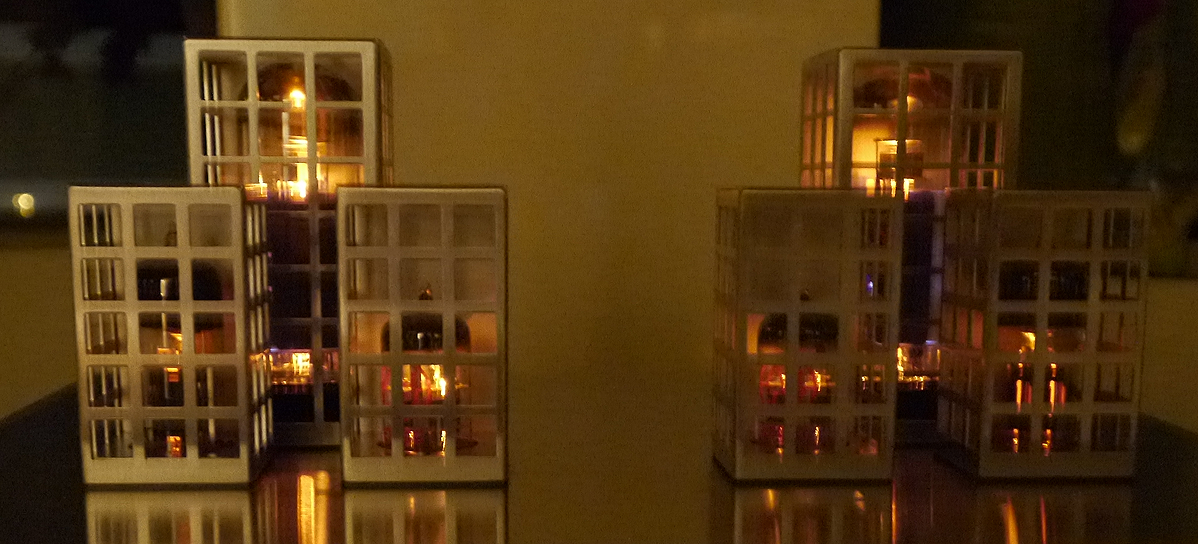
If on my regular speakers the Block sounded a bit like the next photo, it completely changed, yes colours when...
|
|
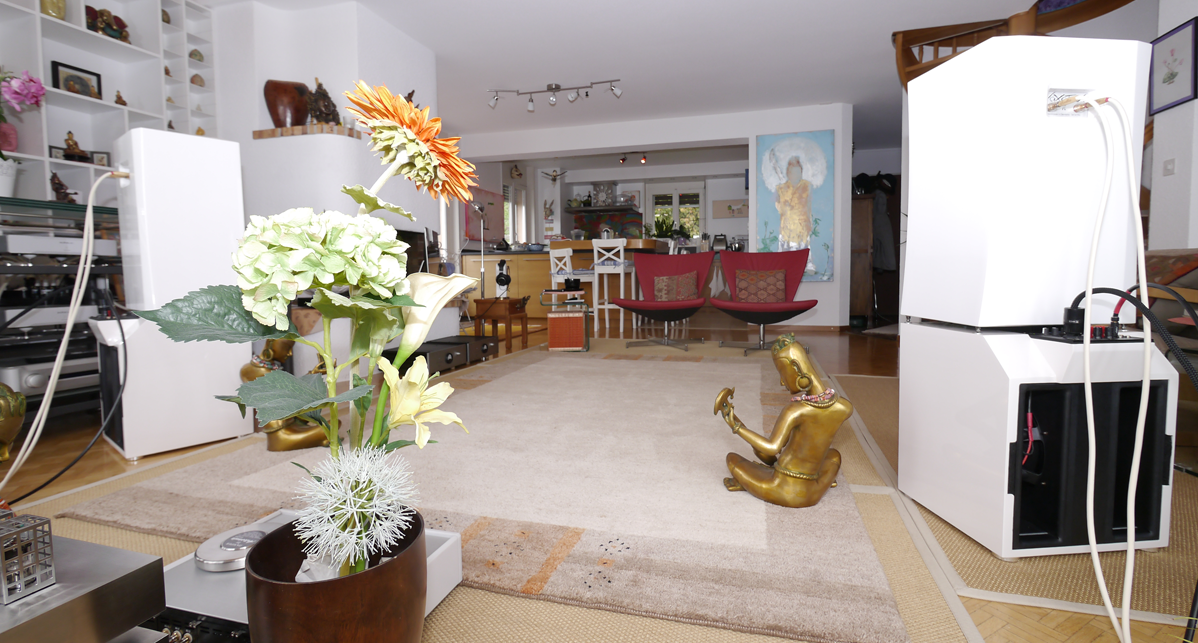
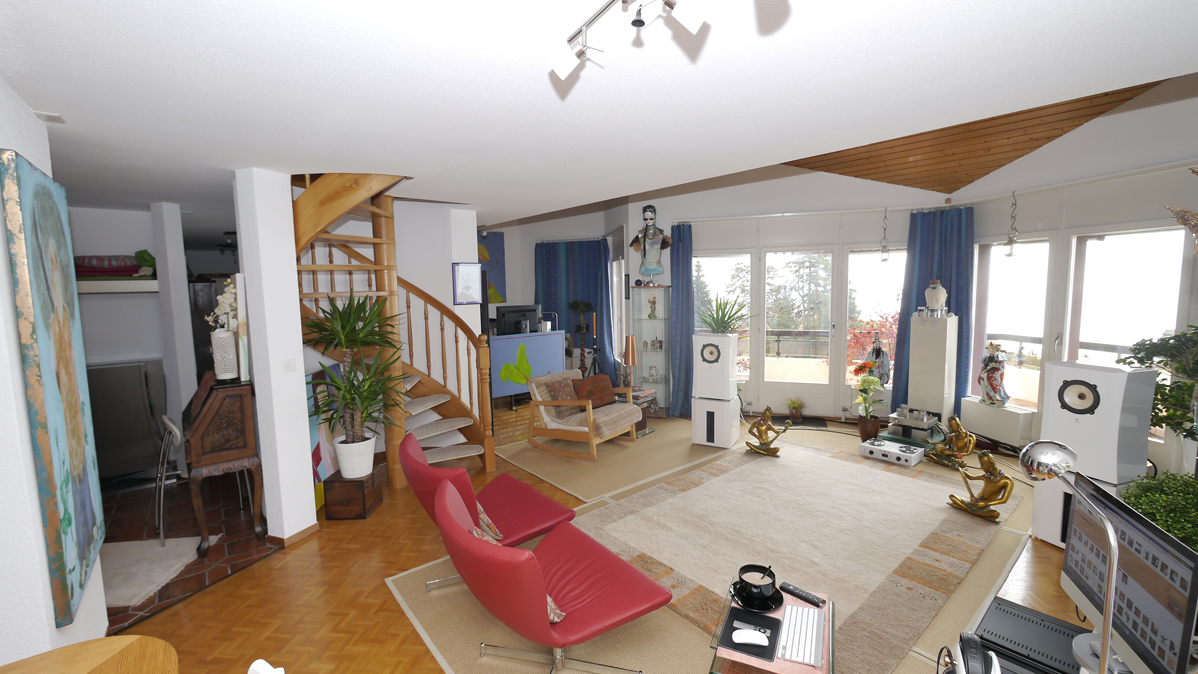
... asked to front the Voxativ 9.87 speaker system. We already knew how the G Lab lacks preouts, an oversight in my book. As it turned out, Voxativ don't connect the speaker-level inputs of their 250-watt class AB plate amps. I thus had to award line-level signal splitting honours to the Vinnie Rossi LIO with its twinned preouts. In this role, it was nothing but a passive autoformer volume control with remote control. With the Block's volume set to 6:00, I had faint steady-state surf with my ear on the 99dB widebander where the FirstWatt SIT1 monos were dead quiet. With Block and LIO set to full tilt, that noise increased to just audible in the seat. So I did all my listening with the Bock fixed to 6:00. Its duty cycle now was ~100Hz and up since Voxativ's 99dB (!) efficient 2x12" isobarically loaded H-frame subs took care of the first 2.5 octaves.
|
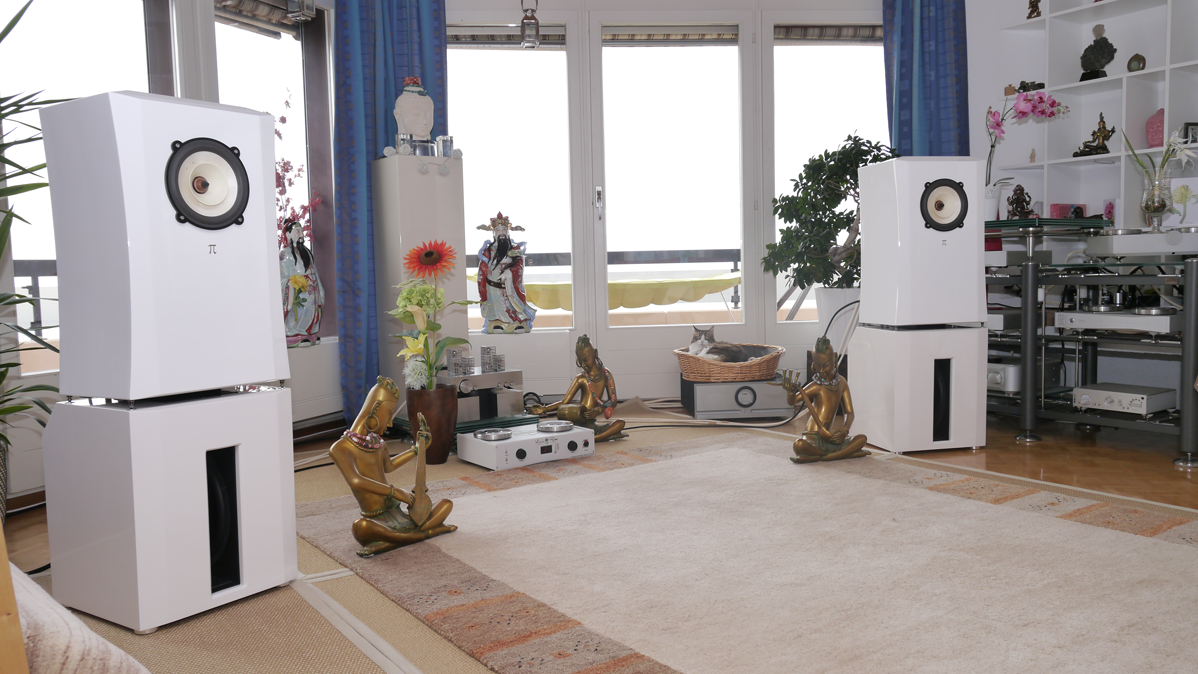 |
Under such ideal/ized conditions, the Block really lit up and stepped out. Now it played it as lucid, wide open, spatially enormous and resolved as the Nelson Pass transistor single-ended did. The latter enjoyed a minor advantage in the upper treble, with the aforementioned zero noise and even greater ambient recovery. Otherwise I'd rate them as equals. In short, when tapped in its milli-watt range as I did now, the Polish integrated behaved very much like a David Berning 300B Siegfried which I've heard many times at my friend Dan's. By comparison to a valve amp without output transformers (though technically, the Berning uses tiny RF transformers for impedance down-conversion on his 250kHz carrier-wave transposed signal), traditional transformer-coupled tube amps sound slow, opaque and bloated to varying degrees. Call the sum total romantic or fireplace audio. To dry out their humid climate takes money for top-quality iron. That can mean exotic costly cores like amorphous, Finemet, Cobalt-nickel; silver windings; or other extravaganzas. Not yet in the G man's income bracket. Just so, removing bass duties and harnessing the triode-strapped pentodes at a mere fraction of their rated power bypassed all the usual challenges. It tapped the clarity, immediacy and linearity one reads about each time triodes are called the most linear gain devices ever conceived when most often, they sound anything but. Again, it's back to matching the tool to the job at hand.
|
 |
For $5'000 of course, one could go after the FirstWatt SIT2 stereo version and eliminate all tube noise, tube maintenance and tube replacements, then notch up resolution. Knowing so from actual experience not wishful thinking made me the entirely wrong character to credit G Lab with a truly unique selling proposition beyond their stylized architectural optics. Having owned a number of low-power SET from Art Audio and Yamamoto Sound Craft, I can say that its self noise on tell-all 99dB speakers was very low to indicate proper power supply design. The delayed turn-on fart once high voltage was applied was minor even then and turn-off happened without any accompanying sound whatsoever.
|
 |
Damnation by faint praise; or kudos under only very specific conditions... those are two review outcomes manufacturers love to hate. It's why some publications have a backdoor policy which allows their writers to bow out after the fact. We stipulate that once a review is committed to, the assignment must formally conclude. In this instance, a diehard valve fancier like Tim Smith on staff would probably have made for a better match on personal expectations and hardware context. That said, even Tim recently wrote in with "well, I bought the used FirstWatt F5. For 1'500 Canadian pesos. That's about $1'175 USD these days. I think it's an amazing amp. It has transformed my Tekton M-Lore speaker (95dB). I'm a believer! Quiet like the still of the night. No warts. And as I work, with Bill Evans' "You Must Believe in Spring" in the background, at very low volume, Eddie Gomez's bass is as rich, ripe and ripped as it would be on other amps at much higher volumes. Later in the day when the work is done, I crank it and it can sometimes bloom like a tube amp. Sure it's not a tube amp but it does what I want it to do. A little cymbal strike at low volume is as resolved as I've ever heard it. Fabulous! Who needs tubes? Wait, no, I can't say that. Not yet."
|
 |
|
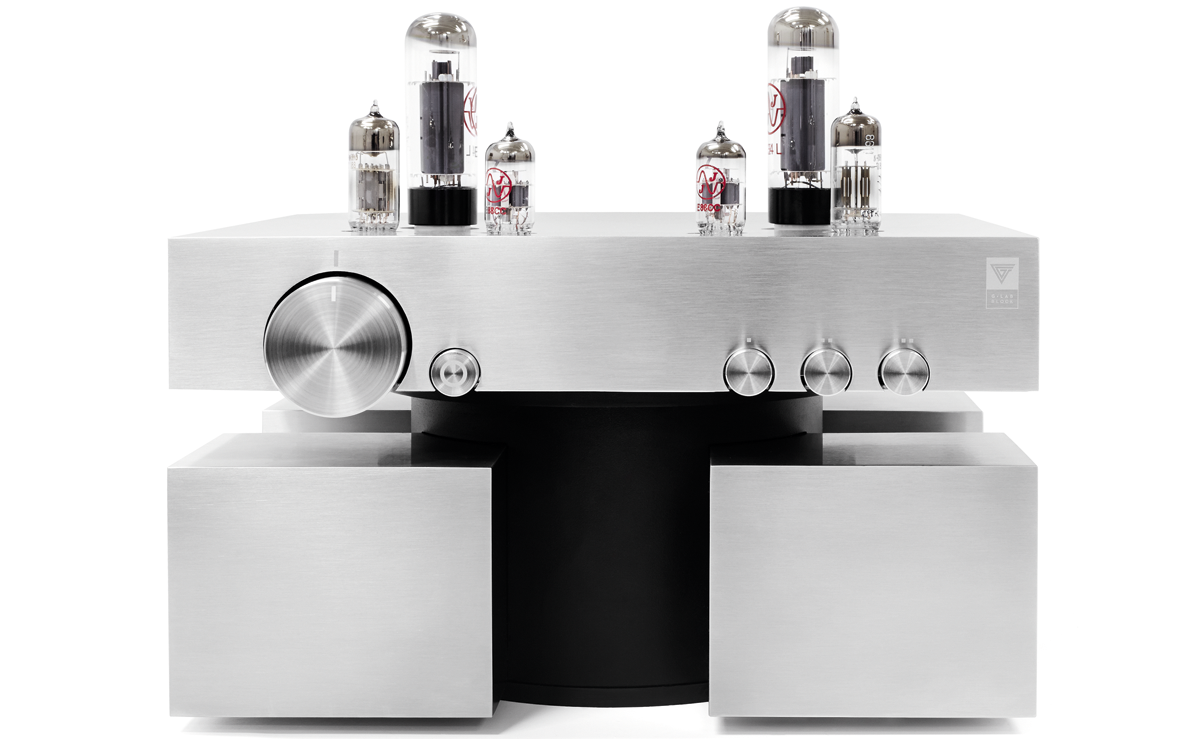
Alas, G Lab doggedly pursued a writer whose ownership of the SIT1 monos set up their Block against what might arguably have been some of the most gifted competitors to market. That this would overshadow my findings was unavoidable. That as a transistor man with prior tube experience, I'd stick without repentance to transistors even after this encounter was equally so. But all that overlooks how, with the above white €30'000 speakers of top pedigree, the Block came in a close second. If you'd even once heard the SIT in a proper context—as special ops amps, they're just as picky as the Block is about the right speakers—you'd know this to be anything but faint praise. Then in fact you might be surprised to learn that a traditional valve amp from an unknown Polish brand would keep up this well with very unusual vertical power Jfets aka static-induction transistors, from the private reserve of one of America's most legendary amp designers. In its category of traditional transformer-coupled no-feedback triode amp, G Lab's Block is a sharply engineered specimen no doubt. Additionally it doesn't rely on fancy potentially very dear direct-heated triodes to make it so. The right shoppers will recognize just what this implies and make a strong effort to audition one.
|
|
Quality of packaging: Very good and safely reusable.
Fit & finish: Like in the photos but ultra prone to stains from skin oils as all 'stainless' steel tends to be.
Turn-on/off thumps: A mild delayed fart when the high voltage is applied; nothing upon turn-off.
Self noise: Low even on 99dB widebanders.
Caution: The input #2 is phono but not marked as such. Plug in a standard 2V source and you'll have excessive gain, noise and a bassy tonal balance.
Complaints: No pre-out means a subwoofer needs to be connected speaker level. No remote control even for just volume means this isn't really a 21st century machine.
Limitations: No negative feedback means an output impedance of 1.8Ω. More so than the 5wpc/8Ω power rating which is actually backed by stout voltage gain to play loud enough even on less efficient speakers, this wants loads whose bass alignment doesn't rely on high damping factor.
Extras: Nicely styled well-fitting tube covers in solid metal shield these heat sources against toddlers and curious furry four-leggeds.
Tube costs: All three tube types are in current production and, unlike exotic direct-heated triodes, inexpensive to replace.
Competitors: Trafomatic Audio Aries [€2'070] and Coincident Technology Dynamo [$1'299] both use single-ended non-paralleled EL34 but add remote control and headphone jacks.
|
 |
|

|
|
|

|
|