 |
|
|
Handling of space emphasized the intimate, with reductions in left-to-right width as well as front-to-back depth. Where this generally leads to superior focus on instruments within the soundstage, the Mini Arch ran contrary with no corresponding increase in specificity or dimensionality. These limitations were small and unobtrusive versus the stock feet but noticeable against upgrade footers like the CA ceramic, dramatic against higher-tier competition like the EquaRack which could reproduce almost limitless hall size with refined placement information.
Overall, against the in-house stable of resonance control devices, the most direct competition was the CA Acoustics which priced at roughly $30 per foot when last reviewed. It is a single-stage solution based on the properties of its ceramic material. The CA's ability to rapidly dissipate energy remains consistent over wider weight tolerances and has the advantage of immediately guaranteed results. The ceramic is faster on transients, translates more dynamics and detail and opens up somewhat superior stage dimensions and focus. Its failing is a mild emphasis in the upper mids which disappears on larger ceramic solutions employing more material. Since it cannot be tuned, those characteristics cannot be altered so acoustically it is what it is. In contrast to the CA's strengths and weaknesses, the Gingko Audio provided greater fine-tuning flexibility and at optimum, more warmth in the midrange and lower midrange area.
|
 |
Against the best of my middle-tier price devices, the performance gap was wider. The EquaRack Footers at $100/ea. when reviewed is not intended as a tuning device. Its effectiveness is based on very specific weight matching via the insertion or removal of viscoelastic pellets within extremely tight tolerances. Properly set up, it is directly competitive against cost-no-object isolation devices and a frequency-neutral vibration control tool. In its position under the Tortuga preamp, it allows a nearly terrifyingly wide dynamic range with a very detailed very low noise floor as well as disconcerting soundstage transparency and lifelike dimensionality. In a best-case scenario, this performance caliber is very difficult to equal or beat and although the Mini Arch did a creditable job, it could not match the EquaRack in any parameter. In this specific case and position, more money would buy better performance.
|
|
|
|
|
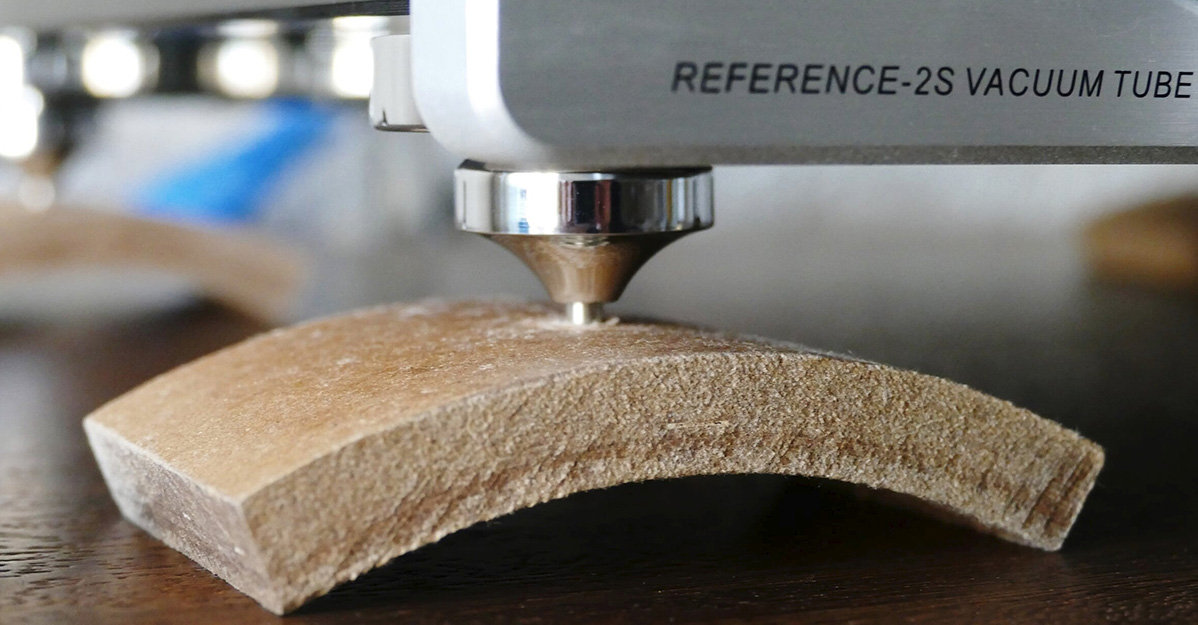
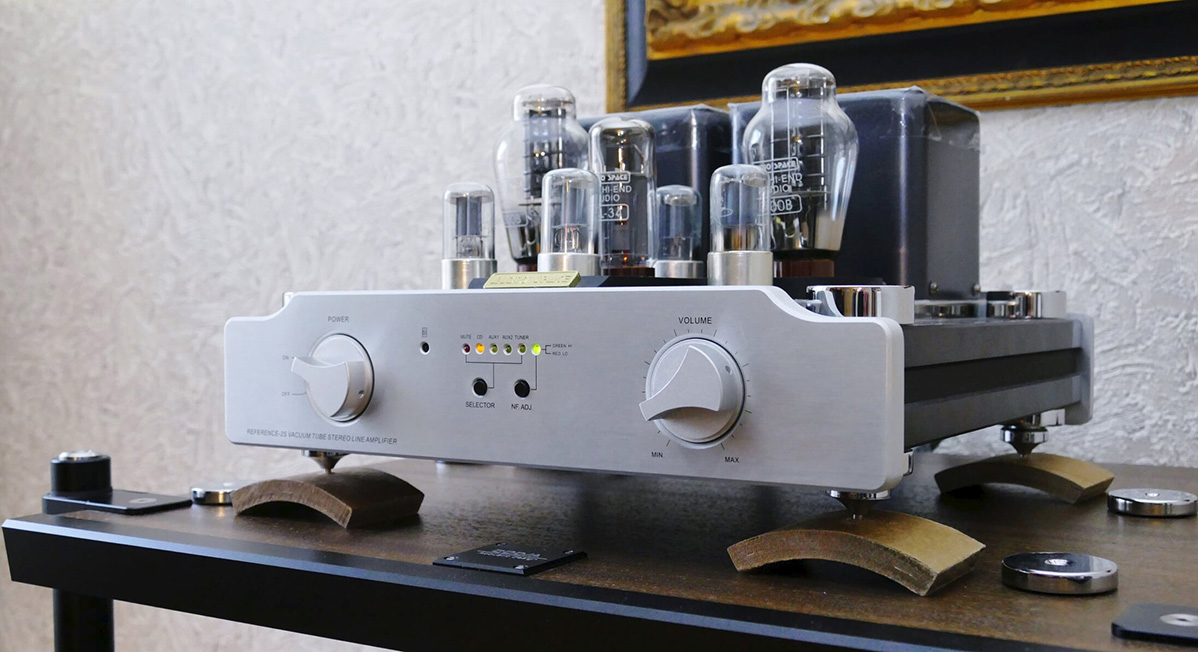
For the next phase, I swapped out the Tortuga Audio for the 300B AudioSpace Reference 2S. This kept the quality of the front end intact but introduced a tubular presentation and far more mass. The AudioSpace was left to run with stock feet for a few days to realign my ears to a fresh reference point. The 2S's native vibration isolation utilizes a multi-pronged approach. The inherently microphonic tubes float in individual elastomer suspension atop a massive 45lbs chassis supported on four adjustable spikes in individual dissipation cups which themselves sport an elastomer damping layer. It's a good system which has proven extremely tough to match or better. Once I had the setup running to my satisfaction, the AudioSpace spike bases were replaced with Arch 1.
Break-in was the order of the day again so the Arch 1 were given their required settling period before serious listening commenced. The Gingko suspension definitely benefited from time and initial impressions of an upper mid prominence and loss of bass level and extension down to subwoofer territory were replaced with a far more linear tonal balance. In this application, the system showed good bass extension down to its limits with good control. The midrange was pretty close to neutral, with a small amount of upper mid energy and a relatively sweet top end, thus retaining a good portion of the preamp's inherent signature. The small deviation however fell directly in the vocal range where the Arch setup gained a little articulation but lost a bit of the 300B magic.
|
 |
|
Dynamics were decent with a sense of enhanced detail in the upper mids and exhibited a fair bit of transient attack, bettering the performance of the Mini Arch in the passive setup. As with the Mini Arch however, the volume of the preamp had to be run at higher than normal levels to achieve the usual low-level detail, thus reducing dynamic scope to result in dynamic compression. Achievable level at the upper end of the scale bettered the Arch Mini + Tortuga but was still below the stock AudioSpace. Additionally, the Gingko feet in conjunction with the preamp's spikes demonstrated progressive susceptibility to overload breakthrough in the frequencies where they showed enhanced detail. Paradoxically, although bass remained clean, higher frequencies seemed to lose damping and isolation. The system could play seductively sweet where the information was not pushed hard in level or complexity but lost its composure when higher SPL mixed with higher data density. Soundstage information was decently transparent but of a very different character than the stock AudioSpace vibration management. Paralleling the earlier Arch Mini, the Arch 1 setup reduced soundstage width, projection and depth and diffused instrumental focus. Best performance was achieved at lower levels where the system managed a good sense of space without being able to quite concretely define or populate it. Higher levels compounded the acoustic breakthrough problems with progressive soundstage collapse. Situated under the Reference 2S, the Arch 1 proved to me once again that the designers at AudioSpace had come up with a solution that was extremely difficult to surpass.
|
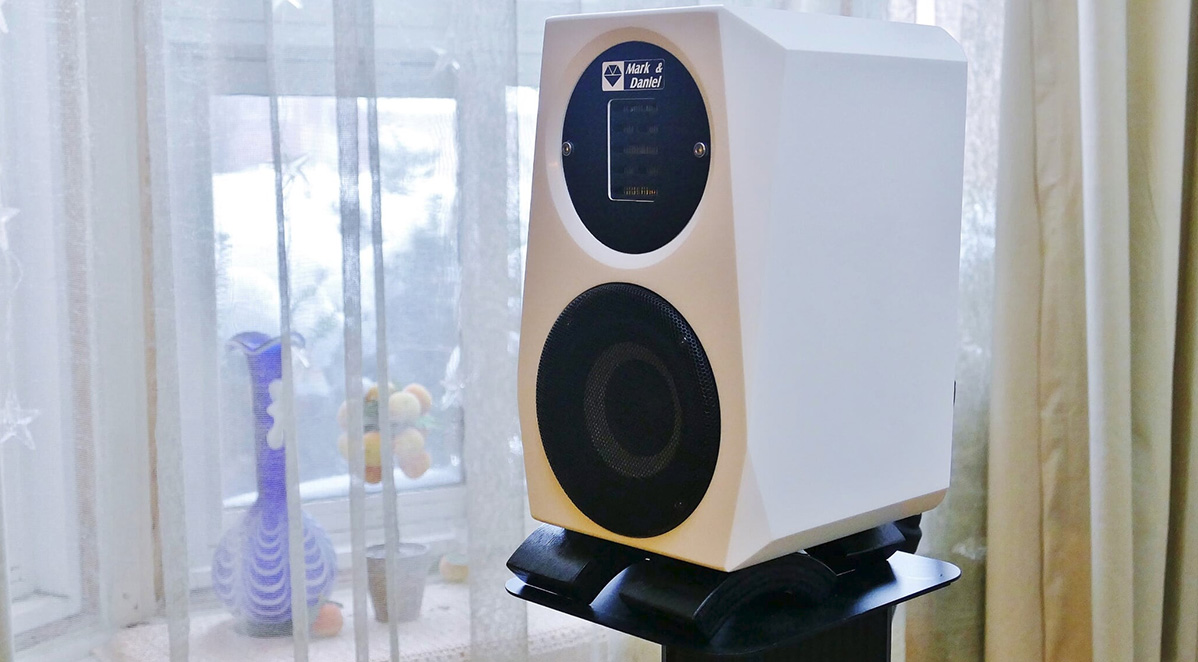 |
At this stage I chose to forgo testing the Arch 2 since it is a variant of the 1 and requires similarly spiked companionship. That would have put it under the AudioSpace again for an exercise in redundancy. Testing beneath the amplifier would have put the Gingko head to head against the KAT Audio Terminator 1 which sits in the stratospheric performance level and upper price tier. The only challenger in our house that gives legitimate challenge to the Terminator 1 and does so at less than nosebleed cost is the EquaRack. That comparative Arch hierarchy had already been established. Instead, I concentrated on the speakers to replace the IsoAcoustics Aperta isolation platform with the Super Arch between Mark & Daniel Monitor Mini and Charisma Audio speaker stand. The Aperta is the audiophile version of IsoAcoustics' proven industrial line of studio monitor isolation supports. It hits the market at an enthusiast-friendly price of ~$240/pr Canadian. The Charisma stand benefits from added isolation tweaking and reaps major gains with the Aperta pairing, making this a tough challenge. The switch was made and the waiting period was monitored with periodic checks to see when the new recipe had fully cooked. And then, a more interesting story unfolded.
|
 |
|
|

|
|

