 |
|
|
I kicked off with the Polish concrete towers and the Sanders amp for instant proof of high resolution and top performance. I could hear the speakers' professional linage in the most prominent feature of great detail and exceptional spaciousness which layered extensively to subtract the speakers from the listening equation. Tone colours were decent yet there was a certain wholesale stiffness and the powerful highs seemed overly illuminated. The sound wasn't dry like firewood yet neither was it generous with saturation. From one song to the next, my impressions varied strongly. AC/DC's classic "Thunderstruck" was too direct, forceful and vociferous. No grain but feistiness were good things, a bit of hollowness less so. Especially with guitars, I lacked for mass though I couldn't deny the overall clarity and matter-of-fact attitude on vocals. The ladies of Värttinä sang through their "Linnunmieli" well. By contrast, Wardruna's drum themes lacked some meatiness. The bass was there but felt liposucked. Kvitrafn's vocals were great and so was the majority of folkloric instruments he favours. The bass had speed but somebody had gnawed off the meat from its bones. With these JWS speakers, what the Sanders Magtech mined were speed, detail and punch to the detriment of density. In short, the key virtues of the amp were exaggerated by what the volcanic concrete bricks already exhibited in spades. It's always about synergy and here I didn't have it. Overdone magnification power has its devotees but I find it tiresome rather quickly.
|
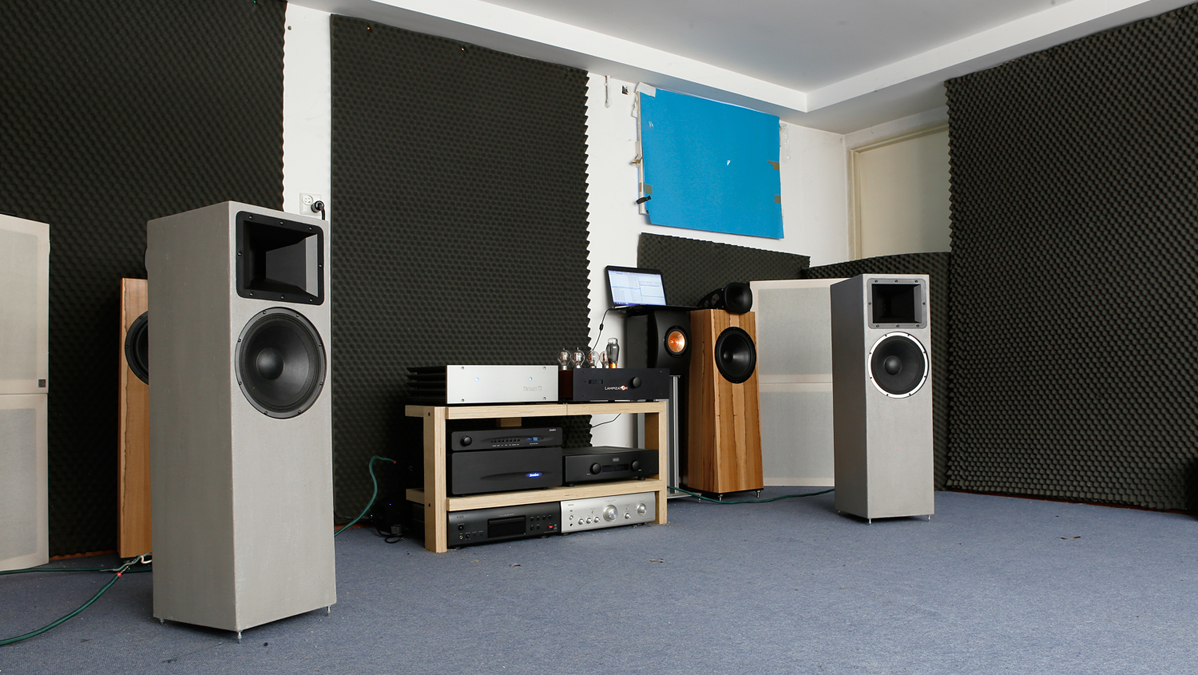 |
Then the F7 had its chance and the changes it brought about were severe. Suddenly density resurfaced everywhere. Aside from no longer plunging into the bass' lowest nether regions, there was no loss, only plentiful gain. The sound became more expressive, rounder, warmer and denser without sacrificing the earlier key virtues of kick and energy. Those attributes in fact left me with the impression of a bass job done really well. That entire range was strong, with boom nearly absent except for poor recording. Truth be told, the F7 sounded slower than its rival but with these speakers, the performance remained properly dynamic and often even outright punchy. The midrange had changed a lot. The previous clamorousness had nearly completely given way to smoothness. This was something the Tsimento/Magtech combo patently lacked. Severity went into oblivion as warmth and greater elasticity with softer contouring took its place. Those were improvements I welcomed with open arms.
|
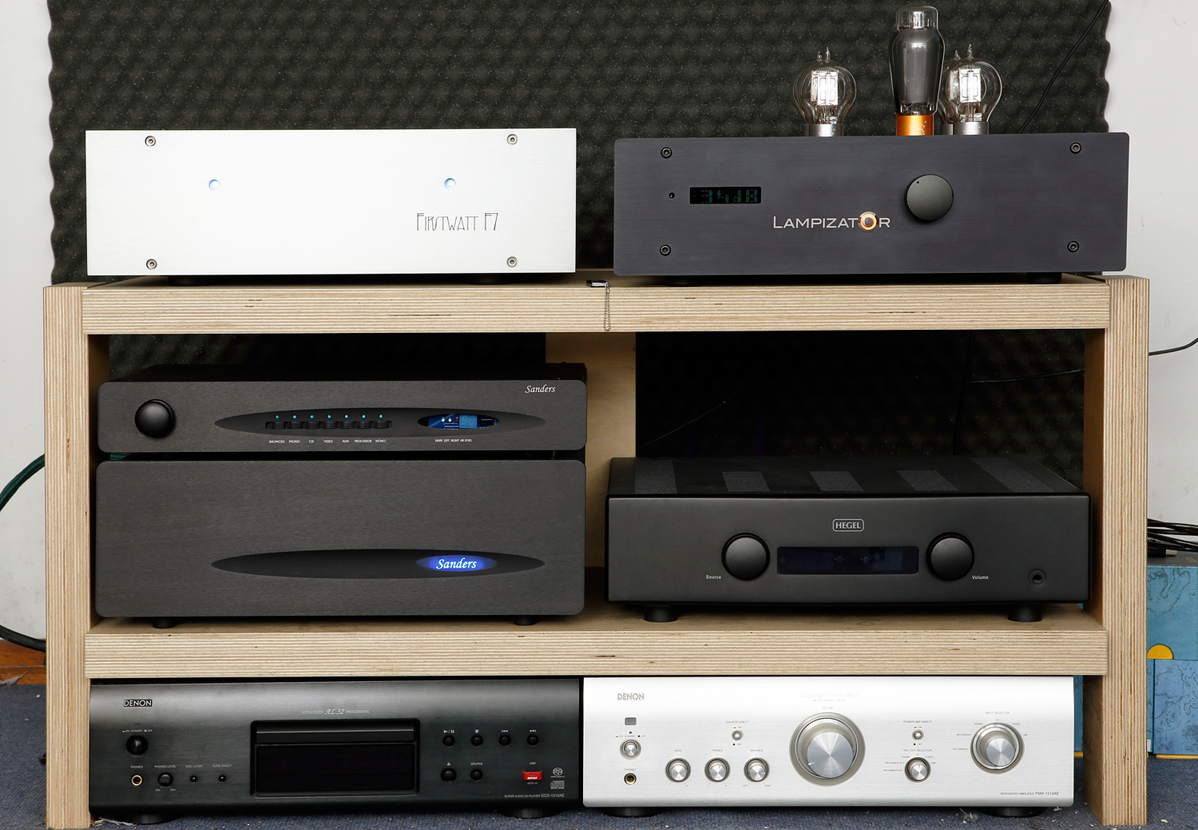 |
The speakers' treble had improved as well. In proper style, the F7 toned down that accelerated horn tweeter a bit to gain in silkiness and more extended decays where the fantastically black background of Nelson's seven was the lucky number to improve resolution. The obvious result was personal joy, again. Finally spaciousness exceeded my initial expectations. These inert Polish horns stage large enough for most casual listeners. What the F7 improved was lateral intelligibility. I could discern far more easily what occurred beyond the first row. I was impressed by depth which had eluded the Magtech. Here it's worth pointing out that the Tsimento doesn't exceed €2'000 – ridiculous performance considering. In summary, after switching to the F7, the sound got positively fancier all around and more mature on top of all that. It gained in refinement. Rawness stepped down, musicality lit up. Far from drowning in proper class A sweetness, the JWS Ifaisteio Tsimento pierced through it with style far greater than it had done in the Magtech pairing. The outcome was a properly energetic showing with soul instead of hollowness. After such a rewarding adventure, Nelson Pass seemed like a house-visit doctor and his F7 my instant remedy.
|
|
|
|
|
Blumenhofer's Genuin FS3 Mk2 were next. Here nothing surprising or unusual followed. These are very pleasant, truthful and natural performers. Their lively behaviour can be heard all across the board, especially in the lower regions which are fast, springy and without abnormal colorations or peaks which might interact negatively with the upper bands. Here the Mk2 aren't additive and their lack of the lowest octave isn't an issue. This is about quality not quantity. One very strong point is their greatly differentiated, smooth and rich top end. It results in marvelously airy detail which still feels truthful but is served up without fatigue. Additionally, excellent dynamic contrast makes things very involving. The Genuin FS3 disappear from the room which is as it should be at their high price. Yet they build up the soundstage in a peculiar way. The closest instruments are firmly sketched which the LampizatOr Golden Gate DAC additionally elevated. The depth layering behind the vocalists further into the corners was also top notch but still the first row dominated my attention. This combined with a generous amount of air led to a very easygoing yet refined experience.
|
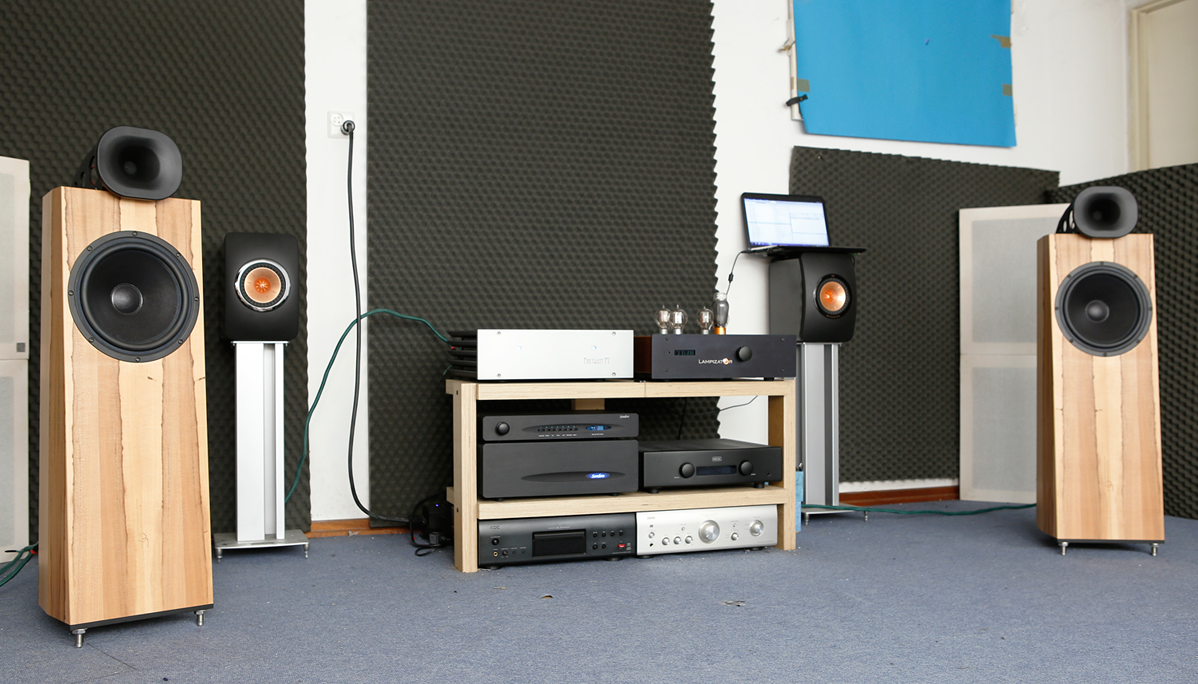 |
With either amplifier, the German horns showed their emotional involving side to be milder, smoother and more sonorous than the Polish floorstanders. This wasn't soporific and still lively and jumpy but to a different degree. The Genuin paired with the Sanders amp showed music in stronger to-the-point fashion than the F7. Definition was more intense. Nelson's amplifier added redolence and with it, more smoothness. But again, no Genuin FS3 Mk2 key features were harmed in the process. What's more important, resolution in fact improved. This was connected to the speakers' ability to dig deep even at lower volumes, something the F7 amplified. This even extended to better treble decays. In its brawl with the Magtech, Nelson's deck showed once more how musical pleasure is its correct motto if one remembers to add to it very fine detail without any obscuration. I'd already heard this with the Boenicke minis but with Thomas Blumenhofer's speakers, it was more explicit still.
|
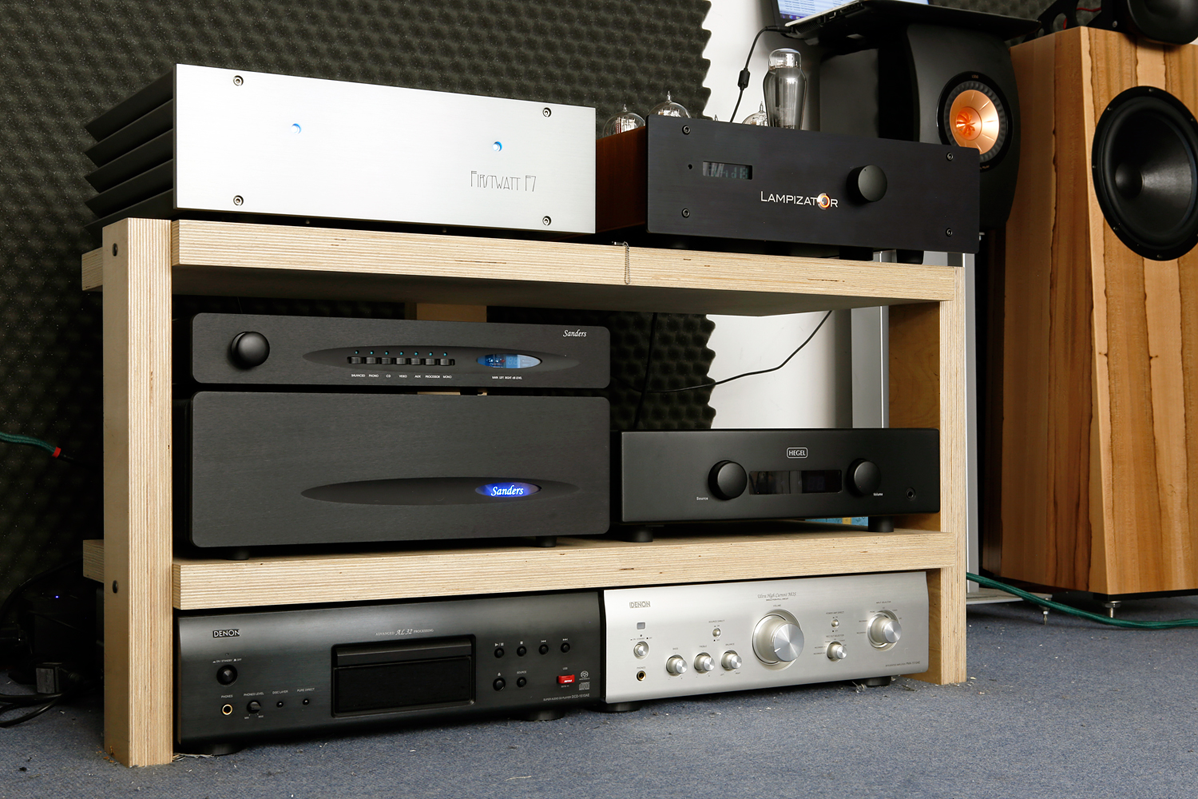 |
Summary. Before witnessing what this FirstWatt could do, I only guessed at what Srajan was on about his brand enthusiasm over the years to give valve amp ownership a complete miss. Now I finally understood why he decided to pursue that particular path. This was quite an eye opener, just as the F7 had opened my ears.
There's no exaggeration in stating that my sound-related journalistic career is now divided into knowledge pre and post Nelson's F7. This is a very specific amplifier - hot, rather big, with limited inputs and fairly low power which obliges one to use high-efficiency speakers. Therefore this machine is not for everyone. It has been designed by a high-caliber enthusiast for a deeply committed audience of like mind. Yet the FirstWatt F7 is sonically extremely generous. By that virtue alone, it rewards potential usability obstacles to the extent that it really seems worthwhile to build a system around it because it does deliver such an unforgettable musical experience. In my case it won't fade like puppy love or a fleeting infatuation. At its $3'000 sticker, transistor amps which perform in an equally saturated involving fashion that nevertheless remain as spacious, resolving, wide bandwidth and effortless practically don't exist. I'm familiar with quite a few of them to feel certain. Nelson's latest is very well considered and nicely made. It delivers a lot of pleasure in a vivid fatigue-free way. It stands as proof that Nelson Pass is a man of great insight and passion who knows what good sound is.
His spectacular FirstWatt F7 aside which I wholeheartedly recommend, I'm not familiar with another person in the audio world who is this involved, open-minded and generous with the DIY community as he. How could one not respect and admire this gentleman for his many contributions to our hobby?
End of Part I.
|
|
 |
|

|

|
|

