|
|
|
fidata's HFAS1-S10U wasn't a completely neutral device. Its character was clear on the strong and sensitive Reflector Audio Bespoke P15 'drivers on sticks'. These don't have excess density so the fat injection of the HFAS1-S10U made the outcome more attractive especially in the midband. With the Japanese streamer in the chain, the sound became more muscular and present yet remained swift and lucid as usual. But the Latvian speakers showed even more detail than usual served up in an amazingly fatigue-free subtle manner. The sound wasn't sharp or glassy but marvelously decayed, present and ethereal when needed, not to mention with great differentiation at the very top. Moving on, the soundstage in general expanded. Its individual layers were easier to extract and the distances between me and single instruments more clearly shown. Still, this wasn't yet the most surprising observation. Despite the added warmth and body injection, the outcome gave paradoxically even more insight into a recording. Usually the opposite is the case. The voice of Wardruna's Kristian Eivind Espedal on Kauna was even grimmer and darker. At the same time, this singer was better separated from the nearby tribal instruments. The space became denser though thicker devices—and the HFAS1-S10U is one— often tend to behave that way. Hence I expected at least a slightly constricted sensation of events in front of me but nothing like it happened. The vocal line on Einstürzende Neubauten's Sabrina and the intro of Grinderman's No Pussy Blues reassured me. Plainly, the fidata HFAS1-S10U escaped typical patterns. In the end I found the active Latvian speakers, Polish DAC and Japanese transport combo nothing short of superb and as far as sound quality and sheer joy go, above all other setups I put together to make this review properly informative.
|
 |
|
The Trilogy 925 integrated and Boenicke W8 floorstanders were next in line. In comparison to the Reflector Audio Bespoke P15, this duo played it less energetic. The presentation became warmer, the downstairs department rounder and 'optically' smaller but the signature spaciousness was as big as usual. The initial assumption was that the HFAS1-S10U addition would produce more sweetness and less speed. This guess was faulty. The sound became not sugar-coated but even more organic, instrumental tissues felt livelier yet raw speed wasn't truncated in the slightest. My subjectively most important observation was that the Japanese machine didn't limit the sensational soundstage which the English/Swiss duo cast. Its precision and depth became slightly better though this wasn't as blunt of an improvement as the Latvian P15 floorstanders had shown. This was perfectly understandable as the Trilogy 925 and Boenicke W8 rig don't show every change as clearly.
|
|
|
|
|
The final setup involved the Sanders Sound Systems Magtech amplifier and PureAudioProject Trio10 Timeless open baffles. This amp is cooler than the Trilogy 925, the speakers are denser and warmer than my reference Swiss boxes. Even though a lot of thickness was all over the place now, the third combination worked and there was no need to add Roger Sanders' dedicated preamplifier. In any case, with the fidata inclusion the temperature raised more than thus far. But contours weren't blurred and the delta of changes and my subjective perception of it was similar to the SuperKomputer. The Japanese machine elevated my experience in nearly every aspect. Yet this time around my only issue was the excess thickness rather than decreased agility. Truth told, this combo's thickness cropped up from time to time only, on certain tracks heavy with upper bass and low vocals. All in all, the last setup turned out to be the least synergistic but even then the fidata HFAS1-S10U surpassed my laptop to still be considered the better overall choice.
|
 |
|
Summary. This inconspicuous Japanese box turned out to be an excellent performer. Out of several similar devices of my acquaintance, this was the best. That assessment isn't only a matter of its peculiar not very neutral yet highly organic, coherent and emotional sound. The key is that the HFAS1-S10U didn't limit the rest of my gear and, above all else, completely turned off my analytical mind for uninterrupted very enjoyable auditions. This can't be achieved easily on demand yet it's precisely here where the real strength of the HFAS1-S10U lies. After witnessing it, I'm confident that many listeners would agree.
|
 |
|
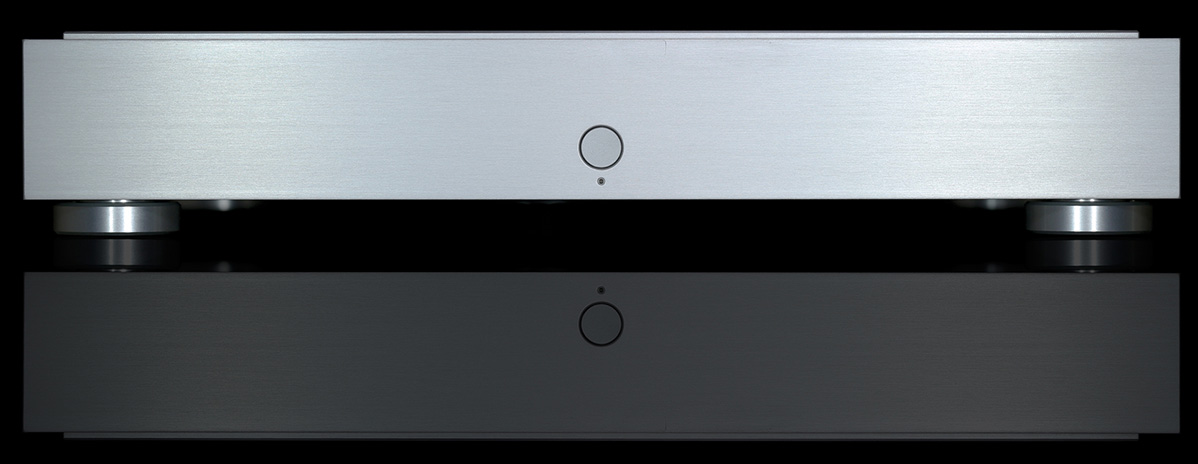
Also, the fidata's build is exceptional. Photos might not quite communicate that aspect yet after already a brief tête à tête, it's hard to shake off the feeling that it's different from similar devices. It's not about being better or worse but of a unique character. Let me repeat that the fidata is superbly made. As far as functionality goes, it has everything an enthusiast might want or need. If a visually attractive minimalist device easily operated covers all your file-based cravings and is readily controlled by tablet remote, the HFAS1-S10U is the one to get yourself familiarized with. It is an undeniably successful debut of engineering and functionality. It's obvious how the team behind this project is very ambitious. Lots of work and attention to detail are on parade and the sound too gives an aficionado something to think about. The Japanese crew evidently feels music and—let me stress this again—translating that into hardware can't have been a coincidence or stroke of luck. The outcome is too coherent, vivid and sophisticated to think so. Because of all these virtues, our highest award goes to the young, passionate and skilled fidata crew.
|
|
dawid @ hifiknights.com |
|
 |
|
|
|
|

|
|