 |
|
|
The same I couldn't say for the bass. Neither Ruark nor Electrocompaniet were champs at finely gradated infrasonics. 'Bass' here primarily served as tonal foundation and to generate a surprisingly capacious soundstage. Though not bloomy or boomy, a lot more dryness and differentiation do exist elsewhere. Why I still heard clear advantages for the EC Living system had to do with the seamless transition between bass and midband. In toto, this was more coherent and unified. By contrast, the Ruark sounded boxier, more artificial and betrayed different drivers. The Norwegian played as one and this cohesive reading became its signature appeal where I was concerned. It simply sounded more real and more like music, hence less canned.
|
 |
What happened when I added the Tana L-1 to go stereo? Obviously this introduced left/right specificity and the stage expanded, particularly in width. True depth layering is still different and not fully supported when speakers hug the front wall. The effect was more like a hemisphere extending forward of the base line, without super-obvious depth cues for individual performers. That wasn't their fault but purely down to setup. Other two-up advantages were more headroom, bass power and macrodynamics fit for a small party. Obviously the same coin spent on a legacy system would offer more bass and SPL and even a streaming tower like a Raumfeld Speaker L can do more on those counts. But today's brief is about staying petit, chic and smart. Those keen on an EC Living system won't tolerate external amps, sources or towers of power. For what this is then, it's bloody wonderful.
|
|
|
|
|
|
| Conclusion. That Electrocompaniet's EC Living range would position itself at the upper end of streaming all-in-one/multi-room solutions seems predestined given their deep roots in legacy hifi. Tradition demands it. And to mix it up in the mass market also requires a different approach than a cheerful "we build all of this in our small village up north". Whoever asks for more must deliver more. The solid and intuitive EC Remote App impressed. Once playlisting appears, it'll be complete. That's expected. Where things go beyond is with industrial design, fit'n'finish and quality materials—a bit like how an Apple tablet outclasses a competitor three times cheaper—plus, fundamentally and decisively better sound.
|
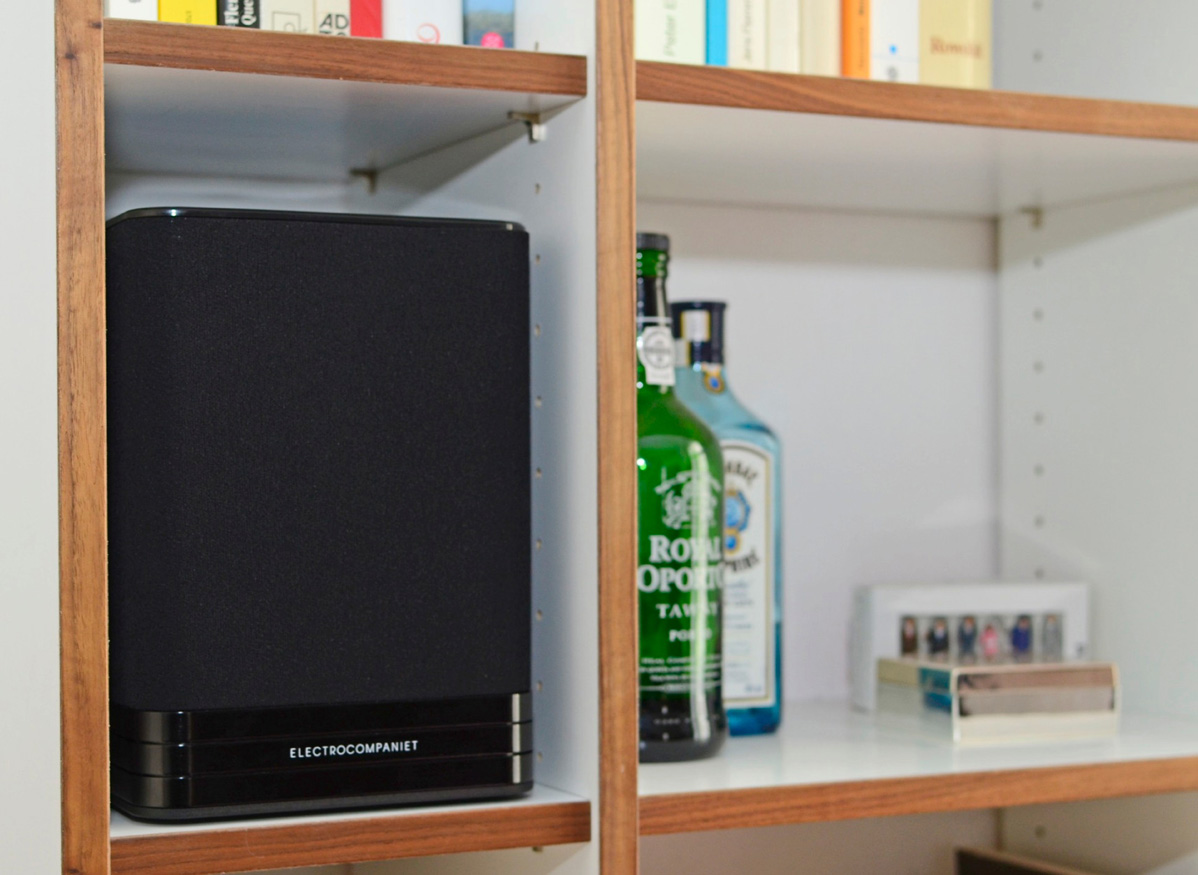 |
For their intended use and concept, the streaming boxes of EC Living Tana SL-1/L-1 impressed me in a big way. In fact, their creators really managed to inject signature sonic traits I already knew from reviewing their bigger stuff: juicy but in control in the bass, pleasantly sonorous in the mids and in the highs more mild than explicit to present the listener with a well teased-out grippily embodied reading with no seams – very authentic and natural.
|
 |
Facts 'n' figures.
Concept: 2-way bass-reflect speaker with integral streaming module and amplification (Tana L-1 is a wireless add-on without streaming module)
Socketry: LAN/WLAN, coax, Toslink, USB-A for storage media, the L-1 connects via wireless 24/96 (or other streamers in the same range)
Weight and dimensions: 6kg, 18x18x24cm WxDxH
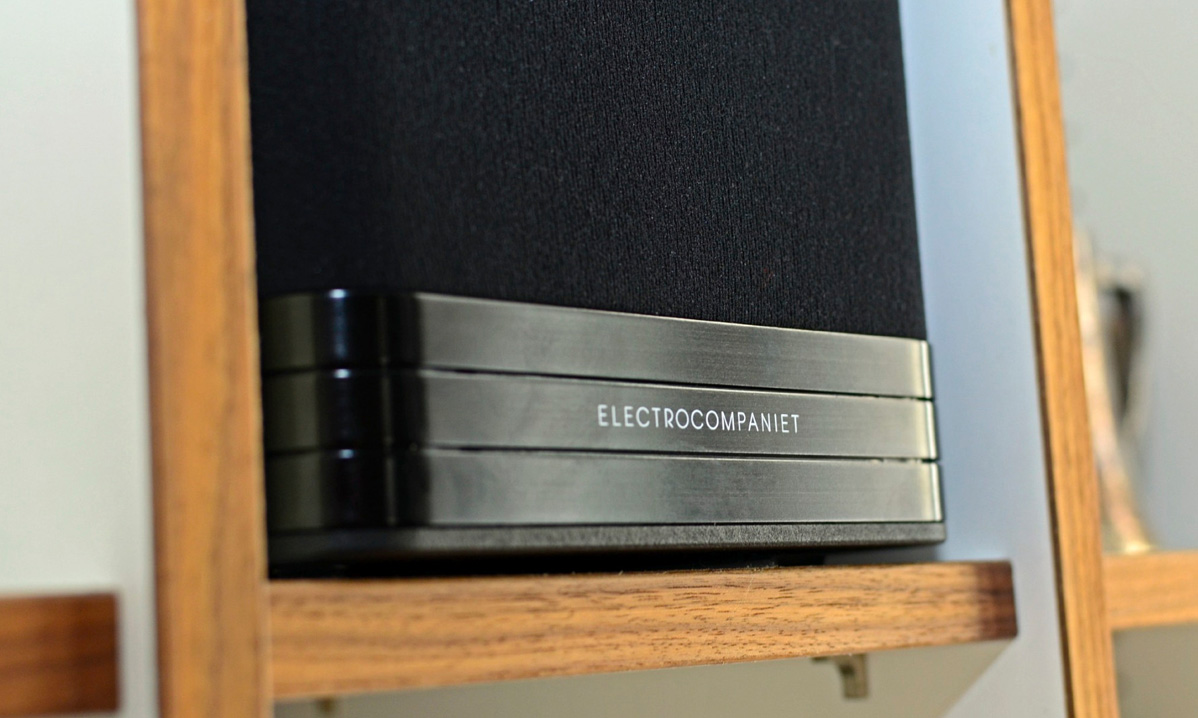
Trim: black or white cloth, bands in black, silver and copper aluminium or Walnut
Format support: All current formats up to 24/192 PCM (DSD128 gets converted to PCM); Tidal/WiMP, Spotify, Qobuz; Internet radio; PNP, SMB, NFS; USB media
Other: endlessly scaleable multi-room capable, each zone configurable from mono up to 7.4
Power consumption at idle: ca 7 watts
Warranty: 3 years
|
|
 |
|

|

|
|


