 |
|
|
True to its aim & claim, this box was good for sub 40Hz bandwidth. That left little desire or cause for the tall subwoofer except for synth-ridden ambient exploits. It also had very useful off-axis response to encourage an extra-wide setup without collapse of center fill, focus or tonal bleaching. Then it went loud enough without audible strain to be suitable in our large space. Rather than hijack ultra resolution to leave musical conviction and cohesion behind, this Danish-designed Indonesian-built speaker's prime virtues were coherence, attractive tonality, a benign top end and fully integrated low register. Other boxes wield more highlighted treble. That arrives with the usual attributes of glossiness, sheen, brilliance and air which one never encounters in a live venue to those degrees. It can create heightened selectivity and as a byproduct, keen separation. But it also tends to encourage more visual than emotional listening which becomes hung up on isolating very small details.
|
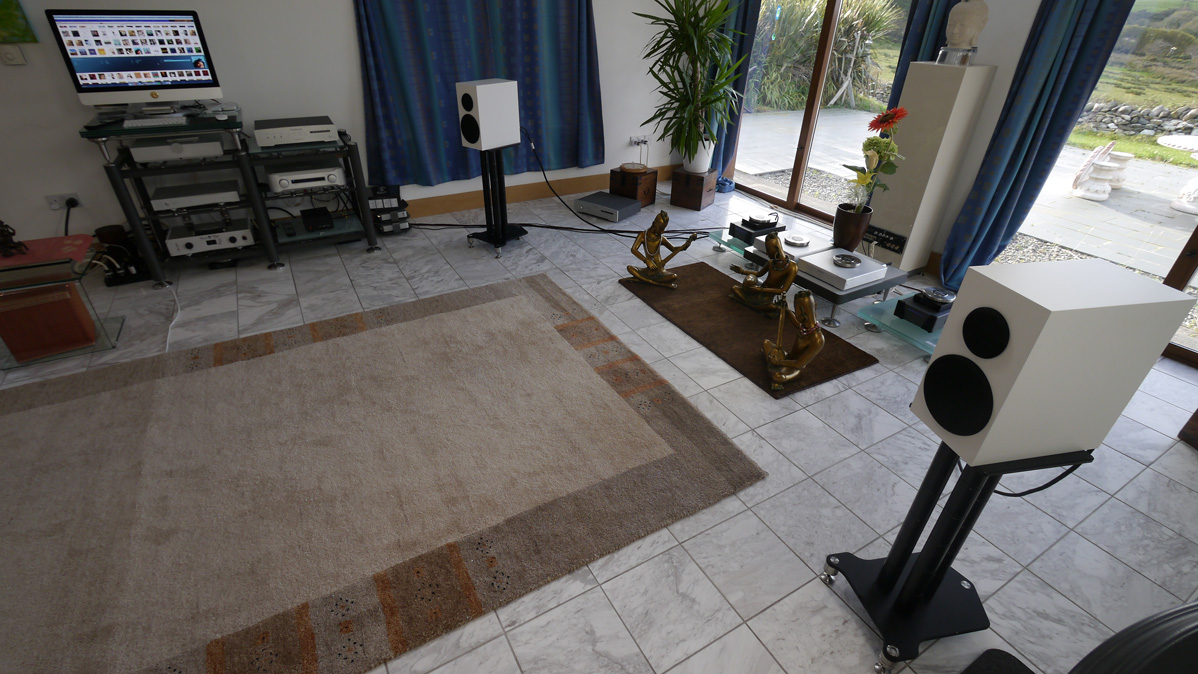 |
Despite all its colossal monitor-esque staging, this presentation was noteworthy for its organic non-dissective naturalness. It didn't sound driven and punchy like dynamically charged speakers with ultra-quiet cabinets can. It didn't sound 'hi-rez' in the sense of looking at the scenery whilst counting the leaves. Instead it cultivated a musical encounter more conscious of the big picture. It was about seamless envelopment, not separation. It was about hanging together, not taking apart. That meant an absence of hifi spectaculars. Like gravity-defying silicone implants, those seem spectacular precisely because they are so unnatural. Whilst bass reach would be spectacular for a monitor in this class, it didn't feel that way at least with the eyes closed. It wasn't brought about by any audibly forced means. It simply was by exactly the same standards as everything else. Hence it only factored as a natural integral part, not emphatic show-off trick. In that sense, these Danes were far less spectacular than the Mark & Daniel Maximus Monitor MkII or EnigmAcoustics Mythology M1. The former are spectacular on dynamic punch and scaling, the latter on top-end airiness and gossamer illumination. The dynamic punch of the first is generated with a brute-force approach of ultra Xmax driver in a synthetic stone cab. The treble glamour of the second comes from a dual-tweeter array with monopole electrostatic super tweeter. For all their spectacles, something about those presentations can stand out. And that can become a kind of subliminal reminder of being nearly better than real; just a bit too good to be fully true. The Buchardt lacked that sort of reminder. Its kind of naturalness defined itself by an absence of features. Again, it was about the big cohesive picture. It defies dissection. That's harder to describe. On first listen, it seems more ordinary, more normal; just like live music. That's rarely ever about geeking out over sound. It's invariably about immersion into what connects the various tones into an overall narrative of artistic message and emotional persuasiveness. By aiming at that, the s300MkII struck me as product for a far more mature audience than audiophile thrill seekers and list ticker-offs.
|
|
|
|
|
Moving the party to the desktop confirmed it. Be it 16/44.1 full-resolution streaming via Tidal; or a few Redbook to hi-rez files stored on my work PC for these purposes then played back via J.River Media Centre into the Stello HP100MkII's USB DAC, the sound's key attractions were rich tonality atop a solid bass foundation; driver integration; and utter absence of fatigue-inducing elements. Unlike the Maximus which in the same close-up position had exhibited nearly elephantine bass to distract, the s300MkII remained far better balanced though it still showed extra warmth from the mid/woofer boundary enhancement of the desk's leather-clad top. This played up chewiness and colour saturation whilst playing down separation and crystallization.
|
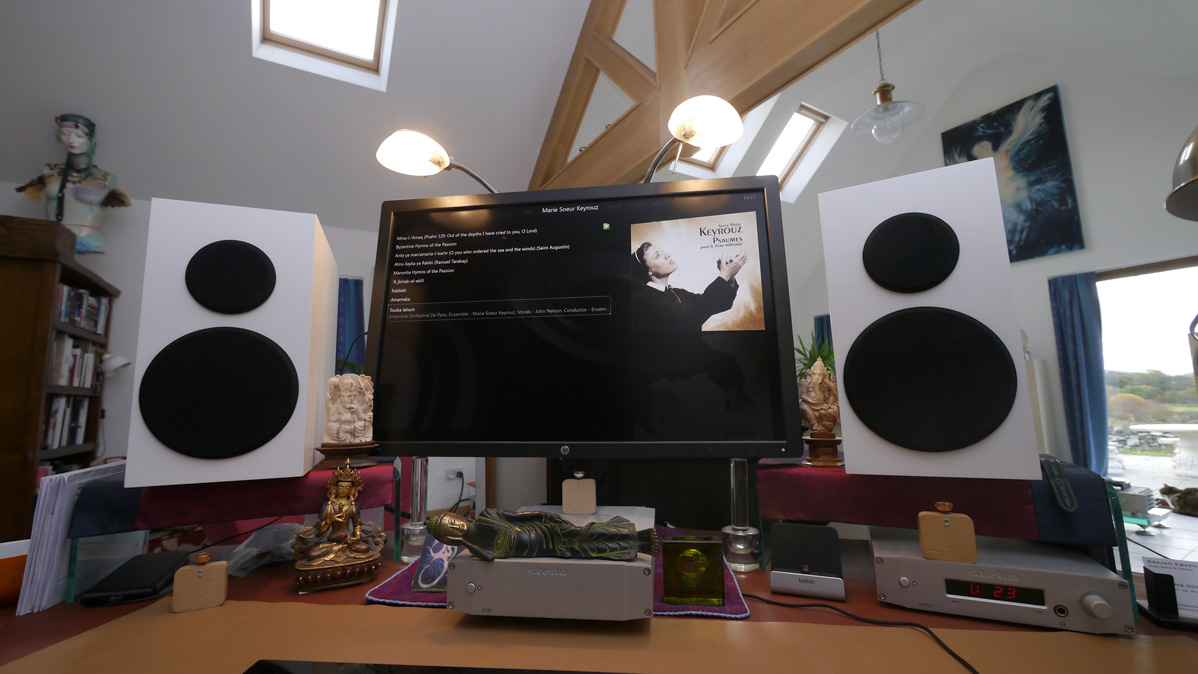 |
For the duration of his Buchardt R&D, designer Kasper Raun clearly was no subscriber to the Sizzler Club, no member of Anorexics Anonymous, no fan of lean cool climates.
Whilst a 6" two-way sold as a normal not Harbeth/Spendor-type maxi monitor must work with limited cubic inches, the s300MkII scales up allowable real estate with good depth. That exploits more gravitas-enhancing enclosure volume than maximally compact efforts whose drivers barely clear the side edges and tops and bottoms of their cabs. On those counts, the Buchardt goes bigger and sounds it.
|
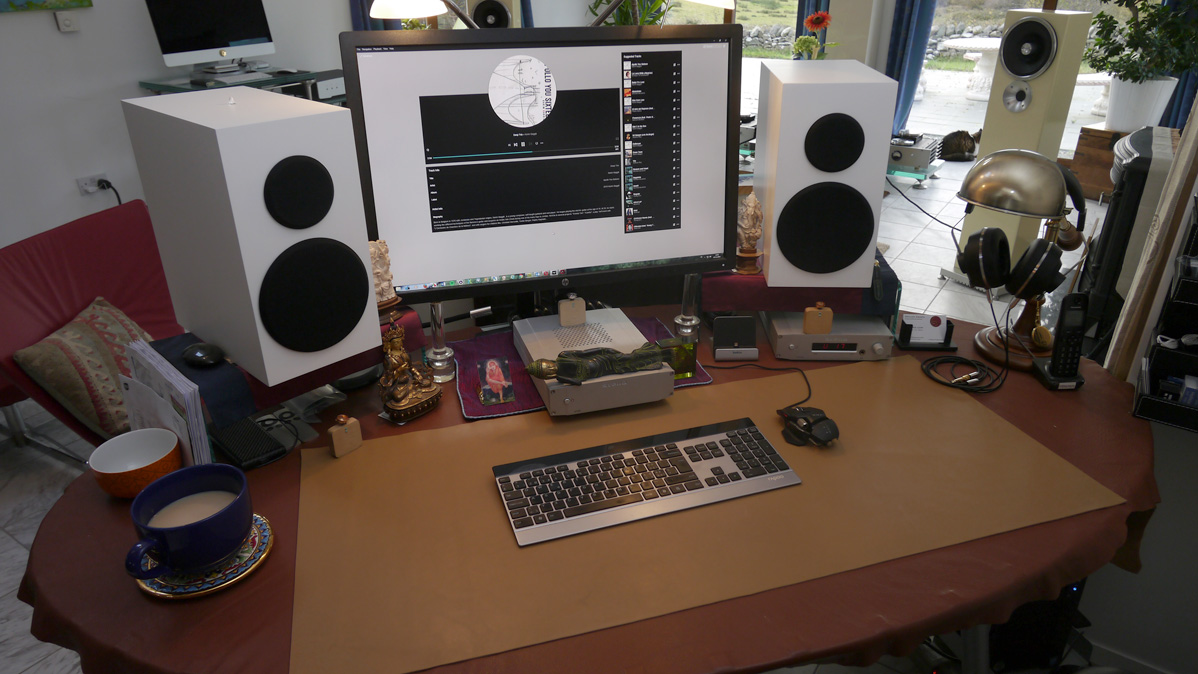 |
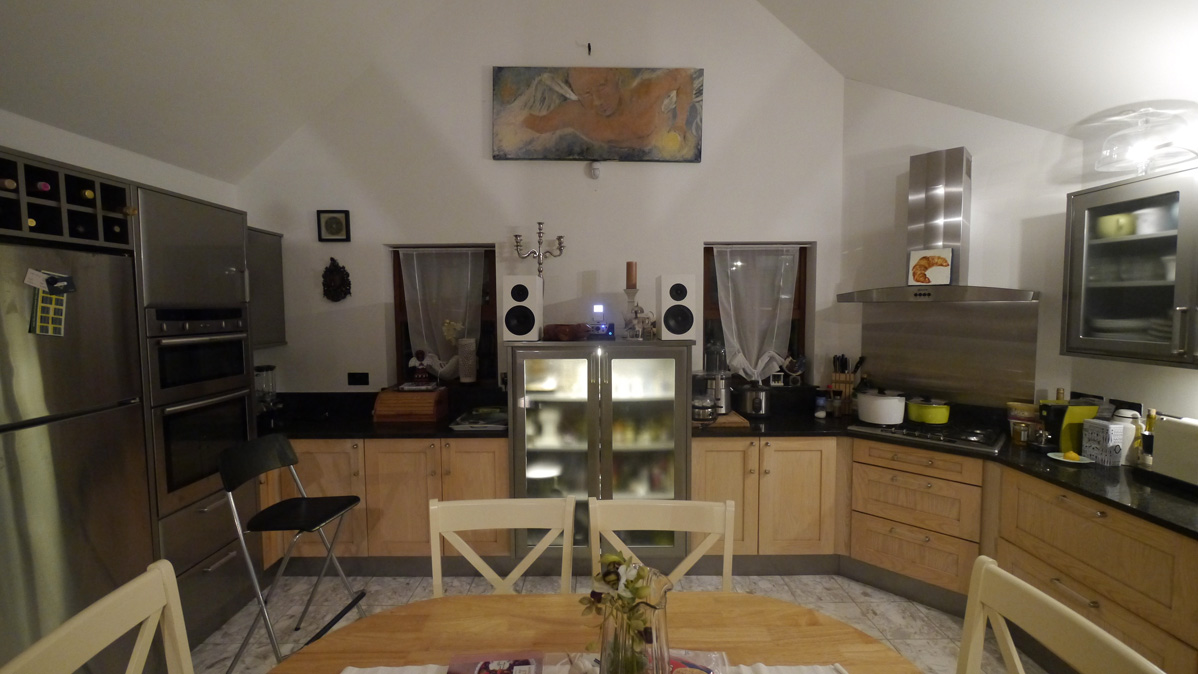
That meant kick drum and low-string transients came off with surprising wallop and punch particularly under the extreme nearfield's essentially zero-loss conditions. Whilst it didn't do sizzle, it did smack. It could slap around bass and drum attacks with surprising impact. In such close proximity, I could sense the port action kicking in but didn't actually hear it as any major change in textures. On this count too the box behaved more mature than its value positioning might suggest. No cheap tricks here. Wyred4Sound's $1'495 all-in-one mINT demonstrated the same in a console-type setup in our kitchen. Being within less than two hands of the front wall, this boundary reinforcement definitely qualified for full-range sound. Highlights were once again meat-packing not fruitarian sonics utterly devoid of glare, grain, glassiness or any other evil G force you might name. This speaker didn't care whether it fed on class A, AB or D. It never vacated the comfort line of gastro pub dining: big portions without fuss feeding the whole family, not just the audiophile neurotic counting the strings in his asparagus.
|
 |
A now mere token appearance in the media room repeated the message about the full in range plus dynamic composure. Due to costlier ancillaries and optimal setup with the tweeters at ear level and wider spacing, this reading ratcheted up into higher-end performance again. Whilst bass quality was obviously of the small-woofer'd sort—pert and punchy but without big-woofer pressurization—its quantity once again went beyond the call of compact monitor duty. Spoken voices on video were real chest affairs not throat catches. Images felt properly anchored. Again, the entire voicing of this box acknowledged proper midband weighting which simply extended lower than expected. The treble was the completer, not the headline act. This was true even when the speaker was backed by wide-bandwidth DC-coupled gain of the high slew-rate sort. And yes, removing the grills does make a small but positive difference; if you can get away with it.
|
 |
|
|

|
|

