|
|
|
Robert excused himself for this Sagarmatha Duo demo system retrieved from the show not get being in its full production guise. The final baffle plinth will be more slender while the back will be covered to give the baffle a smarter look from all angles. Back to our install, an hour later the subwoofers were assembled and placed in their initial spot while the baffles found matching places a little in front of the subs and aimed straight into the room to end up with the baffles' plane at the same distance to the listening seat as we normally use for our horn-loaded Avantgarde or Arcadian Audio speakers.
|
 |
We commissioned our Crystal cable loom to connect the Trafomatic Kaivalya tube mono amps to the passive baffles while Nanotech cables connected the RCA inputs of the Abacus bass amps to the pre-out of our Trafomatic Reference One preamp. Another set of Nanotech ran to the tube monos while the SGM 2015 music streamer with T+A DAC8 formed the digital front end. When Robert was satisfied with the initial sound, he and Armin left us to our own devices.
|
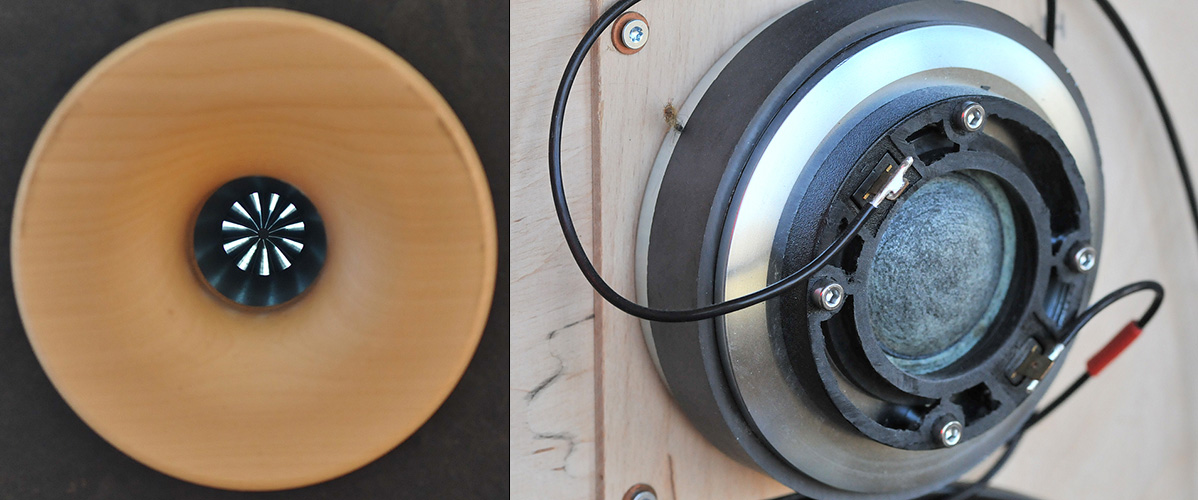 |
Now it was our turn to get intimately acquainted with the Sagarmatha Duo system. Sagarmatha is the Nepalese name for the highest mountain on earth commonly known as Mount Everest. Giving this name to a speaker indicates that it is the very summit of the Bastanis speaker line. So what did that mean in the here and now? First to the baffles. These are true dipoles sporting two 12" widebanders with Alnico magnets and Kraft paper voice coil formers glued up with extremely hard but natural glue. There are no fewer than 14 layers of lacquer applied to the cones plus an oil treatment. These various lacquers containing different crystals and minerals treat different zones of the cones to control unwanted cone resonances. Afterwards, 7 felt pads are glued to the cone throat near the solid hard-wood phase plug. This oil/lacquer treatment takes ~8 weeks for a pair of widebanders. For his filters, Robert runs with home-made caps bypassed with Duelund silver-foil caps and his own graphite resistors.
|
|
|
|
|
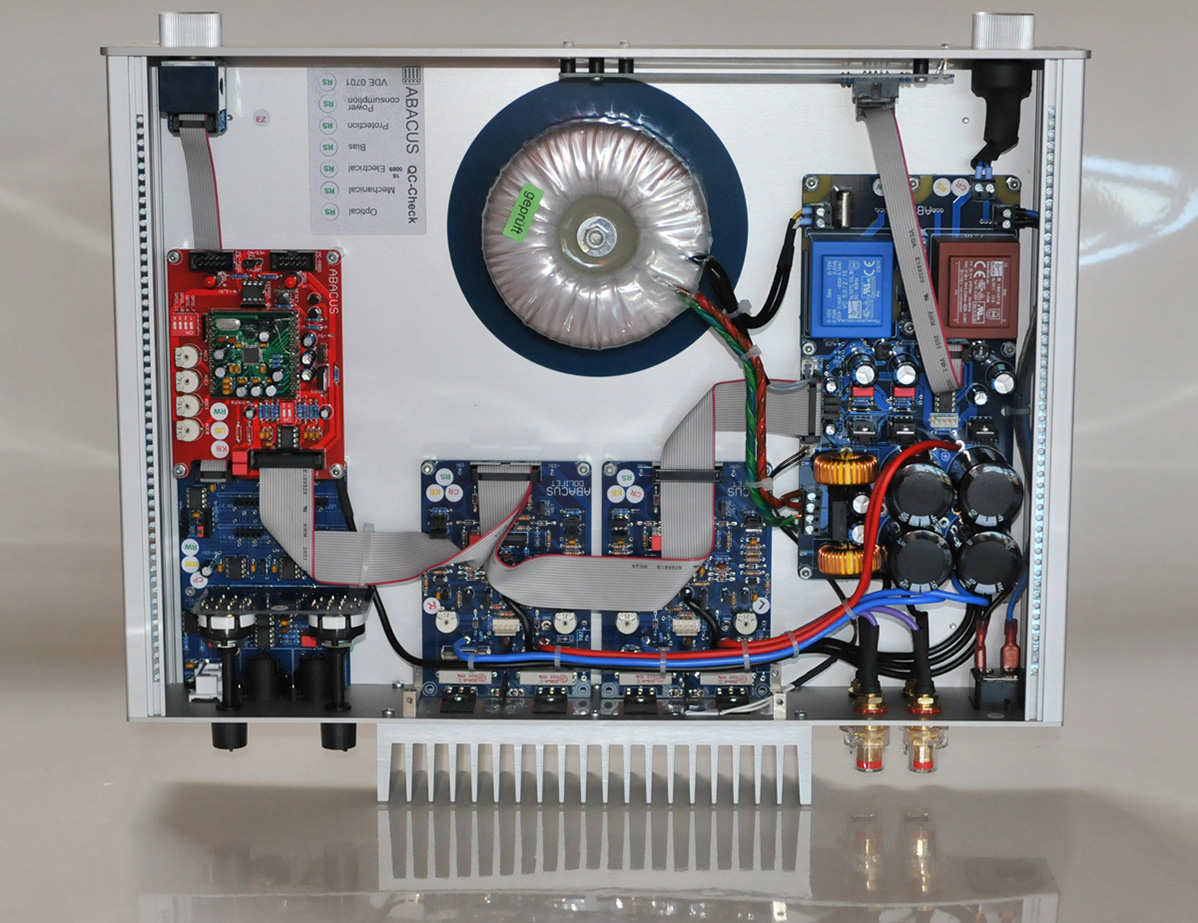
Completing the OB driver array is a Gemini MkII dipole tweeter between the widebanders. With the baffles placed in front of our large front wall in glass, the Gemini tweeters offered a unique see-through lens which revealed their star-like internal structure inside the wooden horn. Over at the low-frequency processing units, we met the German Abacus 60-120C power amplifiers. Robert chose them because they use the collector of their output transistors to drive the speakers, not the emitter as most solid-state amplifiers do. This frees up constant maximum current regardless of load whilst 100% negative feedback adds even more control to couple amps and woofers as though with a rod. For use with these Ultimate dipole woofers as they have been baptized, the amplifiers are set to bridged mode. Beyond their standard stock makeup, the Bastanis version are equipped with an Abacus DSP board whereby a few trim pots can dial in time delay, a low cut from 16 to 48Hz and a low pass from 50-150Hz. We left the top of the amps off to make easy adjustments.
|
|
Bastanis loudspeakers are not shy of being different. Not only all their drivers undergo proprietary treatments, in a way so do the cabinets. Our earlier review sample of the Club 27 Jimi had sported an oxidized i.e. deliberately rusted steel front. The Sagarmatha baffle and cabinet came finished in slate. We grew up with slate as the first material we learnt to write on. Only a year later did we progress to leaky ball-point pens and paper. We also knew slate as roofing tiles in Germany or Ireland whereas Dutch roof tiles tend to be baked clay. According to Wikipedia, "slate has two lines of breakability—cleavage and grain—which make it possible to split the stone into thin sheets". This was done expertly to create the slate sheets glued to the Bastanis baffles and bass cabs. There was no crack and all edges were smooth. When the baffle plinths are disregarded, the grey of the mottled slate sheets plus the shape and geometry of the drivers make for a distinguished unobtrusive appearance. To break up the fifty shades of slate grey, the beveled openings for the twin widebanders reveal subsequent layers of the multiplex sub baffle to add visual friendliness atop which the blond wood of the tweeter horn becomes the virtual cherry on the visual pie.
|
 |
|

|

|