This review page is supported in part by the sponsors whose ad banners are displayed below |
 |
 |
This informative attitude extended to soundstaging. The virtual stage began classically at the speakers’ base line and depth was particularly well illuminated. To this were added high image focus or localization power and the ability to carve out dimensional sounds. Voices and instruments properly recorded thus exhibited proper body. Though increases in this discipline remain achievable elsewhere—I flashed on Ascendo’s System F or the Myro Whisky—-the Genelecs already operated well above average.
What the 8260 won’t do is organic enhancements. Wherever a sound engineer committed something organic to the master tape, it sounded that way. If the recorded perspective was flat however, playback had the depth of a beer cap. More obnoxious still were recordings shown to be veritably spliced together, with instruments and voices occasionally lacking all inter-spatial context, their edges either too stark or unnaturally frazzled.
|
|
|
| |
 |
Martina Topley Bird’s The Blue God thus asked to be killed off immediately. These New Puritans’ "Numerology" from Beat Pyramid was some fun with its brutally hard contrasts between drum beats, hi-hat and guitar riff because this hardness matched the aggressive rhythmic drive of the piece yet sounded better after deactivating room optimisation. Imaging precision took a hit—I was after softer edging, hurray!—and the bass grew a tad fuller and softer to make for a less punishing mix. |
|
|
|
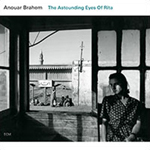 |
The same default setup with Anouar Brahem’s The Astonishing Eyes Of Rita meanwhile didn’t sound as good—not as clear, transparent and outlined—as with the AutoCal adjustments engaged precisely because this recording is of very high quality to begin with where one means to recover all its carefully recorded details as close up as possible. |
|
And that really squared the circle. Point blank, one shouldn’t underestimate the merits of Genelec’s DSP integration. Depending on mix, album or genre I enjoyed switching between default and room optimisation just to see what would suit best. All I had to do was set a dip switch on the back. Which could simply be the beginning. One can create all manner of settings, save them to memory and recall them at whim. A studio engineer might shake his head because he wants dead-neutral playback (he massages sounds before they’re set in stone). At home the recordings are fixed. Only a diehard purist would deny the value of such flexibility particularly since the usual seasoning options of power amplification and speaker cable choices have been eliminated with active speakers.
|
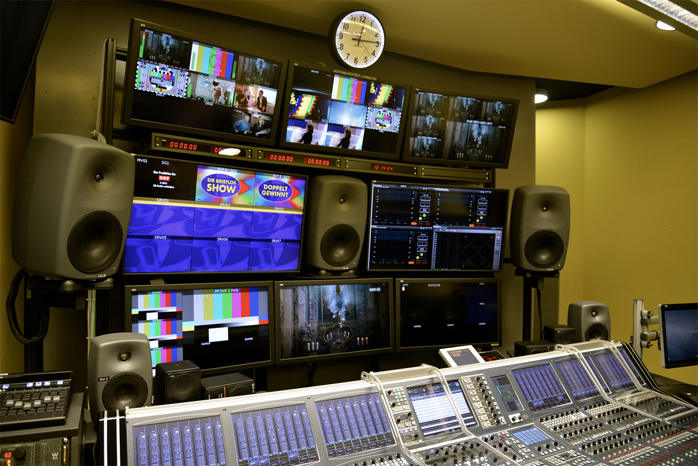 |
Conclusion. Genelec’s active 8260 demands about €10.000 inclusive software, measurement microphone and contingent on color. That’s a pile of dough. A musically compelling chain can be assembled for lots less. Even so I’d call this pro package relative value. Why? Because it’s an all-round multi talent that plays full-range, neutral, highly resolved, spatially correct and most of all with very low coloration and distortion surely served by that acoustically shaped highly rigid cast aluminium box. DSP steering adds uncommon flexibility to adapt to various room acoustics by minimizing room mode effects and accounts also for listening preferences (predominantly but not exclusively on tonal balance). It can even be sensible to switch settings between recordings or for specific genres.
|
 |
The digital input increases flexibility particularly for those without analog sources. One saves on a preamp and the speaker leashes directly to a laptop/network player. Very smart. Hence it’s a pity that the Finns play out their trump card with hesitation and only via AES/EBU. There’s no coax, no Toslink, no USB input. Most hifi clients will have to reach for an adaptor. Further pity is that the 8260 lacks a standard remote control as is included with Genelec’s Syno sub/satellite systems. Volume is exclusively adjustable via GLM software which is sensible for studio use but inconvenient in the home.
|
|
|
Psych profile:
- The 8260 plays truly full range and tonally neutral.
- Thanks to active drive bass extension is truly shocking regardless of size. Low bass is dry, quick and articulate all the way and seamlessly integrated with the midband.
- Bass quantity is user-adjustable. In the optimized setting most recordings sounded expertly balanced whilst some seemed slightly dry and wiry but individualized DSP settings allow customisation.
- Midrange and treble are one unit because the coax driver works without transitions. These bands are extremely transparent, clear and resolved.
- Absence of artefacts and colorations renders performers exceptionally pure in all their sonic textures and colors.
- Macro- and microdynamics operate on a good level for the price. At very high base levels bigger boxes handle dynamic shifts with even more nonchalance where the 8260 starts to work harder – but those tend to cost more.
- Soundstaging is highly accurate to combine keen image focus, laudable sonic plasticity and brilliant depth.
- The pro roots are obvious in the studio tuning as acoustic microscope which sounds concomitantly correct. Certain pleasure seekers could feel left out.
Facts:
- Concept: Active 3-way bass-reflex monitor with coax driver and DSP crossover
- Dimensions and weight: 593 x 358 x 344mm HxWxD, 27.5kg/ea.
- Other: XLR analog and AES/EBU digital inputs, treble and bass filters via rear-panel DIP switches, optional comprehensive software-driven measurement/compensation menu (GLM incl. microphone €699, without microphone €279)
- Warranty: 2 years, four years with registration
|
|
redaktion @ fairaudio.de
|
 |
 |
|
 |