 |
|||||
| Visiting Lloyd Walker was a crash course in "I can not only tell when a fly lands on my table, I can tell which of its legs is arthritic". While this sounds like so much poppycock laced with crocodile tears, I'm hear to tell you that minute adjustments on his Proscenium Gold Signature table truly did make confoundingly audible differences when Lloyd, partner Fred and yours truly visited Walker Audio client Mike Malinowski. But I'm getting ahead of myself. At Lloyd's, I first learned about the intricacies of his table and was even given a clandestine tour of the innards of the phono stage which was a poster child for point-to-point wiring. In most cases, it eschews hook-up wire altogether by connecting parts via their leads instead. Definitely work for the nimble of fingers and patient of psychological makeup. |
|||||
 |
|||||
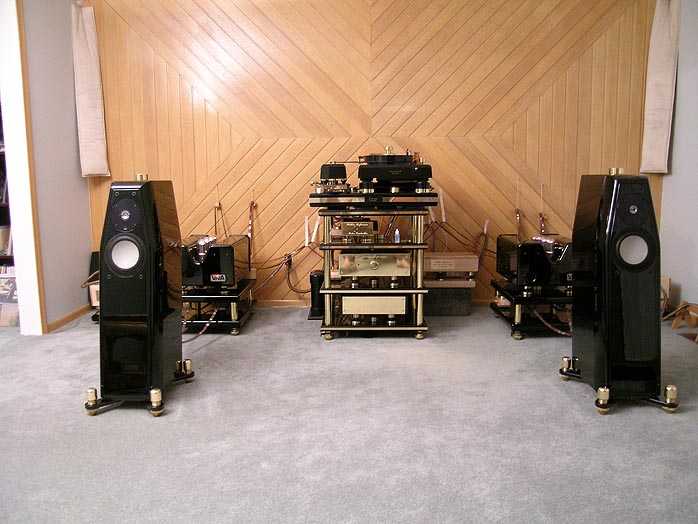
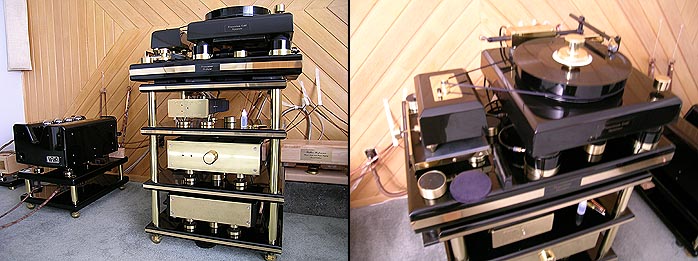
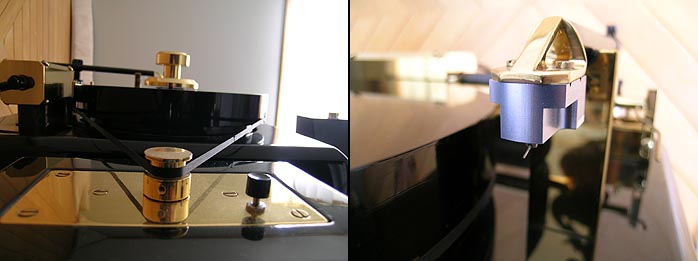
Like Kiuchi-San of Combak/Harmonix, Lloyd Walker is a true grandmaster of the Audio Tuning Arts. When he proclaims that the devil hides in them details, you better believe it and pay attention. The following installation pix will not only prove that there's a lot more to his table than people usually see but also show cable routing and termination aspects that combine to make the kind of differences you pays the big bucks for. |
|||||
 |
|||||
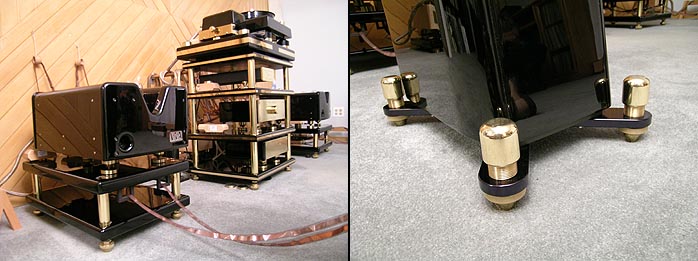
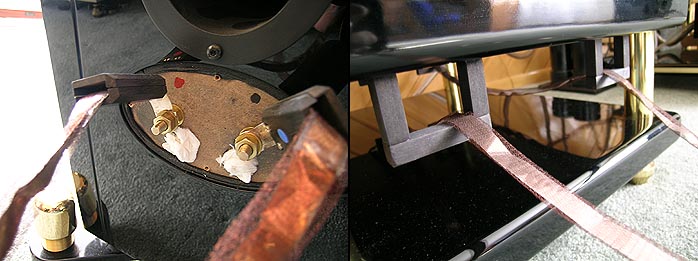
Not one to leave 'good enough' alone, the maestro had machined solid brass footers for his Kharma speakers and hot-wired his Omega Micro cables with DC bias mesh shield directly to the terminal posts. |
|||||
 |
|||||
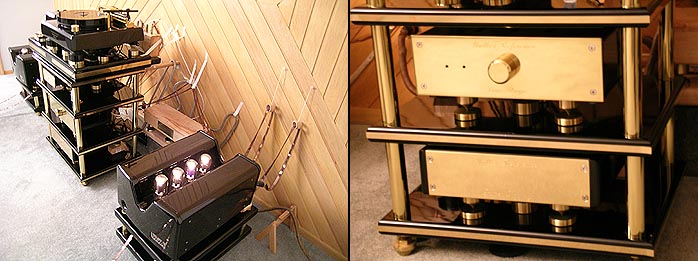
The large 211 Viva Audio monoblocks were no longer stock either and had benefitted from internal rewiring and direct-coupled ValidPoints. |
|||||
 |
|||||
Walker Audio's new line stage uses three valves fitted with properly drained lead shields, ValidPoints and a solid-state power supply. |
|||||
 |
|||||
 |
|||||
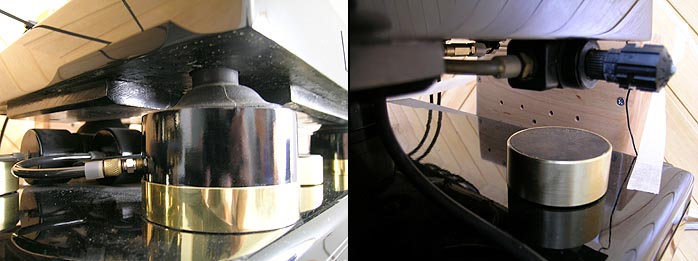
As an air-bearing design, both the 70lbs lead-filled platter and the tangential tone arm float on an air cushion to reduce any mechanical drag. An oil trough meets the arm's needle point damper and an adjustable displacement lever can raise or lower the oil surface to calibrate damping. The external high-torque motor drive sports a set screw that adjusts distance of the belt spindle from the platter to fine-tune belt tension to a 'T'. |
|||||
 |
|||||
 |
|||||
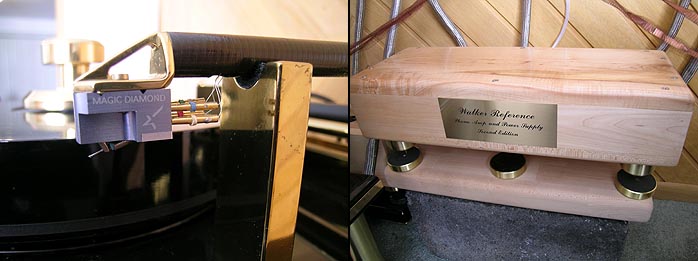
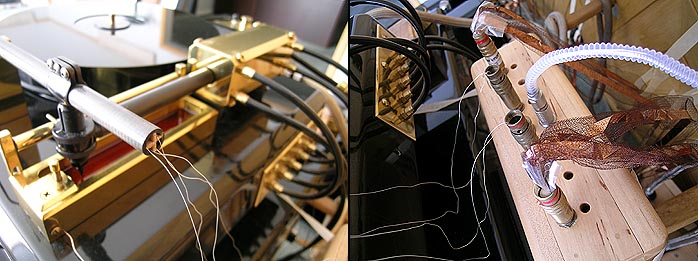
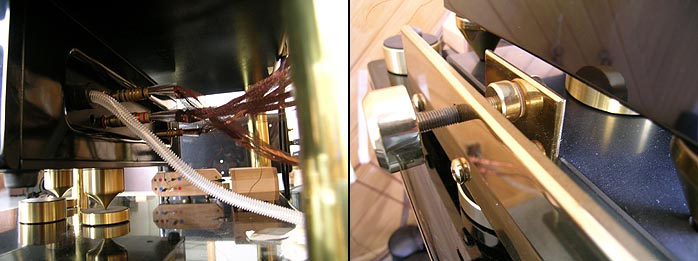
The tone arm wiring exits the hollow Carbon fiber arm tube directly and connects via Mapleshade's proprietary RCA plugs to his wooden-chassis phono stage while the outboard Reference Motor Controller eliminates even the tiniest line voltage fluctuations to insure rock-steady speed stability. A screw terminal can increase or decrease said speed as referenced against the usual strobe mat. |
|||||
 |
|||||
 |
|||||
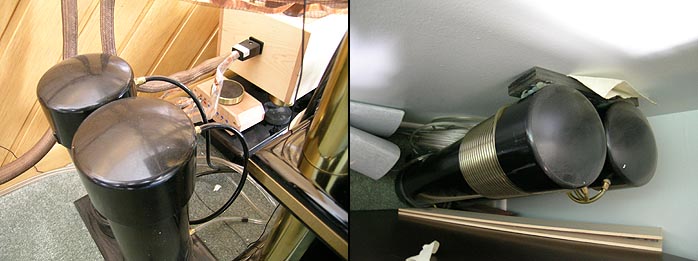
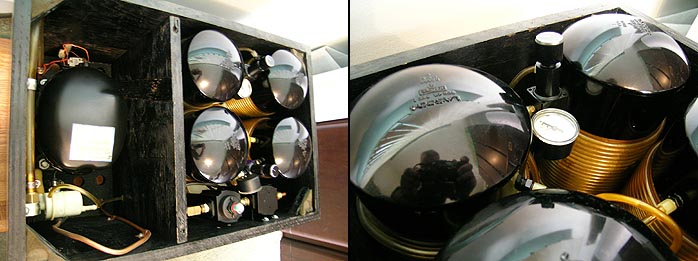
The air supply is extremely elaborate and consists of two local canisters close to the table and a pair of pressure feedback canisters and the main pressure drive system in a remote location. |
|||||
 |
|||||
 |
|||||
Despite the overkill construction and parts count, the table is extremely easy to operate and once set up, requires no further adjustments to become leave-and-forget simplicity. As the following stop at Mike's will detail, the fabulous tunability of this design is mandatory to truly adapt the table to the remainder of the system. It's something digital doesn't at all accommodate safe perhaps for certain filter settings on upscale machines. Beyond that, you can't change any digital parameters to tune the sound. On a truly high-resolution system like Lloyd's or Mike's, minuscule adjustments of speed, belt tension, tracking angle and arm damping act like an atomic microscope that changes which molecular layer of the music you zoom in on via the mere rotation of a screw or two. Having gotten in very late due to Bill & Loretta's seductive surprises, we did only the most cursory of listening here and hit the back roads early the next morning to check out Mike's latest acquisition, the mighty Wilson Audio Alexandrias for which he had remortgaged his house, plus VTL's 'Son of Siegfried' stereo amp and matching 7.5 preamp which replaced his former X1s and Tenor Audio 75-watt OTL monos. Despite my very brief sonic encounter at Lloyd's, it was clear as the -- fading by now -- daylight that except for the last sock 'em reach and oomph below 35Hz, his system was about as well-balanced between extreme resolution and musical involvement as imaginable. But Lloyd has already threatened to add two of Kharma's new subwoofers in either corner to flesh out the bottom octave for good. As though you couldn't tell already, Lloyd's way deep into this hobby. But he can also bedevil you with harrowing anecdotal details about bore and valve jobs on hot-rodded cars and motorcycles, reflecting a background in machining and mechanical applications that mate nicely with his systems-control skills on nuclear reactors and oil wells to enable the creation of something as complex and refined as this hand-crafted marvel of a turntable. |
|||||
 |
|||||
 |
|||||
 |
|||||