 |
|
|
Another difference came in the high frequencies. The Level7 was calmer yet had the better decay, all smooth but with proper weighting. D1 was great too but on sheer refinement I compared two different classes. The LampizatOr painted the more coherent, smoother and better differentiated picture. The more time passed, the more air popped up. The Lumin was more centrally focused. Despite its generous soundstage, more things went on between the speakers than on their left and right sides. The Level 7 handled that particular task in a more balanced stretched-out way, at the same time showing excellent focus directly in front. That's why the Łukasz Fikus device appeared more coherent and natural. Yes, a bit darker too but more refined overall, no doubt about it. These differences were big. But in the very end, out of pure formality, we must remember their price tags. There was a huge gap at work.
|
 |
The time had come to challenge the D1 in the second rig. Here Boenicke Audio’s W5 monitors connect to NuForce REF 9 V3SE monos fronted by a direct Lumin competitor, the Asus Xonar Essence III serving as source plus preamplifier. When needed, USB interface duty was handled by Audiobyte’s Hydra-X+. This gear was placed on a Rogoz 3QB3 platform, with a Gigawatt PF-1 power strip and Forza AudioWorks cable loom. This listening perspective is the nearfield. Speakers are put on a 150cm wide desk. The D1 drove the NuForce monos directly, hence volume control was handled by the Lumin app wholly in the digital domain.
The Asus is a quite soft sounding tonally balanced source which favours saturation and pure listening ease over resolution, detail or attack. It most definitely isn't a magnifying glass. It can be heard that its designers wanted to achieve a certain musical effect and they did achieve that. The Essence III isn't the best in class but should be seen as a whole package; a serious headphone amp, DAC and preamplifier stage. Knowing how this Asus flagship performs, many people will believe that it must have things in common with the D1. WM8741 chips are seen as highly musical after all. Practice shows that this assumption is somewhat correct. In this nearfield setup, the Lumin again gave a very easy-going performance. It sounded relaxed, resonant and bluntly pleasant. After several hours of listening, one comes to the conclusion that everything adds up nicely. Nothing critical demands intervention.
|
|
|
|
|
Tonal balance was even, saturation spot on as was resolution. There even was punch and impressive holography with lots of layers in front. A big part of this staging wizardry was down to the Swiss wood speakers too. By comparison to the Essence III, the D1 played it tighter. It had a stronger grip over the bass for example and its colouration was toned down a bit. Those were noticeable and good differences. Without excess, the Lumin's dynamics were more to the point to play music without any effort. By contrast, the Essence III had a fuller, looser rounder bass. The D1 controlled itself in this particular field of LF presence. It was spot on again. I had nothing to complain. And this silvery device was the more resolving, too. The highs were more selective, smoother, weightier, more pronounced and illuminated. Generous amounts of air became the cherry on top. In summary, this kind of presentation is far less tiresome in the long run.
|
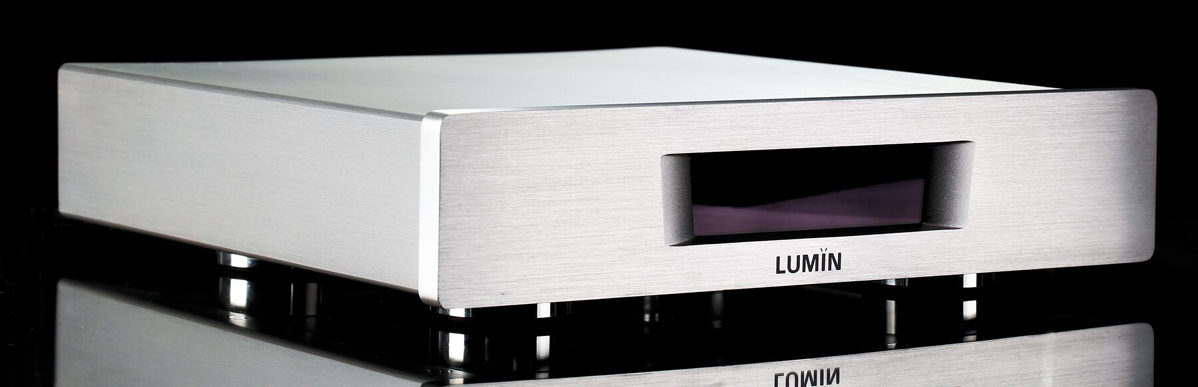 |
Summary. For me the Lumin D1 was a hugely positive surprise and sonically unexpectedly refined. It marked its presence in marvelous fashion in each setup I tried. My ears were served with beneficial advances far above just being audible. And the D1 worked without the slightest hiccup. During my two weeks with it, the loaner didn’t pull even the tiniest stunt just once. In terms of pure functionality, it's a very fine device to have. Once one tries navigating music with the Lumin, there's no turning back. The quality app and iPad-based remote are brilliant conveniences.
In the end, the D1 is neither an excellent streamer and above-average DAC nor vice versa. Its two core functions are equal, complementary and as such equally serious. Add an appealing form factor, clearly mature engineering and overall performance and the asking price is fully justified. For the money, it doesn’t get much better if at all. But it isn’t for me, yet. I couldn’t connect it to the costlier LampizatOrs to exploit their proprietary DSD engine. That would require a USB output which the Lumin lacks. Little does that matter though. After our living-room stereo is completed which will rely on remote control by my wife’s absolute insistence, I will only take the Lumin D1 under consideration. Those planning to part with €2’500 on a marvelous streamer cum DAC in one neat box, take a good hard look at the D1. It really deserves it!
|
|
Dawid.Grzyb @ pclab.pl
|
 |
|
|
|

|
|


