|
|
|
Returning to Warsaw in my mind, another super speaker which really impressed was the Vivid Audio Giya G3 running off big Cary Audio valve monos with a PS Audio transport/DAC front end. As with turntables, speakers come as low-mass and high-mass concepts. Here Vivid represents the former, Kaiser the latter. When enclosures are as craftily subtracted from the audible equation as these brands manage, remaining qualifiers on presentational style and flavour are the filters, the dispersion traits and the actual drivers themselves. Laurence Dickie favours an aluminium alloy for all of his diaphragms. Rainer Weber champions paper for his main driver whilst Mundorf's top AMT with its pleated 126cm² of foil is likely Mylar. Whether this metal/paper choice is the decisive reason to explain a very different gestalt, I cannot really know. As an isolated fact, it's simply suggestive. The Vivid sound—I've heard their speakers at many other shows too—is a combination of electrostatic clarity and hornloaded dynamics. As such it belong into the adrenaline class. The company name is most apt in fact. It's a very vivid sound.
|
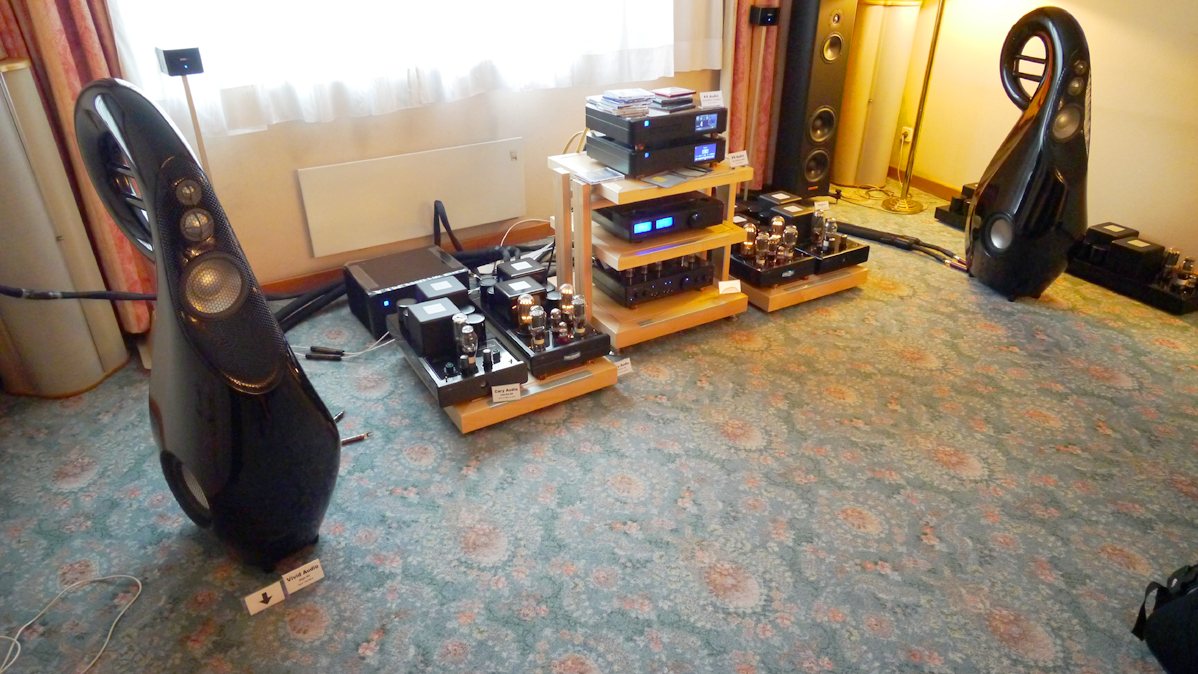 |
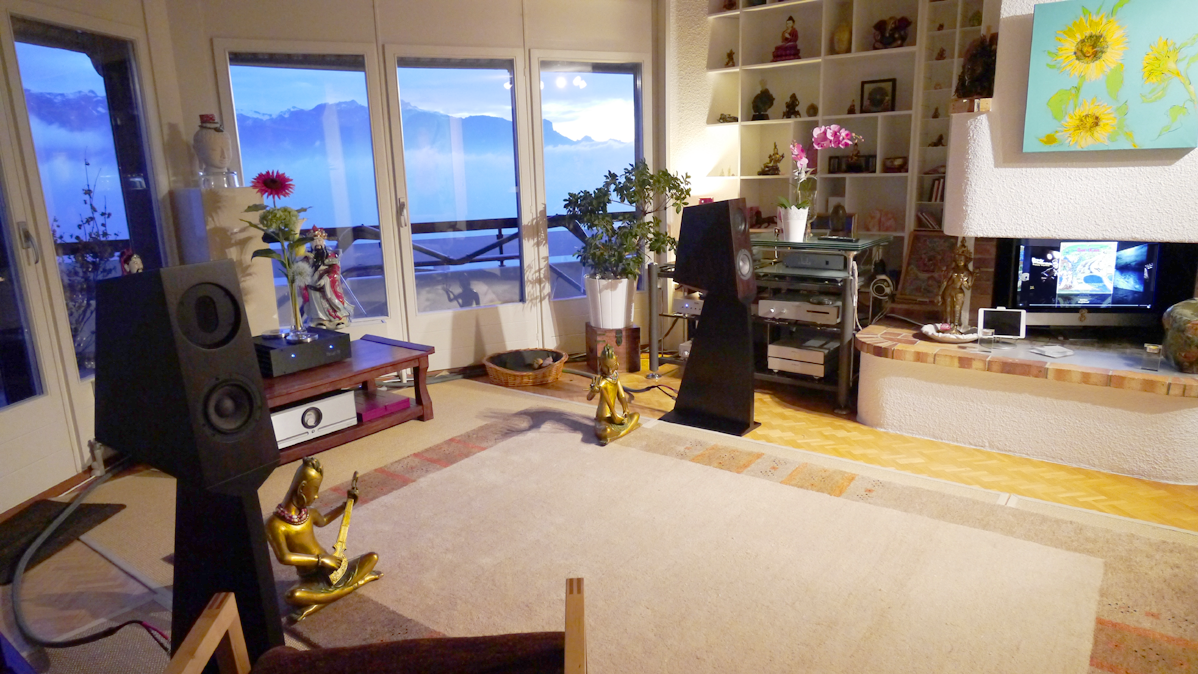
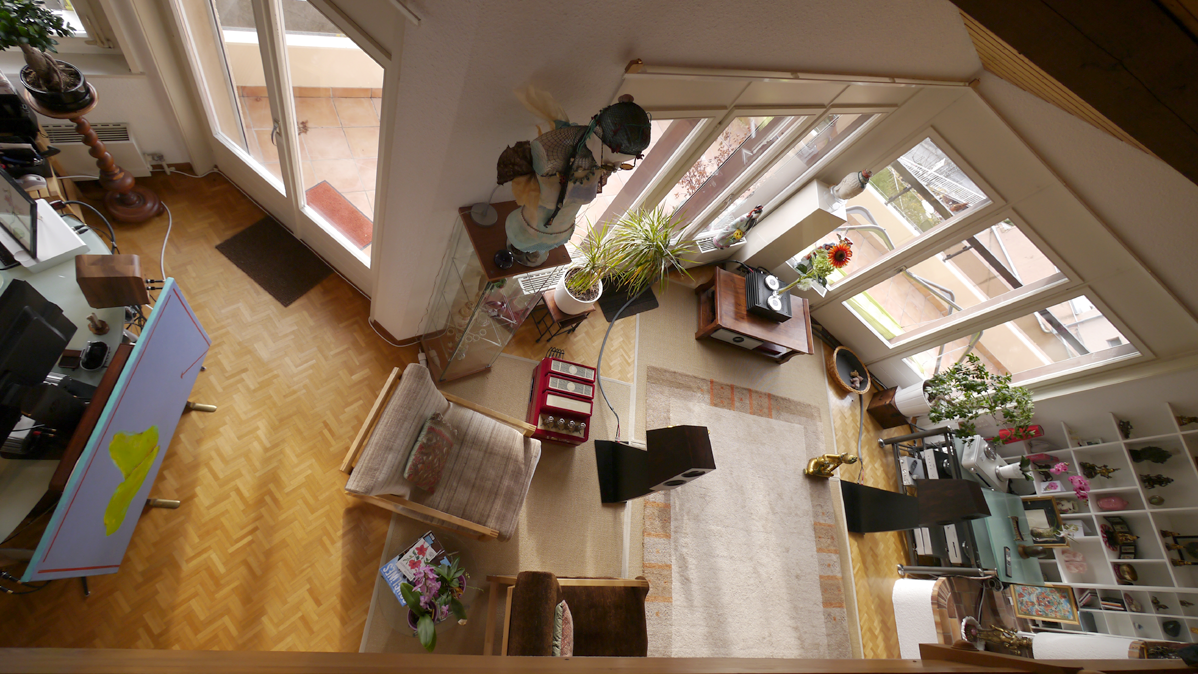
The Kaiser Kawero Chiara is a tone-first example. It prioritizes density, material substance and warmth without fuzz. Factoring the ancillary choices in the above photo versus the ones which worked best for me further underwrites this opposition of temperaments. Within my arsenal of speaker choices, the Chiara was thus closer to the soundkaos Wave 40 and Boenicke W5se than the Albedo Audio Aptica. A true highlight of its in-room behaviour became the absence of triggered room modes. With as bass-capable an alignment as its ABR loading, that's an asset buyers of the ubiquitous port-loaded speaker routinely overlook or underestimate. What good is low bass if it creates ringy boomy hot spots that, like a shoe that's too small, become constant painful reminders that the speaker overloads your space?
|
 |
Given how ours is already larger than
many a super posh Hong Kong flat I was invited in years ago to observe huge towers nearly touching the ceiling whilst the listening seat was too close for widely spaced drivers to sum as intended... the Chiara really is all the speaker most people ought to have who want peak performance, can afford to play at this level but use rooms of normal size. Even in an asymmetrically shaped 100m² space like ours, the only thing more you could possibly want happens below 40Hz. Again, that's ideal for a quality infrasonic subwoofer whose output you can control separately; and whose position is independent of where the Chiara sounds and looks best. If you read into that an indirect suggestion that the Chiara is nearly too good to justify the next model up in this line, you'd have captured my own thinking precisely. Even adding €5'000 for a premium sub from a variety of specialty vendors would still get you in well below and nearly guaranteed create more linear bandwidth too.
|
|
|
|
|
In this rarefied realm of the super monitor, my prior encounter with the EnigmAcoustics Mythology M1 sets the Chiara apart not just on looks. Where the M1 with Sopranino monopole electrostatic super tweeter clearly moves ahead is on ultimate airiness and ambient recovery. If you're a treble worshipper who insists on complete top-down illumination and 'seeing' all the haloes of reflective space around the performers, I've not come across anything which equals the enigmatic twin-tweeter box from Asia. My wife in fact still bemoans that I let them go. Where the Chiara has the edge is on bass weight and—I believe but don't listen to such extremes—achievable max SPL.
|
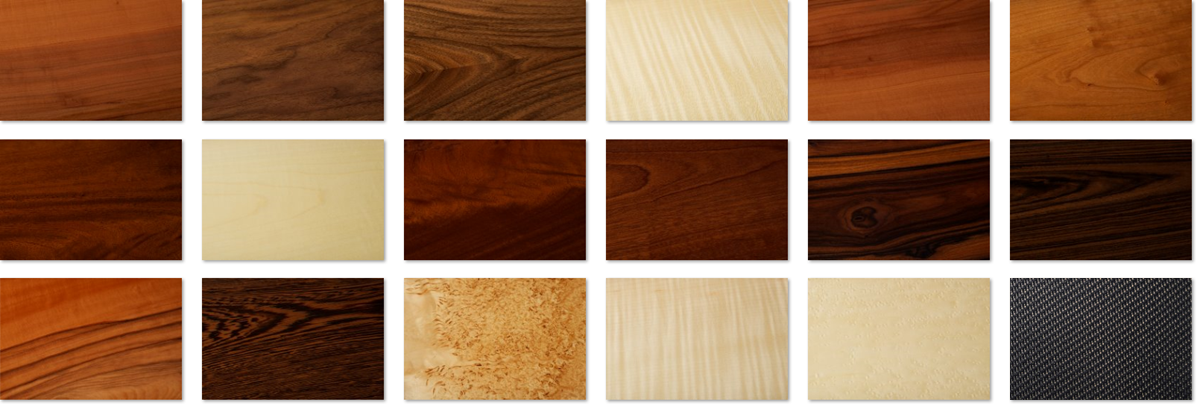 |
From a practical perspective, I also preferred its monolithic assembly which integrates the stand; puts the binding posts at the floor; doesn't add an outboard tweeter with more wiring hanging off the back; and the broader finish choices away from black piano gloss. That looks swell in brochures but simply doesn't wear the same in the real world of dust, finger prints and reflections. Further on real-world practicality, the ABR's damping of the mid/woofer is so effective that the usual muscle-amp requirement for small bassy monitors is lifted. Add to that its tonally generous behaviour and smaller transistor amps like the FirstWatt F6, Crayon Audio CFA-1.2 and forthcoming 50wpc Bakoon AMP-51 become exciting options. Whilst the Chiara shares not just the basic concept with Franco Serblin's iconic Extrema, on the subject of drive it's a very different game.
|
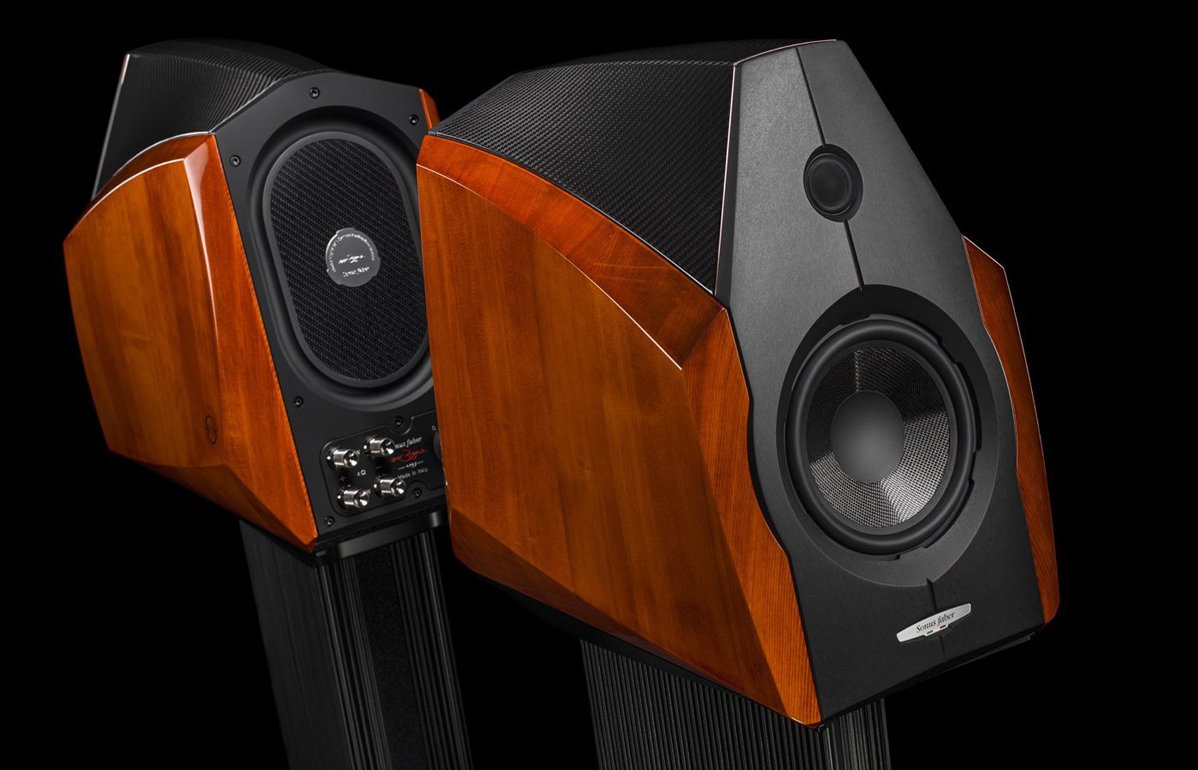 |
Sonus faber's limited-edited homage model of the Extrema restyled and modernized for the post-Serblin era.
|
Whilst on Sonus faber, with the FineSound Group's fiscal and infrastructure resources—they today own Audio Research, McIntosh, Sonus faber, Sumiko and Wadia —one expects industrial capabilities and operational scale to aim as high as they please. With a small speaker house from Germany, one doesn't to the same extent. That's what makes Kaiser Acoustics different. Like the Chiara, they act a lot bigger than they are. Yet being a family enterprise with solid roots in the furniture business, they can make riskier decisions corporations might not make. And let's face it, an über monitor priced as such isn't exactly a safe business bet. Perceptions on size and number of drivers work against it.
|
 |
On those counts, the Chiara and its makers are boneheadedly contrarious. Such stubbornness marks a throwback to HighEnd's pure beginnings. And trust too that enough customers exist who are willing to give a more unknown brand a chance. They must appreciate extremism and the inevitable costs associated with it. In the current climate where particularly Asian distributors clamour for ever more expensive statement products to cater to a nouveau-rich clientele to whom cost is no issue, it's easy to predict that as word on Kaiser's engineering and manufacturing acumen spreads, they might soon be petitioned for something far bigger and more expensive than their current flagship. It's the direction Swiss Stenheim pursue who began with the compact Alumine two-way but today make brutally heavy big floorstanding all-metal reference models in the Magico vein.
|
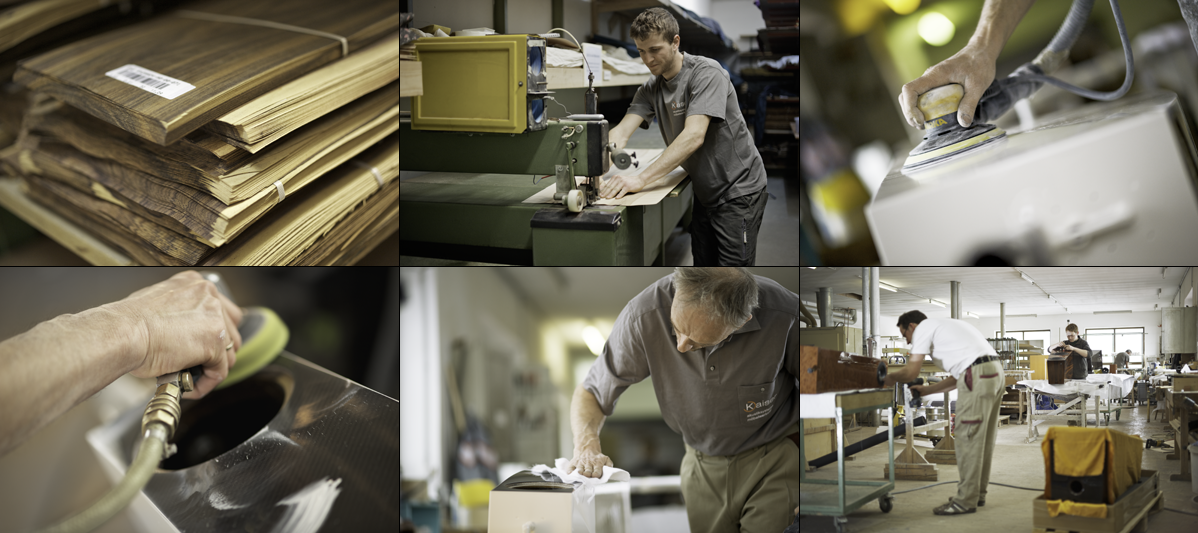 |
With Kaiser's commitment to Panzerholz, trickle-down below the Chiara would only net a smaller sealed or ported two-way without shaving off significant cost. The Chiara would thus seem as approachable as the existing recipe allows for. That sufficiently liquid buyers are more apt to pursue floorstanding three-ways from the majors is a given. That in many instances they'd end up buying too much speaker for their space to backfire is as well. C'est la vie.
|
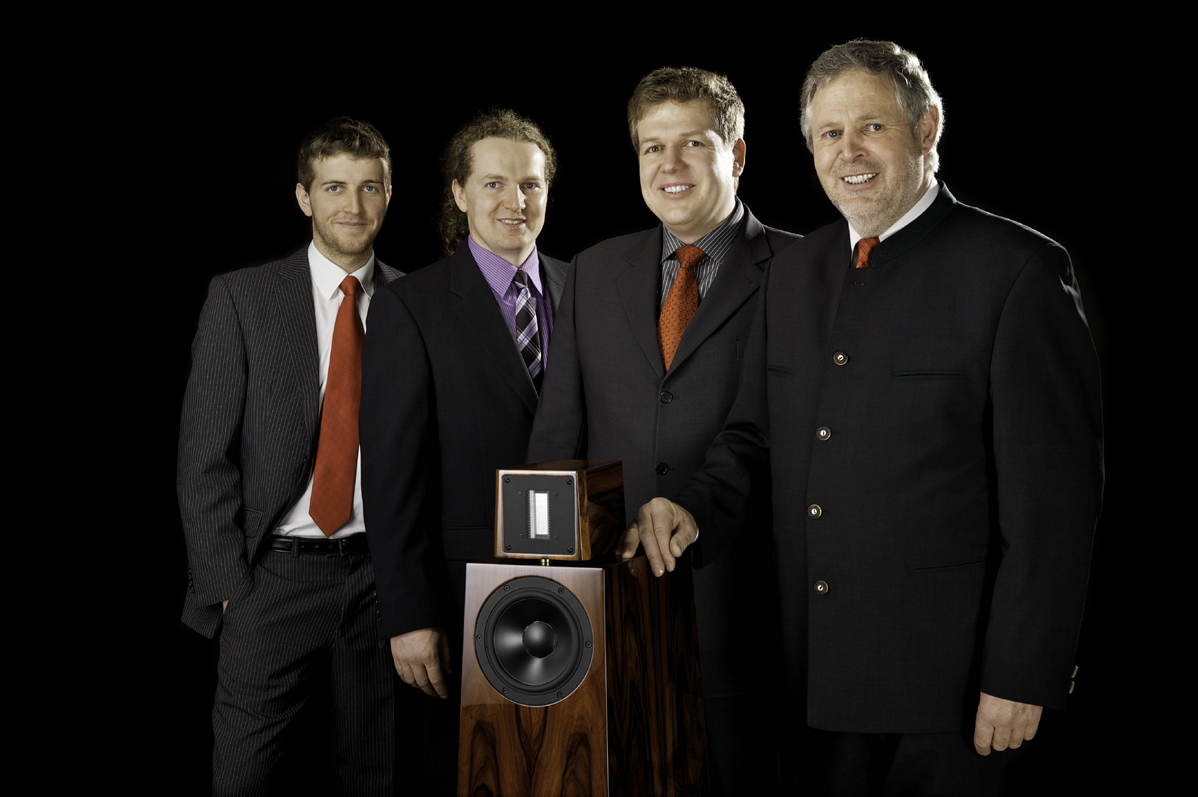 |
Three generations of Kaisers keep things firmly in the family.
|
To conclude, as the A/B against the sharper drier more studio-prepped Amphion One18 showed, the Chiara is possessed of some innate sweetness. Here the use of an AMT tweeter à la Burmester, Elac and Mark & Daniel does not result in a forward fresh 'Germanic' sound. It's another reminder that in high-end hifi, specific parts don't automatically predict specific results. That the top ScanSpeak Illuminator paper drivers do express warmth and meatiness is a reminder to the contrary. For folks who find much to like in tube sound but for various reasons hesitate to actually go that route, Kaiser's monitor becomes an attractive proposition. Even with transistor amps, it exhibits many very similar qualities. Because of it, fast lucid high-bandwidth amps are mandatory to not overshoot. For the 14x20' (5x7m in euro currency) rooms which many audiophiles use, the Chiara's very strong 40Hz reach completely decommissions a subwoofer. For those with grander expanses, sub 40Hz fill with a sufficiently steep low-pass filter becomes the completer. Put differently, for most people into high-end audio—a fractured fraction of most people—the Chiara is a true end-of-life proposition up there at the edge of the art. Journey over. Cancel your membership to the audiophilia nervosa club and throw away the key. For those of us still looking in, the Chiara is an extremist proof of concept for what a compact speaker can be and sound like when all reasonable and unreasonable stops have been pulled up by the roots scorched-earth style. Expensive stuff backed by real engineering, real manufacturing and exotic parts costs and superb performance. An encounter of the 4th kind. |
|
 |
|
|
|

|
|