This review page is supported in part by the sponsors whose ad banners are displayed below |
 |
 |
Round II.
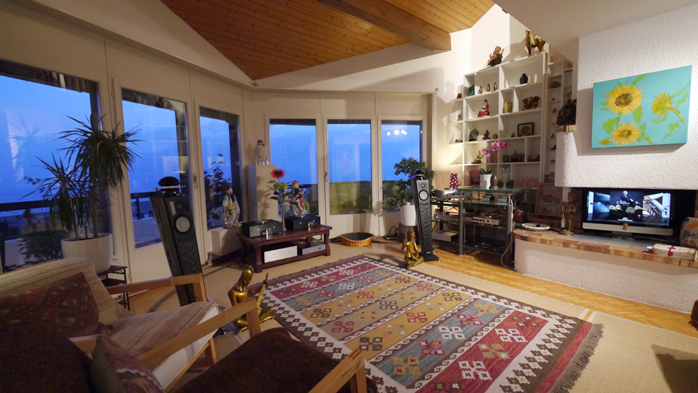
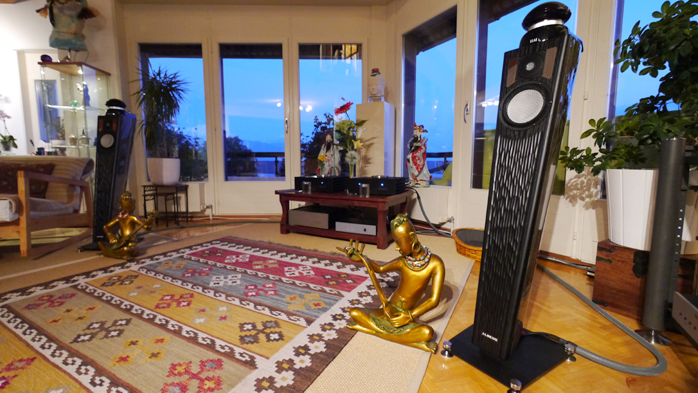
As explained in their revisited feature, I'd acquired the Albedo Audio Aptica as a placeholder for a very modern very lucid hifi sound such as you'd expect and get from other ceramic proponents like Kharma, Mårten Design, Gauder Isophon & Co. Of that lot, these rakish Italians best suited my own tastes, wallet, looks and size. Regardless of private allegiances, any reviewer wishing to cover a wide range of kit can't be ultimately locked into just one type or flavour of speaker. After all, that's the device which most dominates the final performance. Whereas my solid-wood soundkaos and Boenicke speaker and the fully omni German Physiks HRS-120 all fall into the broader tone & texture camp—this speaks to my own biases—the Aptica is lit up from top to bottom. Speed is its deed, articulation its fascination.
|
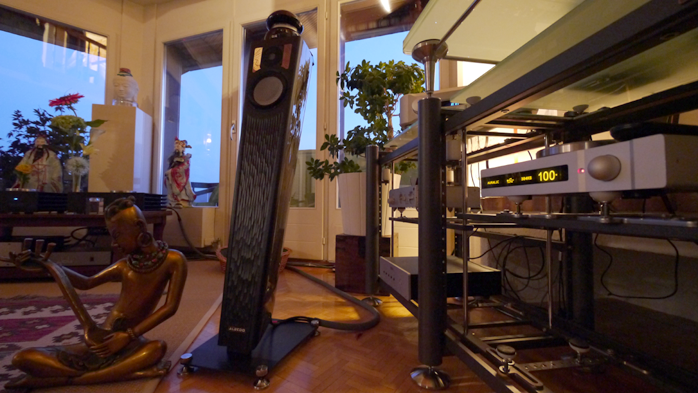 |
Its crystallized sound sparkles like a fancy faceted glass decanter. It drills down into the tiniest of tendrils. It's less about mass and deep colorization. It's leaner, quicker and crisper. Yet it's very smooth to avoid the dentist's drill and his drab office ambience (sterile white digs, then in his chair those uncomfortable down-to-the-bone assaults). The ultra-wideband Crayon really plays to this speaker's innate nature. That math has like meet like. Either of the F6 played a bit against it. This injected more tone density and also moved edge-of-seat transient focus back for a more relaxed mellower feel. Regardless, this speaker would magnify offsets between output devices more than my tonewood speakers, particularly so with the optional assist of those exotic cylindrical ribbon supper tweeters from Germany's Elac.
|
 |
That's because
hifi tales are filled with mentions of diminishing returns but far more rarely speak to the law of compound gains. Eliminate a bottle neck on performance by upgrading just one component and all the rest of it will improve. Components upstream of the blockade didn't get all their goods past it. Downstream kit didn't receive its full quota. This co-dependence makes it near impossible to assign firm cause and effect. But that's reasonably obvious. As such, it's boiler plate talk. One final note on said small print: the Lindemann DAC had to hoof it back to Germany's Krailling so the AURALiC Vega took its place.
|
|
|
|
 |
With the Vega a Technicolor champ, perhaps it was not completely surprising in the end that the core difference between the amps would now play out in the colour domain. The SemiSouth amp sounded paler and less explicit, the Mosfet version more saturated and specific. The word 'explicit' can connote extreme intimacy. Here that's not the intended meaning. There was nothing unbecomingly intimate about the reading. It simply exhibited higher contrast to feel stronger and more emphatic. Another way of pointing at the same effect would be elevated colour temperatures. Where soundkaos' innate emphasis on that aspect downplayed this difference by contributing to it plenty of its own sauce, the leaner Albedos spotted it more keenly. |
|
|
| In the shadow or right behind this observation was slightly fuller embodiment, often a side effect of deeper saturation. By prioritising said element of their own, the Swiss had diminished small gains or losses here and instead telegraphed the offset as one between edgier and smoother. Over the Aptica's greater bandwidth particularly down low but due to the Elac add-on ribbons also above 7kHz, I heard more body but was also aware that the production F6 exhibited greater bass power. Nothing went lower but the relative impact of bass runs was more pronounced. Fine cymbal and triangle work with brushes and soft tips had a bit more weight with the Mosfet version. A popular observation would be more copper, less silver. |
|
|
|
 |
Reverting to pleasure-seeking animal, I went into the C3 preamp's setup menu and finally set it to a full-bore 24dB of voltage gain over and above the 4Vrms output of the Vega. In theory, the generation of excess gain which then is duly burnt off resistively via attenuation seems foolhardy. In practice, it can act as a very benign minor analogue EQ. With Nagra's Jazz for example, the 0dB setting invokes more feedback, hence a drier sound. With the Esoteric, more gain always gets fuller, bassier and mellower. Zero gain is leanest, fastest and has the most brilliance. With the ceramic speakers, the best sound I'd made until now came from running my iMac via Audirvana set to 352.8kHz upsampling; the Vega at the 'exact' clock setting and filter '4'; the Esoteric at 24dB of gain; and the FirstWatt Mosfets. |
|
|
|
| Best sound refers to hitting the most compelling balance between speed and lushness, separation and tone, detail and context. After all, the catch-all term resolution is all-inclusive. A system can't just resolve so-called 'detail'. It must apply the same magnification to tone mass, dynamic scope, contrast and color wealth or else most the good stuff gets discriminated against. To my ears, these particular hardware choices and tuning options accounted for everything at the best distribution. A gal questioned by a young inspector Morse tracking a serial killer in the BBC Endeavour series referred to her invisible neighbour's music listening as gawd-awful caterwauling. Morse, good chap, understood right off that she was referring to operatic sopranos. |
|
|
|
 |
|
 |
I suffer a similar genetic inoculation against being turned on by the genre in general. With the latest F6 in place however, I was able to enjoy a good stretch of mezzo soprano Elῑna Garanča without anything getting grating or nervy. Don't count me a convert yet and give me Sœur Marie Keyrouz any day instead. But to the real point at hand, this amp—on speakers which to me would suggest against it—managed to avoid all the usual missteps with such caterwauling fare. As you might imagine, that counted as a high point in my book.
Feedback bad, 0 NFB good; single-ended good, push/pull bad. If that's really the case, the FirstWatt F6 is a very good baddie. Its overall temperament is mellower, its color rendering more intense than the F5. F6 shoppers self-conscious for lacking DIY chops are rewarded with a turn-key version that many would find to be a small but meaningful cut above the circuit first fitted with the SemiSouth parts. |
|
|
|
|
|
That the costlier SIT2 still has the edge on widescreen soundstaging and holography is true but rendered irrelevant to most who couldn't cope with just 10 watts into 8Ω and a trifling 8w into 4Ω.
With the power-equal F5 long since put to pasture unless Reno Hifi still lands the occasional refurb or trade-in, the FirstWatt F6 is a splendid new occupant for that vacated spot in this specialty catalogue. It's its first port of call for owners of conventional speaker efficiencies if one isn't a committed headbanger or owns low-impedance monstrosities from criminally lazy speaker designers who reckon that power is cheap to put the onus on the amp makers.
|
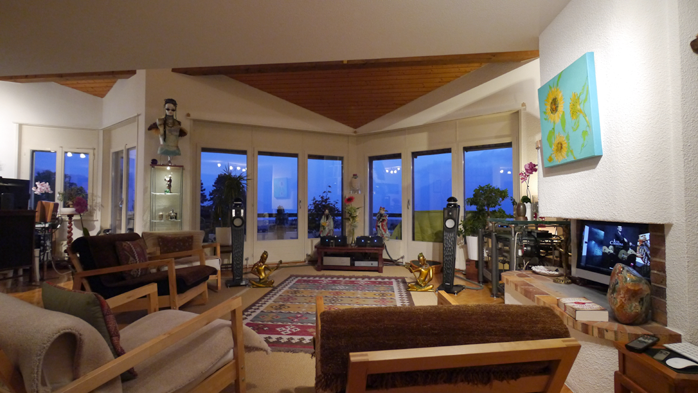 |
To wrap up, the F6 is voiced like an older man's amp. It's for those whose youthful fascination with maximum blister and zing has mellowed out. The "how many 32th notes can he cram into a bar" mentality has given way to discovering greater depth where more is said with less. The F6 is more lyrical than adrenaline-addled and all the better for it. In short, another very crafty piece of minimalist class A amplifier engineering from the man who does it best! |
|
 |
 |
|
 |
|