|
|
|
Reviewer: Marja & Henk
Financial Interests: click here
Sources: PS Audio PWT; Dr. Feickert Blackbird MKII/DFA 1o5/Zu DL-103; Phasure XX-PC;
DAC: Phasure NOS1 DAC; T+A DAC8 [loaner]
Streaming sources: XXHighEnd; iTunes; Devialet AIR; La Rosita Beta; Qobuz Desktop, Tidal Desktop; Sound Galleries SGM 2015 [loaner]
Preamp/integrated/power: Audio Note Meishu with WE 300B (or AVVT, JJ, KR Audio 300B output tubes); dual Devialet D-Premier; PTP Audio Blok 20; Hypex Ncore 1200-based monos; Trafomatic Kaivalya; Trafomatic Reference One; Trafomatic Reference Phono One; Music First Passive Magnetic]
Speakers: Avantgarde Acoustic Duo Omega; Arcadian Audio Pnoe; Podium Sound One; WLM Sub 12; Sounddeco Alpha F3; dual Zu Submisson MKI; Soltanus Virtuoso ESL.
Cables: complete loom of ASI LiveLine cables; full loom of Crystal Cable cables; full loom of Nanotec Golden Strada; Audiomica Pearl Consequence interconnect; Audiomica Pebble Consequence;
Power line conditioning: PS Audio Powerplant Premier; PS Audio Humbuster III; IsoTek Evo 3 Syncro; AudioMica Allbit Consequence
Equipment racks: Solid Tech and ASI amplifier and TT shelf
Indispensable accessories: Furutech DeMag; ClearAudio Double Matrix; Franc Audio Ceramic Disc Classic; Shakti Stones; Kemp polarity checker; Akiko Audio Corelli
Online Music purveyors: qobuz.com, tidal.com, bandcamp.com, amazon.co.uk
Room treatment: Acoustic System International resonators, sugar cubes, diffusers
Room size: ca. 14.50 x 7.50m with a ceiling height of 3.50m, brick walls, wooden flooring upstairs, ca. 7 x 5m with a ceiling height of 3.50m, brick walls and concrete floor downstairs.
Price of review item: € 3’250
|
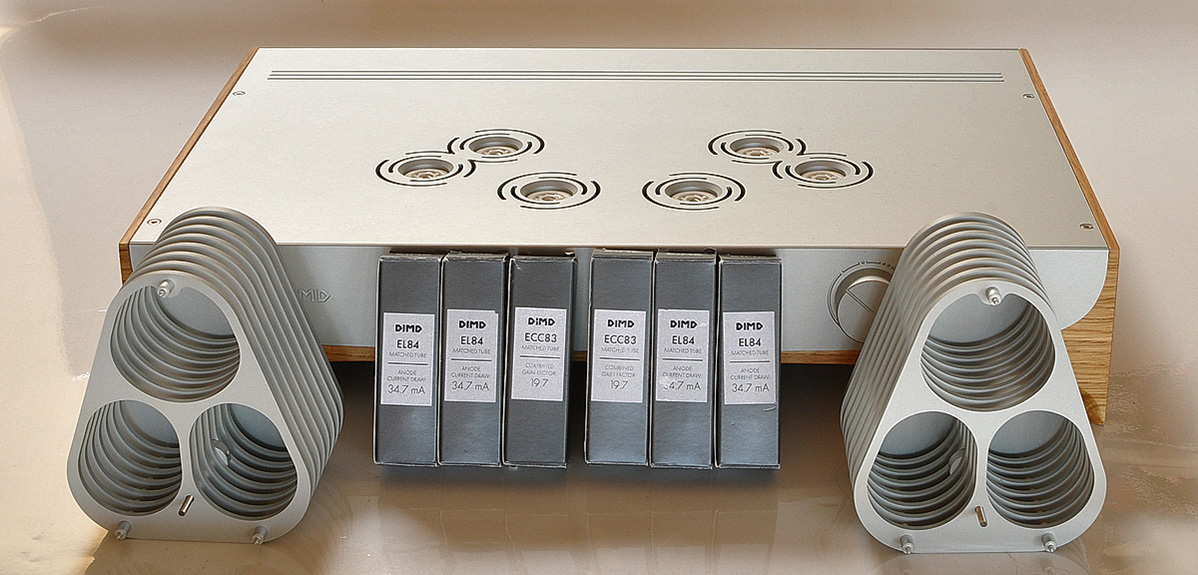 |
We met DIMD at the 2016 Warsaw show for the first time. Here's what we penned about them for our room-by-room report of that extraordinary annual show: "DIMD, a new Latvian company, exhibited in a nice brightly lit room for a change. The lighting combined great with the almost Nordic/Swiss feel of the amp's industrial design. On display was the PP10 amplifier without/with protective tube cage and a very fine combination of oak, matte aluminium and glass by way of ECC83 and EL84 tubes, simple tubes which in our opinion are highly underrated. In combination with the right parts, these tubes sound wonderful. From what we heard, DIMD use the right parts." The sound was promising, the looks great and the people behind the brand knowledgeable and pleasant. All these factors added up to a high chance for a positive review. Such a high chance meant a low chance of wasted review time, on a dud that wouldn't get off the ground no matter what efforts taken.
|
 |
|
|
|
|
|
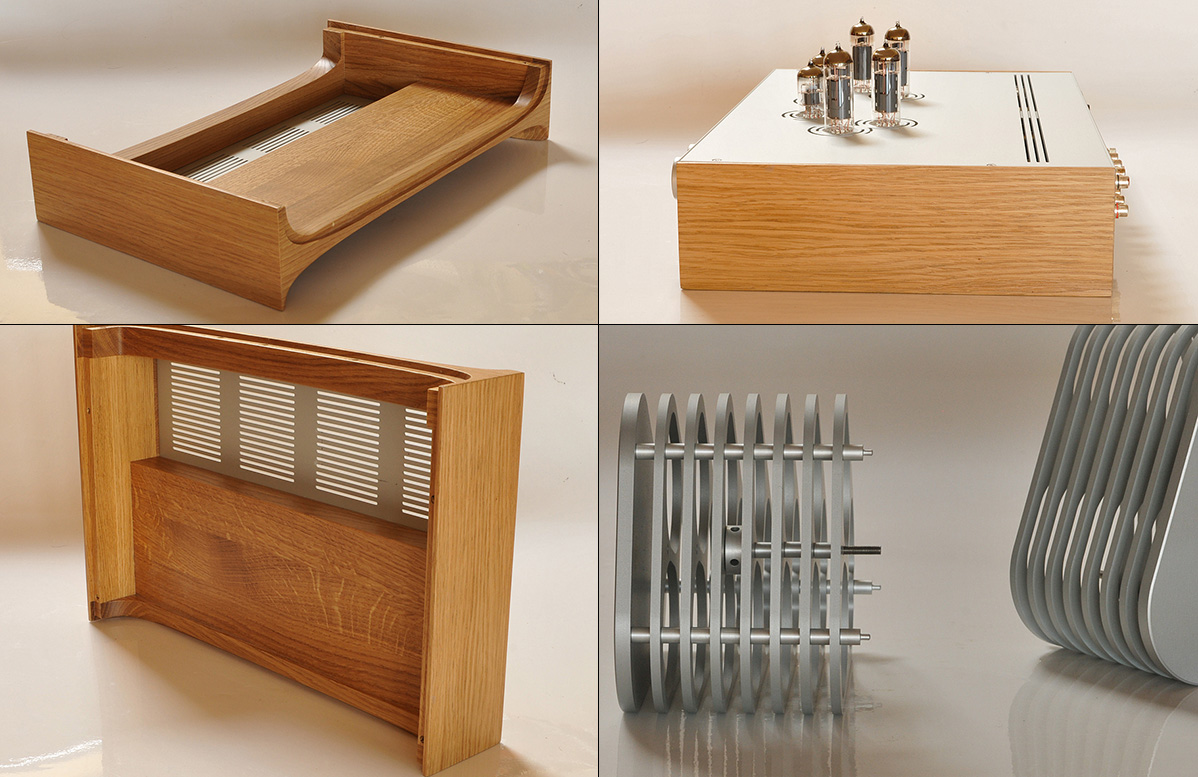
At the agreed-upon date and time, the DIMD PP10 arrived. Packed in an oversized 64 x 64 x 29cm cardboard box with plenty of foam cut to fit, its svelte 9kg of steel, copper, aluminium, wood and glass were accompanied by spare fuses, an Allen wrench, a power cord, a user's manual and two tube cages. We could whine about lack of cotton gloves that would have been nice if included. Being prepared for delicate things, we used cotton gloves from our own stock to lift the amp from its packaging. The very slick design was heavy at the back, indicating solid iron in the power and output transformers. When we flipped it over to take a look at the bottom, we noticed not only a nice ventilation grate but no footers. All you get is wood down there. From the front, the PP10 looks nearly symmetrical between top and bottom half. Both are curved at the outer edges though the bottom part also curves inwards in a very organic fashion. As we see above, this wooden base cradling the electronics which hang off the metal cover is CNC'd from blond oak. On top of that the matte anodized aluminium cover fits snuggly. At first that looked like a thin sheet of aluminium folded twice to form the front, top and back but as we learnt when we opened things up, we were wrong there. More on that later.
|
 |
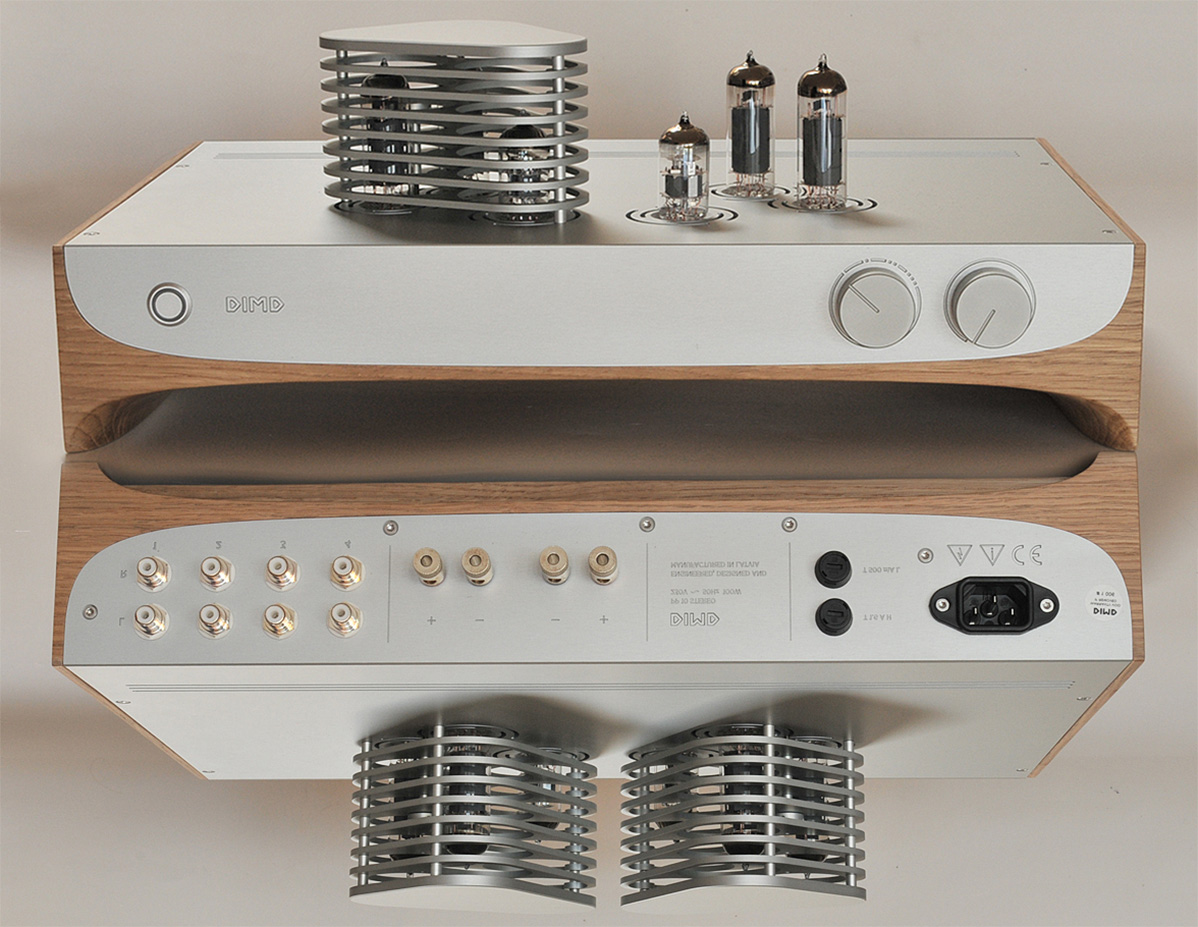
The front carries the white-illuminated power switch, input selector and volume knob in matching matte. Flush with the top plate are 6 ceramic tube sockets each surrounded by four coaxial semi-circular ventilation slits. Three more long slits run along the back of the top plate for additional ventilation. The back end of the aluminium cover sports 4 pairs of silver-plated RCA inputs, a pair of silver-plated 3-way binding posts, two fuse holders and the IEC power input. Fit and finish were absolutely wonderful, with aluminium and wood joined perfectly. The organically curved oak at the front must be designed to draw in an unobstructed flow of cooler air by convection to keep the electronics and tubes at perfect working temperature. This was the first time we saw such a clever solution to use the draft of heated air from the tubes to suck in cool air from below.
|
 |
|
 |
|

|

|
|