|
|
|
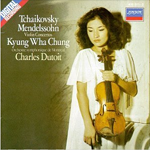
Hooking the Dynamo up to my Tekton Design M-Lore, I could if I wished recreate the SPL I endured at a 2006 Alice Cooper concert. With the Tektons, the bass firms up a bit in relation to my Harbeths and there is sufficient headroom during orchestral dynamic swings at least in my low-ceilinged narrow listening room. Using the Mapletree 2BSE preamp with the Dynamo, I get surprisingly dry taut synthesized bass listening to the oeuvre of Calvin Broadus. Time to see just how fast this amp is and just how deep its power reserves are. I reached for some Charles Dutoit, a conductor I have seen several times. He’s still active but whatever happened to Kyung Wha Chung? She teaches at Juilliard now. She burst onto the scene in 1967 and made, over the course of the 1970s and 1980s, some of the most dazzling technically proficient recordings ever. Then she fell off the radar. I happen to love in particular her rendition of Tchaikovsky’s Violin Concerto in D major. I bought that CD in 1986 and have listened to it probably at least twice a year since. Charles Dutoit turned the Montreal Symphony Orchestra’s energy levels to 11 and coaxed from them a blisteringly fast fluid performance. It is an early 1982 digital recording yet somehow listenable. I used a Marantz CD5004 transport feeding a MHDT Labs Paradisea+ (a non over-sampling DAC known for its ability to smooth out rough digital edges) armed with a Western Electric 396a tube. Speakers were Harbeth. Would the Dynamo keep the pace?
|
 |
I think so. And I think that KWC’s violin has never sounded so woody and articulate. I know of no other 8-watt amp that can keep pace with this music. Listening loud, at 80dB with 100dB peaks, there is no piercing of my ears, no digititis. With the right speaker, I think the Dynamo has all the cojones most of us need. The next test involved poorly recorded bright 70s rock. Guitars on Bachman Turner Overdrive’s “Blue Collar” are sweet and sharp. I can’t say I have ever heard so clearly into this music. And that’s because I have never been able to listen to this music at loud levels. This is a terribly bright recording and it sounds horrible on CD and LP alike. Yet through my Musical Paradise DAC armed with Pearl cryo’d Amperex 5670, the Dynamo somehow reveals all that is remarkable about Randy Bachman’s playing without becoming shrill. |
|
Consider once more the Dynamo’s ability to tame shrill highs. The Mississippi may shine like a National guitar but Doug Macleod’s National will screech like a fraying fan belt if you don’t choose your amplification wisely. But it’s worth the effort. There are few more soulful musicians of Macleod’s vintage who keep putting out, year after year, such wonderful music. Thanks to the Dynamo, I can play Macleod at high volumes without aural fatigue. The shrill is gone. Macleod’s resonator guitar is one thing. But then there is an entire genre that can induce aural fatigue or, in some, madness. Of course I allude to disco. Played through a high-resolution solid-state system, I usually cannot stomach it. This amp simply shines with disco. It tames the shrill cymbals and synthesized strings even as it keeps pace with the boogie. The Trampps' music-for-sex tune “Burn Baby Burn” is fully rendered in its rhythmic and fluid splendour. The beat is driving, pulsing, elastic.
|
The same goes for Don Thompson’s bass playing. The late great Jim Hall, Don Thompson and Terry Clarke made a masterpiece of an album in 1981 with CTI called Circles. Thompson may be one of the greatest underrated jazz musicians of the last 50 years. A virtuoso on the vibes as well as double bass, he is one righteous pianist too. He has chosen not to live in the limelight—the not so universal dream—content to linger in the shadows as a sturdy sessions player, a jack-of-all-trades musician’s musician. He never sought to break on through to the other side of fame and fortune. I saw him play a few years ago at a small city’s public library. His bass playing on "Aruba", a track featuring manic ascending scales, should qualify him for some sort of Hall of Fame. I sat in a state of suspended incredulity as the Dynamo did justice to Thompson’s playing. I had a similar reaction to another classic CTI LP, Art Farmer and Jim Hall's Big Blues. Michael Moore’s bass is deep and dry, the vibes are fluttering and swirling. Farmer’s trumpet soars without searing the ears. There is an amazing amount of PRaT for such a small amp. It boogies. There is no sense at all that this is a modest 8-watter. |
|
|
|
|
|
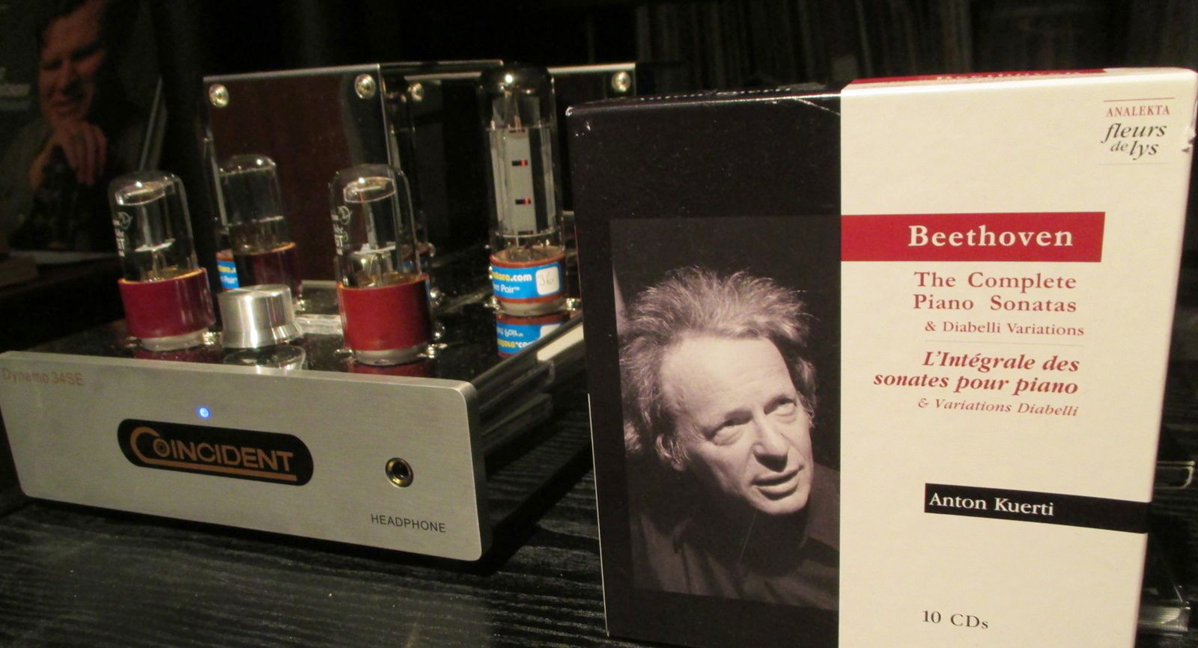
Next I reached for my favourite recordings of Beethoven’s piano sonatas. Anton Kuerti’s playing is so lyrical, so playful and inventive. And the box set seen in the photo is recorded beautifully. Kuerti plays jazz-like, mixing tempi, teasing and surprising us at almost every turn. He makes the music his own, doing for Beethoven what Gould did for Bach. Every audiophile knows that it is extremely difficult to coax realistic piano tone and body from loudspeakers - especially small ones. In the past I have had something approaching success with direct-heated triodes like the 300B. Currently my 845-based amp gets me pretty close to the tone I can reproduce upstairs on my piano. And the little Dynamo in turn gets close enough to that big fat 845 tone that I could live with it
|
 |
|
I love the mellifluous touch of Jason Lindner who plays piano with Anat Cohen’s group. Cohen is a master clarinettist and live performer as well as a remarkably modest and friendly person. I once waited half an hour to talk to her and get an autograph after a concert. She probably stayed there another half hour to talk to other fans. She has not become jaded by success. Let’s hope that lasts. She plays tenor and soprano sax too but most of her playing is on a standard B-flat clarinet. How I wish she would grab the baton from Bennie Maupin and stake a claim to being the best bass clarinettist in the jazz world!
|
 |
| |
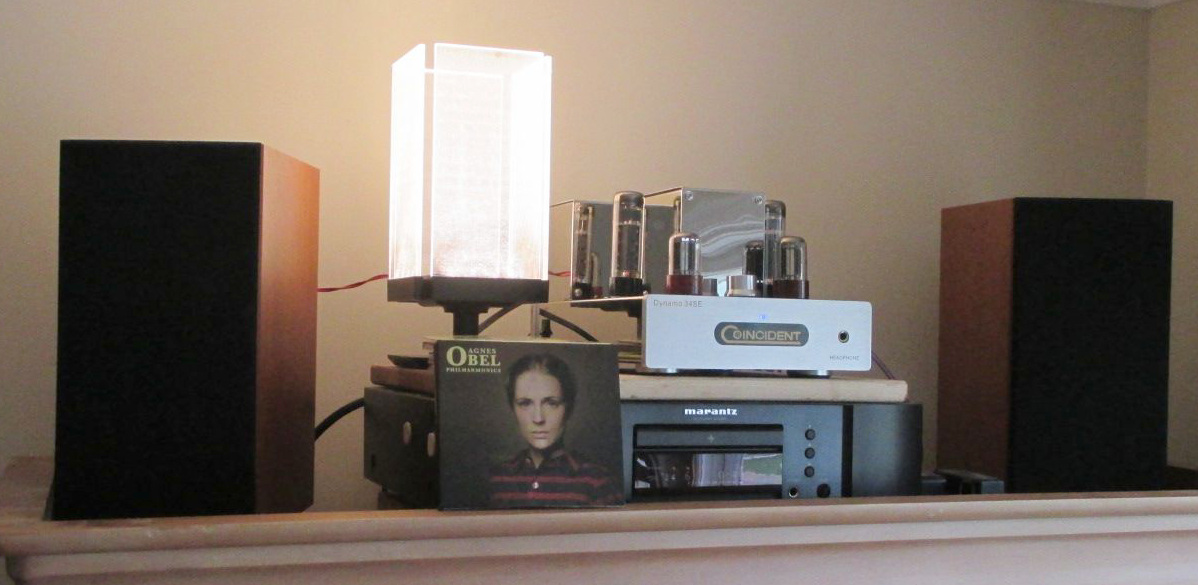
Cohen rarely records with the bass clarinet but when she does, it’s magic. Case in point: her positively romantic rendition of Coltrane’s "After the Rain", a 9-minute cut on the CD Notes from the Village. I played this tune on a system residing on the top of an armoire in my living room, safe from curious toddler hands. The Dynamo breathed life into the music. Its addition to an entry-level setup comprised of a Marantz CD5004, Mordaunt Short Carnival 2 with Paul Speltz AntiCables, was nothing short of transformative. Suddenly my Carnival 2 were propulsive and armed with giant reserves of energy. The bass clarinet bounced off the ceiling, filling my room with the intoxicating resonances of its lower registers. When I played Cohen and Bennie Maupin downstairs on the main rig, I came as close as I may ever get to hearing them in my house. This amp loves the bass clarinet as one of few instruments capable of reaching the first or contra octave. That is no small feat. |
|
|
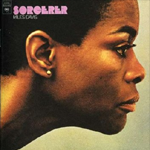 |
To wrap up, I tried but failed to trip up the Dynamo. Everything I threw at it worked wonderfully. This is an eight-watt single-ended tube amp? Aren’t they supposed to suffer from low bandwidth? Won’t the transformers saturate when turned to 11? Not so the Dynamo. I put this thing through its paces. The verdict is out and all my musical personalities agree. This little Dynamo is an unparalleled bargain, the best I ever had. I am aware of nothing else like it for the price. This small amplifier constitutes some sort of public service to audiophiles the world over. I give the Dynamo an unreserved endorsement. Pull out your plastic and buy this fantastic amp. [At left, Miles Davis' Sorcerer album which contains the track “Nothing Like You Has Ever Been Seen Before…”] |
|
|
|
Manufacturer's comment: We would like to extend our appreciation to Tim and 6moons for a brilliant review of our Dynamo 34SE. This may be the most complete and edifying review of any component in any audio publication. Tim truly captures and articulates the unique and special qualities of the amp. In mating the Dynamo to a wide variety of speakers ranging in sensitivity from 86dB and higher and impedance moduli from 3-16 ohms, we have yet to experience a mismatch. The extremely large power supply of the Dynamo is responsible for permitting the amp to be used with a wide range of speakers with excellent results. However, for those requiring more power in order to drive low sensitivity low impedance speakers and who are in need of 3 inputs, we offer the state-of-the-art Turbo 845SE remote-controlled integrated amplifier. While not inexpensive, at $5'999 US it is an unparalleled bargain.
Many thanks for the time and effort expended in the preparation of such a superb review.
Best Regards,
Israel Blume - Pres.
|
|
|

|
|

|
|