|
|
|
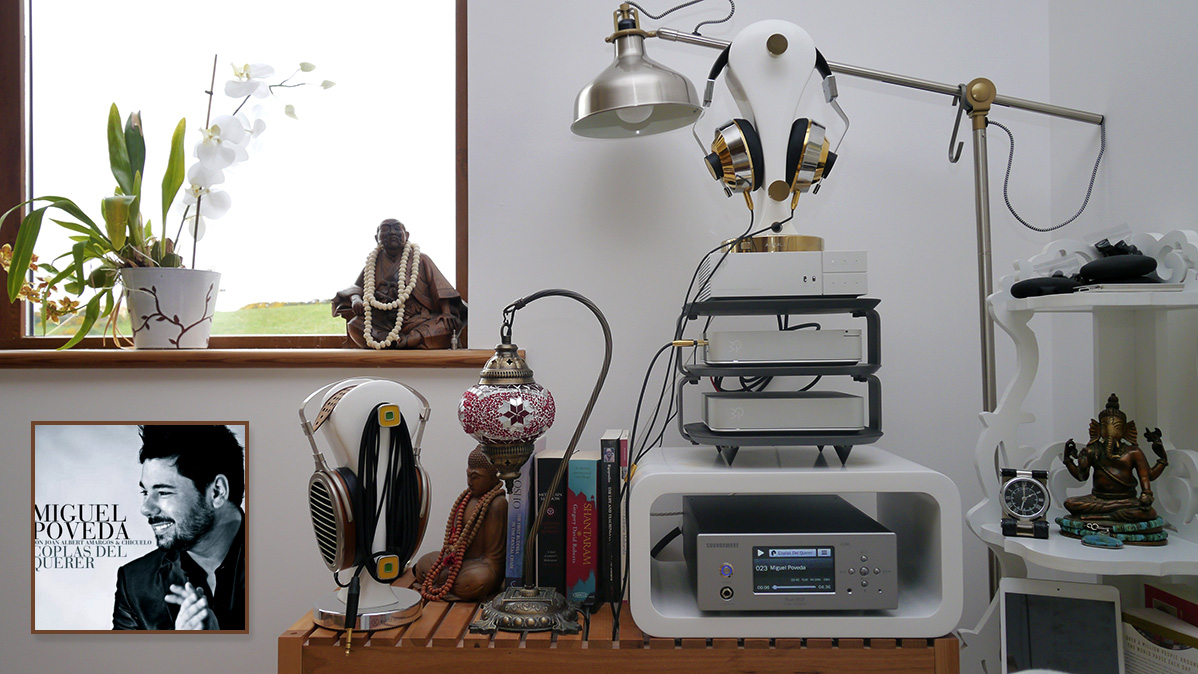
Satri Link vs RCA. To test Akira Nagai's current-mode transmission, I connected the DAC-21 to our AMP-12R with the included BNC-terminated links. Given how the amp's 15wpc power isn't wholly sufficient for any of our current loudspeakers, I instead plugged in Final's flagship Sonorous X headphones. Few know that this two-box amp—power supply separate—makes for a terrific headfi champion. Source was another Soundaware SD card reader with .flac and .aiff files. Though physically larger, the DAC-21 fit on Bakoon's amp stand to perfection. Their signature leading-edge softness stood in stark contrast to COS Engineering's H1 which usually drives the Finals in balanced mode. This gap of temperaments had frisky vigour on one side, keen calm on the other. I combined 'calm' with 'keen' to stress how here was nothing sleepy about this reading whatsoever. It was wide awake... just maximally non-stressed and laid back. Switching to current drive elevated that limpid easeful quality further yet. This shift operated utterly outside the domain of frequency response. Just so, it was a profound gestalt changer; like switching from COS' espresso to Bakoon's fresh guava juice. One is acidic, bracing and pushy; the other sweet and fruity. Both prompt a physical reaction in the body; very different reactions. That's back at the 'o' word of organic for the DAC-21/AMP-12R combo which was still elevated Satri-link'd.
|
 |
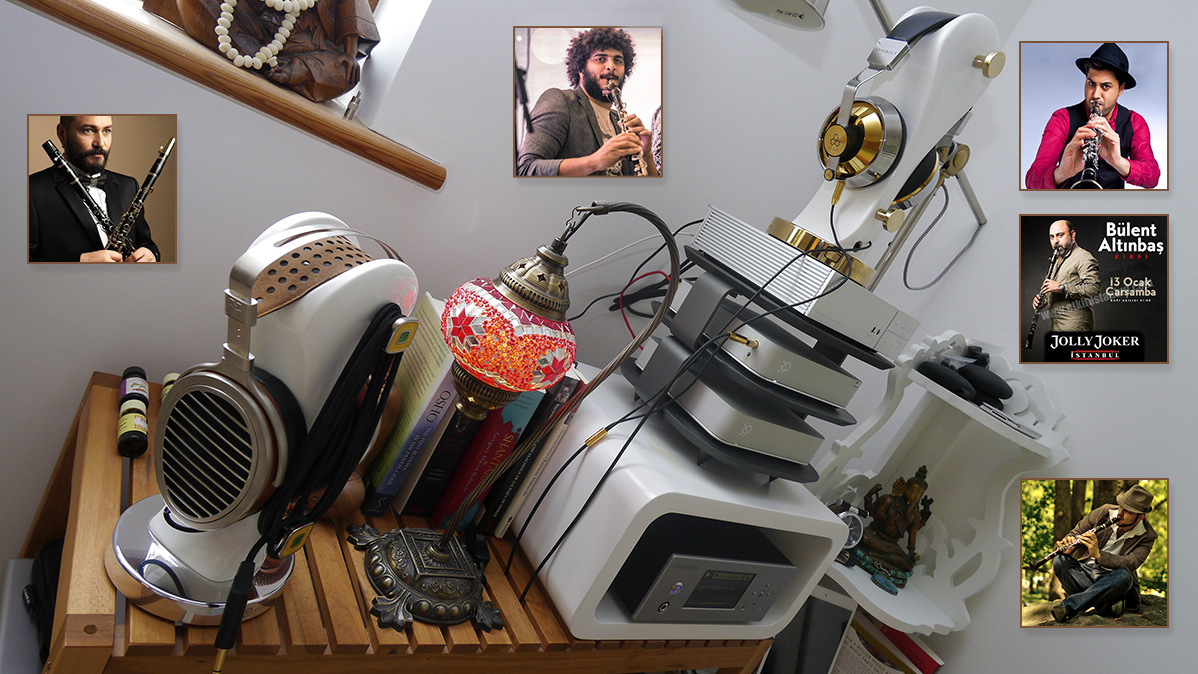
That this didn't cut into fine resolution was confirmed on a personal compilation through some Middle-Eastern clarinet heroes. From Hüsnü Şenlendiriçi to Ghassan Abu Haltam—click here for a lovely YouTube cut—from Serkan Cağri to Bülent 'Kirpi' Altinbaş, from Serkan Hakki to Ismail Lumanovski and Göksun Çavdar, distinguishing the reed kings purely on timbre not tune was child's play. Those who love guitar, piano or any other instrument will have their own maestros with whom such call-it-by-timbre games are secret fun. Hearing such extreme resolution from wide bandwidth and completely absentee noise without even a hint of sharpness... that was an unusual constellation of attributes. It made for the first time I'd ever heard two Bakoon components together in our home. It really had me look forward to the arrival of the AMP-41 and/or 51R and transfer this experience from inside the skull to the free space of our big speaker system.
|
 |
|
|
|
|
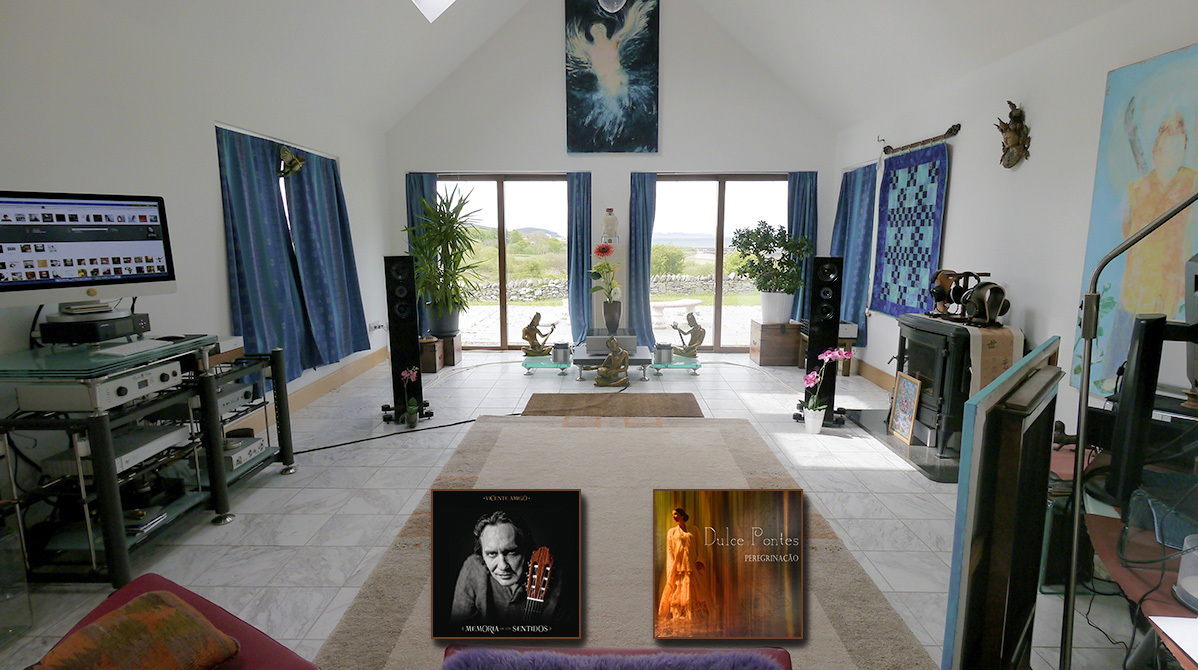
To approximate said occasion ahead of time, I set up the DAC-21 into the Linnenberg Allegro monos. Their single pair of push/pull Exicon lateral Mosfets and 1MHz bandwidth mirror much of Bakoon's design ethos. This occurred via Wyred4Sound's very best, the STP-SE Stage II preamp. Still in from their review were the full-range very quick Audio Physic Codex four-ways with hidden 10" woofer. Until the AMP-51R's arrival, this would be my closest approach, obviously in conventional voltage-mode connection. I soon thought that perhaps Soo In had undersold the DAC-21 when pointing at it 2-Series position within their line. At $3'495, it's clearly not the $8'500 AMP-41 tag or the $19'500 AMP-51R bill. Just so, it securely held its own against costlier in-house references from Aqua Hifi and Fore Audio. I had no indications of sonic setbacks, just a different climate. That moved different facets into the foreground, others into the back. What came to the fore was lucidness as that lit-up-all-over acuity. It had glass-like purity and steep rises with fiery upper-harmonic brilliance. What in that crystalline clarity turned away were warmth, moodiness and weightiness.
|
 |
|
|
With these ancillaries, emphasis was resolutely and resolvedly on utmost intelligibility. This meant a total reveal of the soundstage as though white overhead lights had banished all shadows. A certain moodiness which we associate with candle light because of its rich penumbra and limited exposure had lifted. The type heaviness which results from a tighter musical weave—without the virtual crochet gaps that let in air and space between sounds—was likewise gone. This wasn't a tonal balance effect. Bass had fabulous pitch definition without any softening or lessened reach. This lightness was simply the other side of luminosity. It could be played at seriously faint levels due to its extreme visibility. To fully incarnate body simply wanted solid room levels. Making the sound weightier sooner meant substituting the Wyred with the tubed Nagra Jazz which sacrificed some top-end resolution in trade; replacing the Audio Physic speakers with the Zu Druid V, a truly excellent combination that interlocked like the perfect dovetail joint; or switch the Allegros with the Pass Labs XA-30.8 and hit perfection on the Codex. With gear of DAC-21 calibre resolving power, any little loss or gain, from strategic nip and tug with hardware changes, telegraphs clearly. Isn't that the unwritten definition of high resolution? |
|
|
When the tears come freely on Vicente Amigo's "Réquiem" from his Memoria de los Sentidos album, with Niña Pastori, Arcángel, Miguel Poveda, Rafael de Utrera and Pedro El Granaíno taking turns at full-throttle vocalizing before joining in a chorus, all is as it should be. When the same happens with a cover of Mohamed Aly's violin on a popular Arabian song... then it's Xmas in May, thus with far better weather. To bring on the heavy rains of a musical root-canal cleaning sure to empty out a trade-show demo in ten seconds flat, I spun up the Inspector Gadje album Live at Kafana Balkan. That's rambunctious snotty brass folklore polished to an abrasive sheen. Think paired trumpets, tenor horns and clarinets plus sousaphone and drums. It's the Balkan equivalent of a Mariachi band at your table; or a Klezmer band in full inebriated swing. Intense. Loud. Ear opening, with the elephantine oompah bass of a tuba that wraps around the upper body of its player. The obvious playback test is how soon your pink bits welt. There's a difference between realistic sharpness and artificial glare. The Bakoon-fronted system played it so clean that the session was all about adrenaline and vivaciousness, not rejectamento and its quickly vacated room.
With proper gear, walks on the wild side are welcome. Here is a lighter version on YouTube. |
|
|
|
|
For jubilant female vocals against sweeping sultry strings and a dancy beat, I cued up "O Re Kaharo" from Anu Malik's Bollywood soundtrack for Begum Jaan with the glorious Bhojpuri singer Kalpana Patowary; and "Prem Mein Thore" with the powerful Kavita Seth. For male equivalents, "Aazaadiyan" on the same short album features both Sonu Nijam and the shiny Rateh Fateh Ali Khan. Saucy stuff. Staying with the Indian theme but adding an electrified sarangi and stacked synths, Shafqat Ali Khan's hypnotic "Stolen Dreams" was next. And so forth. When a component constellation is fortuitous, your road map is wide open. There are no forbidden or favoured areas. You come and go as you please. That different production values would telegraph more clearly than with less revealing gear is par for that course. |
|
|
|
 |
|

|

|
|