|
|
|
With today's affordable über speakers à la Golden Ear Triton & Co., competition in this market sector has become fierce like fire. Even with due sympathies for small boutique makers and real wood rather than stretched cloth covers, that makes it harder to soft-pedal relatively soft performance. After all, it's only fair to assume that for nearly €5'000/pr., most punters will want rather more than a friendly inoffensive cuddly take on their favourite tunes regardless of usefully broad dispersion.
|
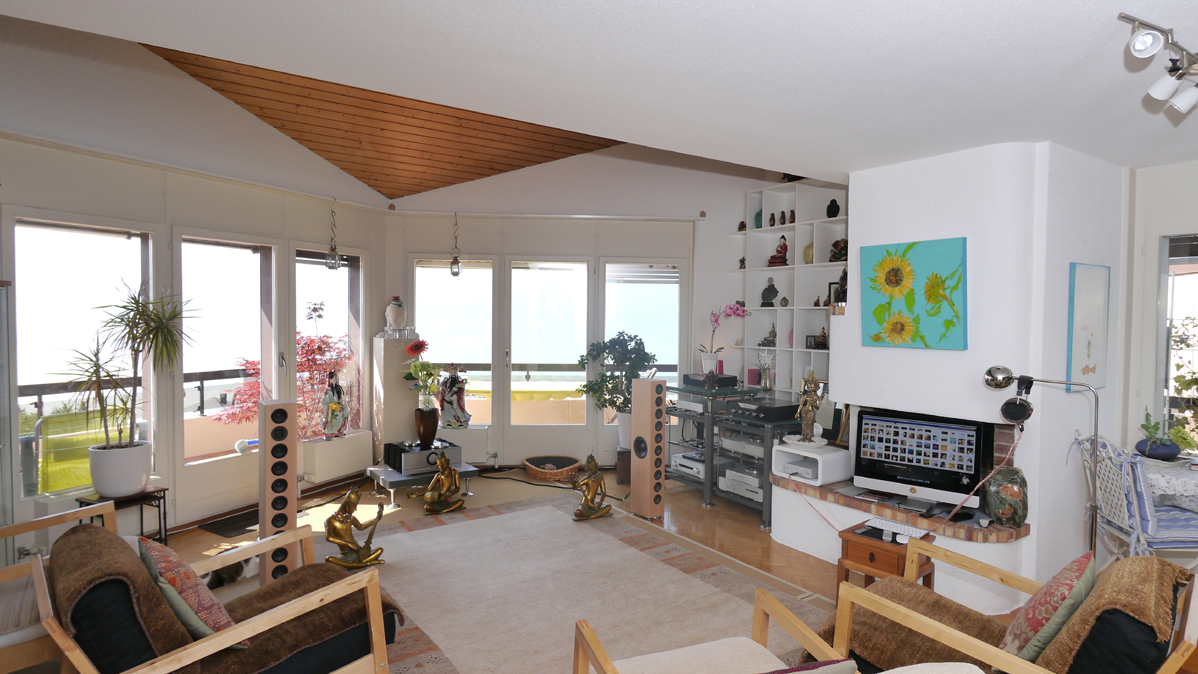 |
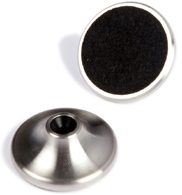
With the general sonic flavour mapped out as it presented itself for us in two systems and over three different amplifiers, I'll merely add that perhaps—and designer Neil Clarke will still investigate this—the particular loading of his speaker is more sensitive to small gap changes than anticipated. Our upstairs space is carpeted. There I forced the spiked speakers solidly into the sub floor for best stability which minimized the floor gap. The wooden parquet of the living room however demanded protection. Hence here I used my trusty Track Audio shoes. As a result, those raised the speakers a bit higher to increase the gap. Perhaps this in conjunction with 'seeing' a 100m²+ space conspired to generate the somewhat underdamped personality I described?
|
|
|
|
|
 |
In conclusion, the S-Series solid Beech speaker from Swiss newcomer Audionautics is a narrow small line-source tower with a petite sidefiring woofer. Though it speaks to common wisdom—which tends to be all too common but none too wise—here the raw visual balance of nine mids vs. just one tweeter and one solitary woofer does tally out as a midrange-centred presentation. It's not farfetched at all to predict that lovers of affordable no-feedback single-ended valve amps could herewith have found their speaker alter ego. I'd simply not recommend an actual match of such amps with these boxes. I predict too much of a good thing. But, a small gainclone amp à la Clones Audio, PTP Audio or Teddy Pardo could end up with exactly the desired SET sonics and manage for little coin and zero tooth aches aka valve woes. If that presses your hot buttons, remember today's cool Audionauts. |
|
|
|
PS. As promised, Neil looked into what happens when his ideal floor gap distance is increased with floor protectors. "Reading your review I was immediately concerned about your comments of "laid-back and underdamped” bass. On reviewing your setup and testing the speakers at our facility, I believe I have identified the issue. The speakers measured and performed exactly as delivered so there was no noticeable depression that could be associated with component failure. In your report, you raised concerns regarding the port and reviewing this part of the design I believe I have identified the issue.
As the port is downward facing, it is designed to work in combination with the air mass under the speaker defined by the gap between the bottom of the speaker and the floor. As we discussed during our initial meeting, the speaker gap should be 1.5mm. This is a design criteria for the boxes and also the size of the standard spikes delivered with the speakers. The performance of the port/gap system is optimized at this height.
|
 |
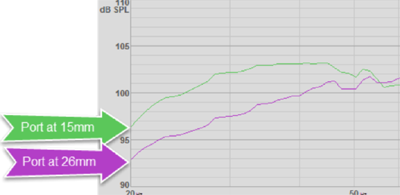
"Deviations from this value by a few mm’s should not cause any appreciable shift in performance but unfortunately the floor protectors used in your downstairs setup raised the overall speaker by 11mm. This has the effect of almost doubling the air mass below the speaker. As the compressibility of air reduces with volume, the effect on the port is that back pressure is reduced. This in turn reduces the overall damping and efficiency of the port.
The result is a less damped and lower response. The right graph is a nearfield measurement of the port at both heights (20-50Hz). It clearly shows the port is not working as designed at the higher value. I plan to perform additional testing but am confident that this is the issue." The upshot is simple. To perform as intended on a wooden floor, one should use a sufficiently large stone tile or wooden board as protector, not add-on shoes like my Track Audio devices where the material thickness beneath the spike receiver dimple will alter the speaker's intended tuning.
|
|
|
|
 |
|

|
|
|

|
|