|
|
|
|
Nagra Jazz vs. ASP-1000, continued. Predictable as far as these things go—they're often anything but—this was about different executions of textural feel or flavour. Even with both preamps set to zero voltage gain, the tubed deck was the more relaxed, dense, layered and supple whilst the transistor variant played it keen, bright-eyed, crisp and more forward. Having a week prior heard Joshua Bell with the European Chamber Orchestra under Semyon Bychkov on the Brahms Violin Concerto plus Schumann's Symphony N°2 in row 9 center of the Montreux Stravinsky hall, I had a good live reference for massed strings. The audiophile notion of separating out the 3rd chair's second in the viola cadre is pure poppycock. A first-rate orchestra's string sections will and do play as one. The overriding sense is really of a giant being whose heaving ebb and flow rides on the communal breath of tightly synchronized bow work. The Nagra rendered this massive (united yet layered) illusion on the elegiac Timbuktu soundtrack more convincingly. With it, the sense of enveloping space casting rippling reverberations well behind the solo duduk or kora was even deeper. Appropriate words to accompany especially multi-paralleled strings would be luscious or sumptuous. With its relative transient perspective, the AbysSound played it more close-mic'd glitter and brilliance and separation. |
|
|
|
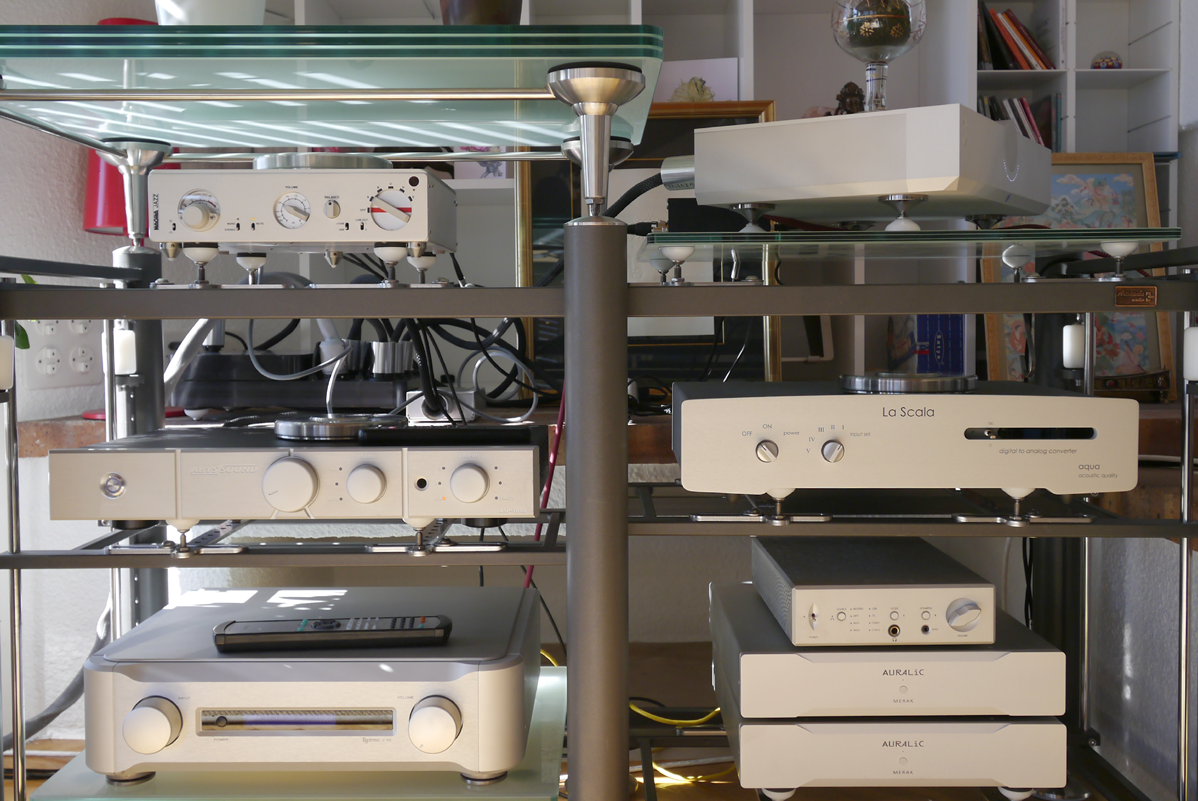 |
Dynamic waves felt even more agitated and riding atop deeper darker waters with the Nagra. Meanwhile the various degrees of on-string fire, snap and sparkle were more nuanced with the AbysSound. The same held for massively paralleled percussion exploits like big Middle-Eastern darbouka ensembles or Zakir Hussain/Trilok Gurtu-style pure rhythm sessions. The ASP-1000 practiced more divisive sharpness. This better individuated various drum skins as they were recorded with individual microphones on each. The softer Nagra slightly blurred those lines by comparison. If we called that behaviour connective tissue, the AbysSound was about more sinewy apartheid. It maintained tighter sorting and more chili-spiked leading edges. As such it was closer to running the D1 direct. By triangulation, it thus also sat closer to Dan's transformer-attenuating passive than the texturally enhanced more pliable Nagra. |
|
|
|
|
About which flavour might better suit you, your speakers will have a lot of say. The ceramic Accuton transducers of our Albedo transmission lines do attack mode very well. In trade, they're harmonically leaner than the paper-cone widebanders of our solid-wood soundkaos eggs. For power amps, my preference thus is for the darker heavier meatier XA30.8 on the Aptica. The more light-filled 'spiritualized' SIT1 monos go on the Wave 40. Following the exact same logic, I'd mate the Nagra to the former speakers, the AbysSound to the latter. Doing that, I'd call each better—or more suited—for its chosen application than the other. Once we factor sticker shock, such equality or preferential parity becomes quite the deal should one go after the half-priced contender. |
 |
Conclusion. As good as stuff priced double. Without actual comparators that are unmistakably identified, such review statements are as hollow as they are common. In today's case, we know exactly what the ASP-1000 kept pace if not peace with. And here the price offset was at least 100%. To really appreciate how one mustn't fork over top possible coin relies on exactly such comparisons. If you solely shop the very top because you can afford to or consider it plain necessary, you'll never be the wiser. Case closed. But should value be important too if only because you consider excess wasteful and inelegant, one should know which money bandwidth contains the highest return on investment. At €4'900, I found the AbysSound ASP-1000 to be as good and well executed as both Esoteric C-03 or Nagra Jazz. Even so, it didn't sound the same. Depending on ancillaries and taste, you might call it better; less convincing on certain counts whilst more on others; or just different. Either way, this preamp would belong into the same league. For a newer Polish brand that is just stretching wings beyond its own borders, that's indicative of fully formed maturity right out of the gate. If prior good words about this company had you insinuate patriotic bias for the Polish media which naturally were first to publish, not so. Even if Polish pride did factor, it was deserved and well measured. Time for us heathens outside Poland to get hip to AbysSound.
For a final takeaway, their ASP-1000 is fast, decisive, lit up, energetic and very sorted. It's ideal for transient chasers, minor adrenaline junkies and admirers of highly specific imaging and staging which projects a bit more in your lap than components which move the virtual stage far behind your front wall. This exciting fresh temperament was fully in sync also with the fact that from my bunch of preamps, this was the newest and youngest member. Welcome to the club, spunkster!
|
 |
|
Quality of packing: Very good. Reusable many times because the carton is extra thick.
Quality of communications: Very slow and frustrating. I asked for background on the company and its principals three times and was promised a reply "next week". After waiting three weeks without anything, I finally gave up. Marja & Henk were still waiting for pickup of their giant AbysSound review loaner amp more than three months after our review published. Regardless of company size, there's no good excuse for poor communications or hyper lax response times.
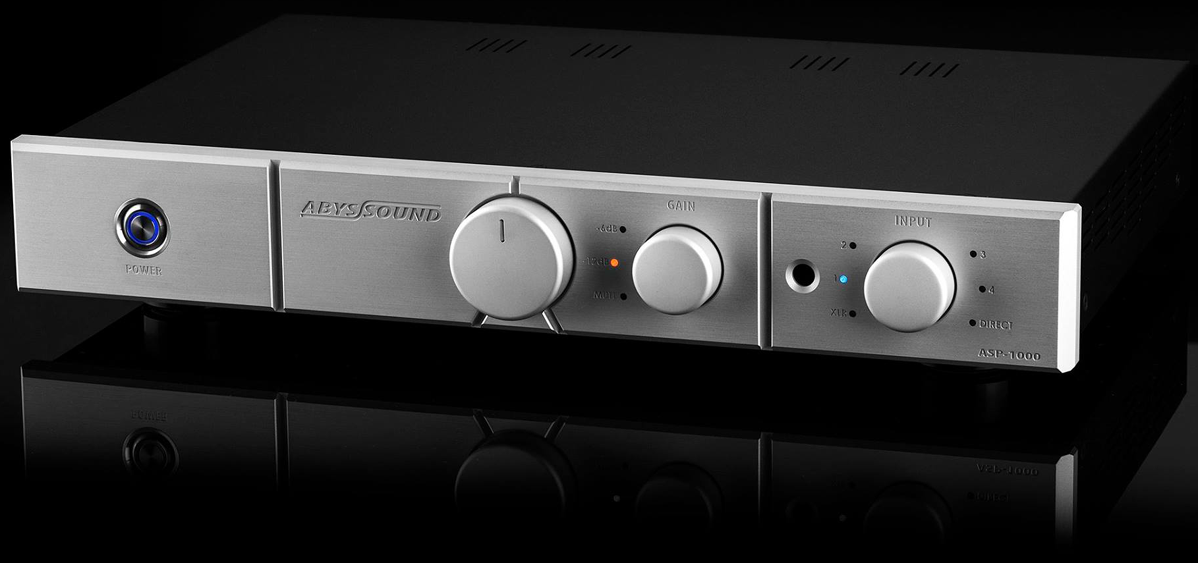
Product nits: Even the company would probably admit that their plastic remote isn't entirely in keeping with the luxurious build of the deck itself. 'Mute' by remote doesn't unmute with the same button but requires re-entry of a gain setting to be less than intuitive. Bright LEDs and power mains illumination cannot be dimmed or extinguished where particularly home-theatre users may be adamant that all their electronics 'black out'.
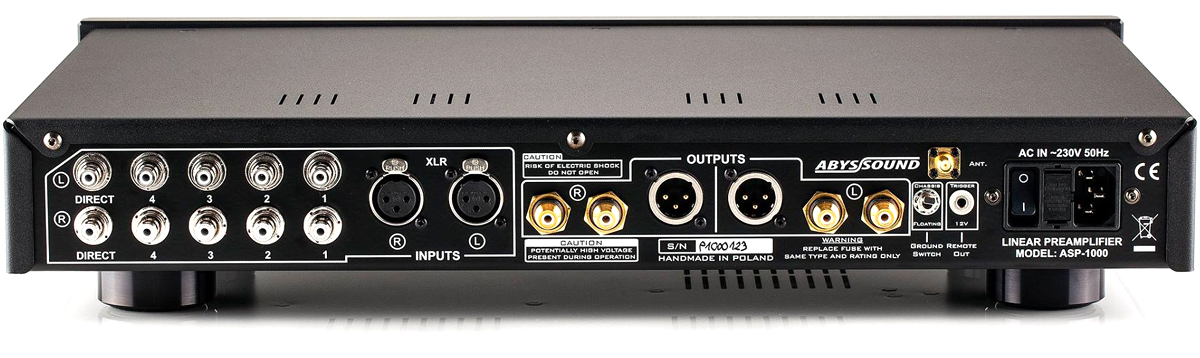
Product highlights: Very responsive remote control range with excellent off-axis reception; three gain settings; comprehensive socketry; textbook performance; 'bomb-shelter' build quality.
|
 |
|
|
|
|

|
|