This review page is supported in part by the sponsors whose ad banners are displayed below |
 |
 |
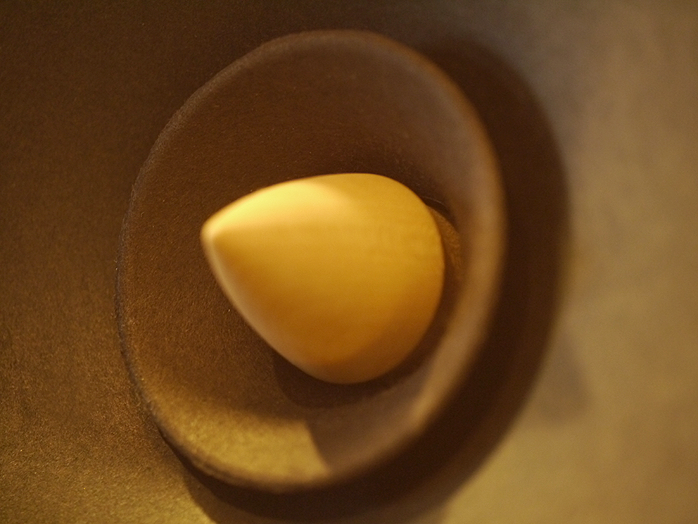
Polemic deliverance. In hifi it's far too easy to trade in ideologies. Arguments are won and lost not by listening and first-hand experience but by the more compelling conceptual abstraction. With the compact Wave 40 the core practicality rather than abstraction is how sounds really do seem to fly off these wooden ovoids.
|
| Tones act like fingers recoiling from a hot stove or embers sparking off a burning log. There's no reluctance, no partial release, no stickum. Instead there's a very big very energetic highly charged quicksilvery sound that's full of light and air. This telegraphs like a crack orator across empty space. It communicates. By contrast Druid V demonstrates what a more standard box sounds like. Its enclosure exploits various hi-tech laminates and innards. This makes for a far quieter construction than the usual MDF affair. Yet the thin-walled constantly activated* Wave 40 had the noticeably higher gush factor. A poor but visually intuitive image
is a concert grand with its lid closed or opened. The Wave had its lid wide open. This completely overlapped with Samuel Furon's Ocellia speakers. Martin's Raal ribbon simply did gossamer cymbal brush work with greater lucidity and needle-work intelligibility than I've heard from PHY's warmer less sophisticated piezo tweeter. |
|
 |
Güher & Süher Pekinel w. the Jacques Loussier Trio
Take Bach |
|
|
___________________________________________________________________________
* This isn't literary license. Placing your hands on the Wave 40 while playing instantly telegraphs the very fine constant response of the tone wood. This isn't peaky or centered on particular frequencies. It's minimal amplitude and broadband exactly like a guitar or violin. Their strings become the speaker's drive units whilst body and enclosure serve the same purpose - to release rather than trap their internal acoustic energies for a big undamped sound that carries.
|
 |
|
 |
The second thing Lowther-injured listeners will note with pleased approval is the lack of hot-spotted lower treble.
In the BBC's runaway series The Good Wife, main character Alicia asks her girlfriend Kalinda whether she's a lesbian. In a bar two years later when Alicia has long since learnt about a one-night stand with her husband, Kalinda explains "I'm flexible". For lack of excess upper mid/lower treble energy we must thank Martin's religious flexibility which had him low-pass his widebander. In nearly all other quarters in this part of speaker town that's considered sacrilege. Only Tommy Hørning is a happy fellow sinner. By not running this Armin Galm driver wide open on top, its more ragged response above what became the filter point was cut off. Cheers to pragmatism, Kalinda and flexibility.
|
|
|
 |
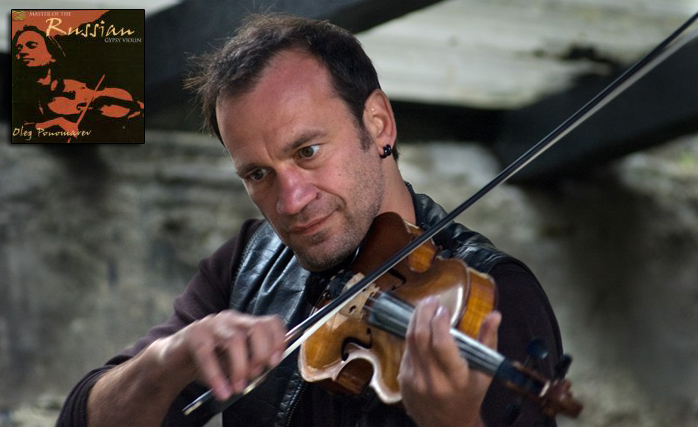
The third thing is that like earlier Rethms, soundkaos went after maximal lucidity in the highs to instead sacrifice some bass reach and power. Zu's Druid V adds about 20 cycles of extension to lower the acoustic center of gravity. Yet the bigger heavier driver grows thicker and more opaque in the presence region just before it hands off to its super-accelerated Radian 850 compression tweeter. Here violin is the perfect giveaway. One doïna with gipsy Paganini Oleg Ponomarev who swoops Sarasate-style—but without Anne-Sophie Mutter conservatory restraints—into top flageolet registers and saucy octave-doubled slides proved the point.
|
 |
|
The Wave gave me full-throttle open-throated violin with all the harmonics intact. The Druid rendered the violin's resonating energy-shedding tone wood as thicker stock. This became duller and more damped.
In trade—nothing's free—a Dhafer Youssef trio number with rollicking bass and punchy kick drums
had the Zu shove and crack harder whilst the vigorous bass lines expressed greater impact and power. These are nearly inevitable trade-offs in the widebander genre. One solution is to engineer a driver that does hit a solid 20kHz, then augment it with integral active bass modules like Rethm does today. Yet adding Zu's external Submission subwoofer tower took the Wave 40 to places Rethm at least until now hasn't reached. Even Inès Adler of Voxativ who had earlier dismissed subwoofers as uncivilized slowish brutes is said to be working on one.
|
|
|
|
|
|
Wave 40 + single Submission struck me as a truly ideal €20.000 full-bandwidth pairing which well eclipsed my by now rather costlier piano-gloss Ampeggio. In the first place Martin's enclosure style doesn't lend itself to infrasonics. Delegating the bottom octave to a mega-powered large rigid box with complete freedom of placement and comprehensive adjustment options strikes me as smarter and more application-correct than attempting to do everything in/from one enclosure/driver. Different tools for very specific jobs. In the second place Martin wanted a reasonably compact form factor. This always imposes limits on bass response. In my space the Wave petered out below about 50Hz. The bigger Ocellias would be good for more but are also considerably larger pieces of furniture.
|
 |
Very similar to Sven Boenicke's SLS or B10 models, the Wave 40 is a high-power magnifying glass on soundstage depth and layering. Set up by Martin as slightly narrower than is my custom but aimed directly at the seat, his speaker creates a walk-in-and-get-lost type of virtual stage. Even large-scale chorus like Mozart's Requiem scaled impressively and instead of a congealed mass teased out into many laterally paralleled sound sources as well as multiple rows. The Wave is also very specific with tiny percussive noises like rattles, shakers, creaks and cracks. Those can exhibit a startling live vibe of miniature shock impacts. In my experience soundstage depth, layering precision and transient fidelity rely on good timing. This the Wave 40 seems to carry in its engraved back pocket.
|
 |
Our soundkaos anti-box within a Bakoon amp/ModWright pre context majored on speed and energy transmission. This became particularly exposed with stringed instruments—violin, cello, guitar, piano—whose activity of resonant sound boards and sound bodies was illuminated and tacit. It was brilliantly obvious how their sounds were made. To this townhouse denizen a most welcome side effect of the grand gushing fully aerated core quality was good whisper-level performance. Where the Druid V arrives a bit later on the SPL meter before its very visceral punchy signature asserts itself fully, the Wave 40 alights sooner.
|
|
|
|
|
 |
Turning to classical baritone Zafer Erdaş on popular Turkish songs [Buram Buram Anadolu] showed how the Galm driver was fully equal to rendering a conservatory-trained male voice with great power without getting unnaturally chesty or heavy. The higher lighter timbre of Serbian legend Oliver Dragojevic was equally well served on Nov Nek' Tiho Svira where he is accompanied by piano and Stjepan Hauser's lusciously bel canto cello. The impression of these voices not being stuck inside chest or throat but flying off like birds liberated from their cages was strong. |
|
|
During a pre-Christmas stint to Geneva Ivette and I encountered a classical soprano busking in the street accompanied by minus-one material on a boom box. The carrying power of her unamplified voice through wide-open air across long city blocks above the din of a bustling luxury shopping section was shocking. A guitar or saxophone played at the same level would die off far sooner. Granted, there's something inherently unnatural about a lone operatic high voice having to compete against the full force of a symphony orchestra. But such is the training these singers undergo. Gauging a speaker's mettle with them becomes quite the litmus test.
|
 |
For those who need their classical arias infused with house beats and modern ambiance, dramatic soprano Sasha Lazard's The Myth of Red is an easy port of call. True believers would shudder and reach for Cecilia Bartoli's Maria instead. Either way the Wave impressed by neither breaking up nor fighting their considerable encoded energies. Even at friskier levels there was no sense of restraint or holding back. Obvious compliments were due also the brilliant Raal ribbon which is built to withstand high-power demands. |
|
|
|
 |
  |
 |