|
This review page is supported in part by the sponsors whose ad banners are displayed below
|
|||||||||||||||
 |
|||||||||||||||
Like all other Mark & Daniel speakers, right out of the box the Diamond+ exemplified uncompromising bass and a wealth of sonic information all the way up into the top octaves yet it still took a long time to fully break in. Whenever I do this break-in thing, I have to keep the subject underground in my torture chamber where a few fellow dungeon dwellers might scream in harmony or dissonance without bothering my family. This time, something unusual happened. |
|||||||||||||||
|
| |||||||||||||||
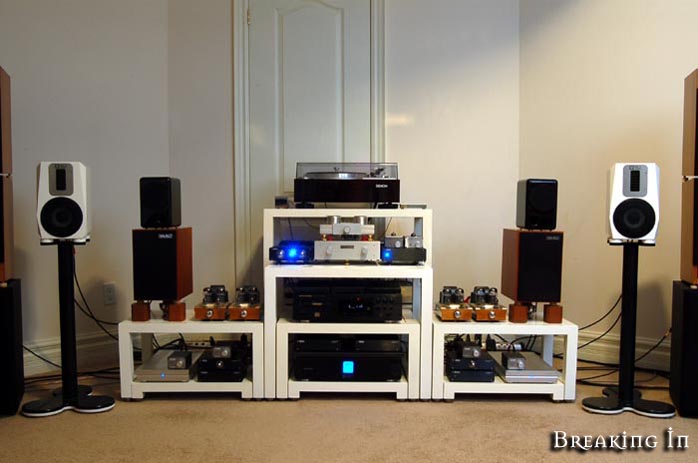
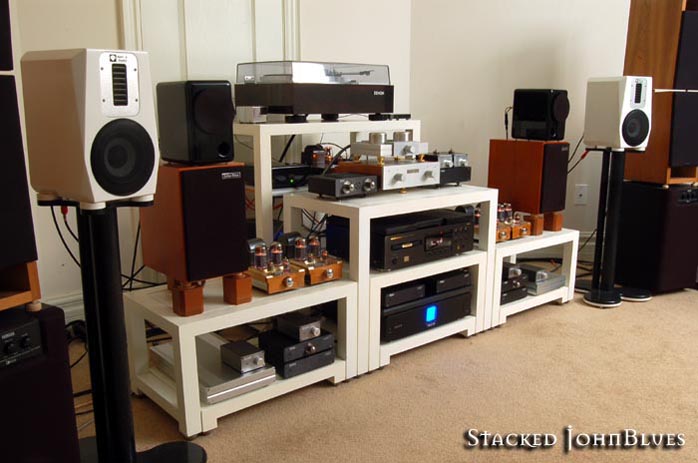
Towards the end of the painful process, torture had quietly transformed into pleasure. That's what usually happens. The high frequencies on the Diamond+ began to smooth out the overall textural presentation and round off the spikes that occasionally poked out during playback of some exotic recordings. That too was expected. Then I started to do music reviews in that room. Still normal. Abnormal was how I was doing that with two systems operating simultaneously. And I thoroughly enjoyed it. From the same Marantz SA8260 digital source, I drove the Diamond+ from the new KingRex PREference preamp and NuForce Ref 9 V2 SE and the JohnBlue Audio Art JB4 with JB3 stacked on top from the new Trends PA-10 tube preamp and Trends TA-10.1 in bi-amp scenario. Both systems sounded so different that they complimented each other like tennis doubles trained by Louis Cayer. I felt clipped when either of them wasn't on the field. |
|||||||||||||||
 |
|||||||||||||||
This wasn't so ludicrous if you know that I sometimes mix my own audio cocktails: tubes with solid-state, Mark & Daniel Ruby with Apogee Centaur Minor. To be honest, I am addicted to how the Ruby finishes the job the Apogee forgets in the lower octaves. When I reviewed the Maximus Monitor three years ago, I naively thought that I had a quick fix for that minor shortcoming of the Centaur Minor. I took out the SX woofers and transplanted them to the Apogees. But that threw the Q-control and crossover curves off balance. The Apogee ribbons turned sour and sounded squeaky. Soon after that, I started to mix my private audio cocktails differently. The Ruby is driven by the humble Thorens-Restek MMA-5, the Apogee by a Symphonic Line amp. |
|||||||||||||||
 |
|||||||||||||||
The beauty of bi-stereo is how I can mix the proportions whereby each system contributes according to each recording, to suit my taste and mood at that particular moment. When called for, I can even add a dash of subwoofer bass from my paired Yamaha YST-SW200. What I had now was a different kind of cocktail. The JB4/JB3 stack seemed to massage and tone the six-pack abs of the muscular Diamond+ to bestow flexibility and elasticity. For lack of a better description, think of an iron man belly dancing. (Pardon the absurd image. I could have used tai-chi or yoga but those disciplines are paced too slow and the JBs aren't slow at all.) The real surprise was that when I turned off the JB4/JB3 stack, I missed the "belly gyrations" (the rich and fluid midrange) so much that I found iron man's movements almost too mechanical. That's right. The JB4/JB3 was so organic, so musical that by instant comparison the Diamond+ sounded too robotic and high-tech. The better the recording quality, the stronger I felt that way. |
|||||||||||||||
|
| |||||||||||||||
Note what's been italicized. As I said many times before, instant A/B comparisons are highly unreliable. Aftertastes can fool you. The interesting thing here was that even in face of Mark & Daniel's bass wunderkind, I didn't sense any lack of bass with the JB4/JB3. The aftertaste should have worked the other way. Perhaps there was one good reason for that. The 4" and 3" widebanders of the JohnBlues concentrate on the most sensitive bandwidth of human hearing. Conversely, the Diamond+ (and any other Mark & Daniel models) extend the frequency range beyond and deliver it at full power. Standing three feet from the rear port(s) of any Mark &Daniel models, I could still feel air jets aimed at me every time the bass drummer rumbled. We all have a soft spot for softly spoken words and music that plays softly. In that respect, this aftertaste was working to the Mark &Daniel's disadvantage. That I didn't expect. |
|||||||||||||||
 |
 |
||||||||||||||
 |
|||||||||||||||