This review page is supported in part by the sponsors whose ad banners are displayed below |
 |
 |
Of the two the Vita integrated is most exciting simply because Oppo have cleaned house in the affordable universal player market by offering full-featured decks with a focus on sonics. And to guild that lily, from NuForce to ModWright the aftermarket is ripe with mods for most their models to take things to the outer limits.
|
 |
Then there's my opinion that spinning CDs is essentially dead past running them once to rip. That said, there's also something quite attractive to be said for legacy spinners in the affordable sector (spending the long green at this juncture seems foolish). One, it's a perfect instant-tunes backup for that inevitable hard-drive failure or simple alternative when one doesn't mean to boot up the PC. That get's particularly apt with a coaxial output so you can connect your super DAC of choice. Here the Vivid complies happily.
|
 |
Two, with digital inputs—here the Vivid goes affirmative in triplicate—digital-direct docks get better sound from various iDevices and aging CD players are upgraded. Adding one and two, from a hipness perspective think of Vivid as a 24/192 DAC with integral drive. The otherwise unhip lack of USB is explained by the forthcoming Aura U3 equivalent. Those impatient could go with Peachtree Audio's X1 which even looks like a U3.
|
|
|
The Vita integrated proved to be a formidable headphone amp which even attacked HifiMan's super-inefficient HE6 with vigor. The reason for such teeth was given already. Rather than running some integrated op-amp behind his 6.3mm socket, Simon Lee reroutes the 50wpc speaker power stage bled through a voltage divider for appropriate strength and impedance. Headphones thus have their full English breakfast with discrete push/pull Mosfets. I'd not go as far as recommend the Vita for just that purpose—here Burson's $1.850 Conductor adds a premium USB converter as the current go-to choice in that sector—but would recommend it to serious headfiers who want a very credible speaker amp thrown into the bargain.
|
 |
That the amp was no mere shiny toy also became obvious in two off-desk systems where it fronted the €20.000 Aries Cerat Gladius, €15.000 Boenicke B10 and €7.600 AudioSolutions Rhapsody 200 speakers in lieu of my usual FirstWatt SIT1 mono and SIT2 stereo amplifiers.
|
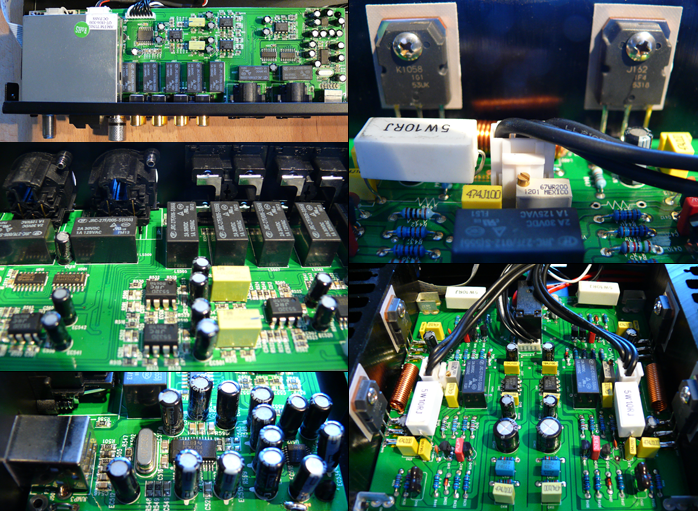 |
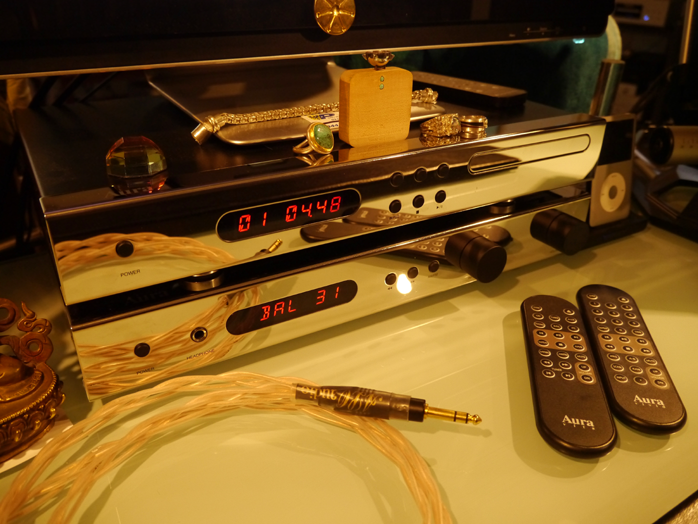
But the first order of business was outside the flat in my wife's commercial bakery on the ground floor where I revisited the Aura Note Premier. This didn't take long to conclude that less money but expanded real estate for internal circuitry really did come out ahead over slicker cosmetics. The Vita sounded grippier, ballsier, warmer and—dare I say it?—more vital. It clearly was the same signature sound but the Vita's output stage powered from its updated bigger driver circuit was the more advanced. For once going separate wouldn't be audiophile myth or fiscal extravagance but the smarter choice!
|
|
|
|
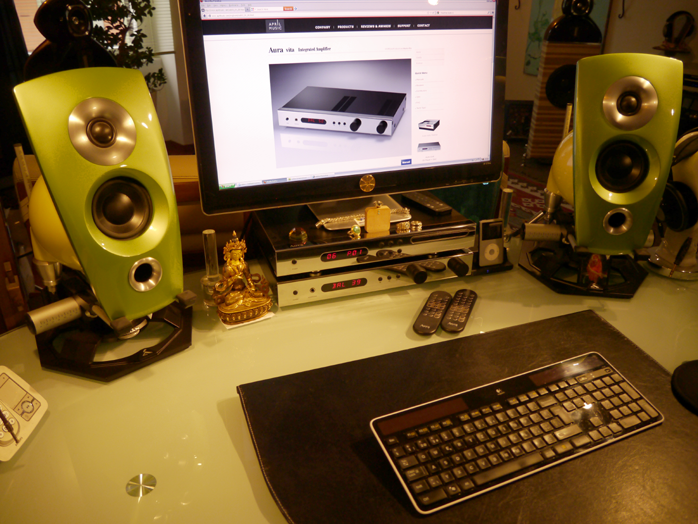
| On the desktop. Having come off NuForce's DDA-100 power DAC just before installing the Aura twins, the difference between midfi and transitional hifi was quite startling. The former began as that endless Pizzicato Symphony for three sewing machines: lean, centered on the leading edge with insufficient engagement of follow-up body, edge-rimmed like shadow-play cutouts, tonally bland and in general whitish, stale and flat though the latter didn't apply to the soundstage. Anssi Hyvönen of Amphion assured me that it just needed proper break-in. During a show he'd loved the NuForce with his Ion+ to recommend I hang on to the latter for the occasion only to be surprised when a new DDA-100 in Finland didn't match his recall from the show. Such a poor parody of bad digital would need much blossoming indeed if it was to make the final cut. Brrr (envision arctic cold). |
|
|
|
 |
With Mass Fidelity Model 1
|
 |
By contrast the Aura set was an instant welcome, a warm embrace or well-worn boot comfort. It had the usual albeit not overly lit hallmarks of good stereophony—layers, spread, image lock—but in the foreground were tone colors and textures. Gestalt was leisurely flow, not choppy urge. Bass was powerful and redolent, not short-leash wiriness to inject black tones and gravitas. On Fazil Say's quite challenging very programmatic Istanbul Symphony [Naïve V5315] usually unplayable by a desktop rig, I was astonished by the sweetness of the massed strings, the violent impact of the kettle drums and the roaring snottiness of the brasses. That this didn't paint with a generous but coarse brush like an indiscriminate saturation command was proven when the Bulgarian Terra III sounded plainly more advanced than the Chinese Mass Fidelity Model 1 to demonstrate proper selectivity. |
|
|
 |
With Everything But The Box Terra III
|
| This was a mature proven aural recipe refined over four generations from the original Aura Note to the Aura Premier then Groove models. The exciting bit was being available now stripped of the Aura Note CD/receiver packaging; and for less coin than the separate predecessor. The Vivid's D/A converter crunching numbers for my iPod didn't hang lesser fare out to dry like a Yulduz Usmonova 320kbps MP3 album I'd downloaded on a lark from Spotify+. While it didn't sound as good as Adnan Karaduman's physical 1411bkps Meçhul CD I'd bought in Istanbul, the slightly forgiving nature of this pairing still was sharp enough to clarify the difference whilst fleshing out the lossy tunes. Meanwhile Øystein Sevåg's very well recorded Bridge was the next sonic upward step. The Aura set tracked varying recording quality without overdoing it to make half one's collection miserable. That trick is for the very costly super high-end. Spend lots more, enjoy lots less. Not here. |
|
|
|
 |
|
 |
  |
 |