This review page is supported in part by the sponsors whose ad banners are displayed below
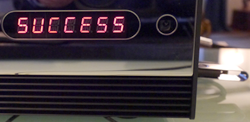
Housekeeping chores. When Windows XP Pro and Asio4all couldn't find the deck as a selectable USB audio device, Simon sent me a firmware upgrade to install a Thesycon driver whilst they were working on their own. I copied his Premier Mk2.MCS file to a blank USB stick, selected USB mode, slipped the stick into the USB type A port and saw the display switch itself to upgrade. One minute later there was an auto-reset relay click and the word success. Unplugging the stick and doing an AC mains power off/on completed the install. PC audio for dummies.
Next came the FM band-region adjustment. With tuner selected and holding the front panel's stop button for 5 seconds whilst pressing enter on the remote brought up OPT USA. Toggling through equivalent KOR and JPN brought up EUR. Pressing enter and finishing off with another power cycle completed that. Finally I ran the 11.3MB 1.61.0 Thesycon .exe file and all was instant peaches.
Checking on how an ICEpower module direct-coupled to headphones through just a series resistor would work, I plugged in a pair of Dan Clark's MrSpeakers™ Alpha Dogs for a quickie. I turned up the speakers' 20-something volume to around 40 to match the new load. Imagine my jaw when at this setting Anthony Gallo's TR-3D subwoofer pounded like a boom truck beneath the desk. Inserting a ¼" jack auto-mutes the main speaker outputs but not the preout. I had to power down the sub to listen without external headfi bass assist. "That's the one point we missed a long time ago. We'll fix it now to block the preout when a 'phone plugs in. Thanks for pointing it out. The funny thing is, nobody ever did for the previous model which was the same."
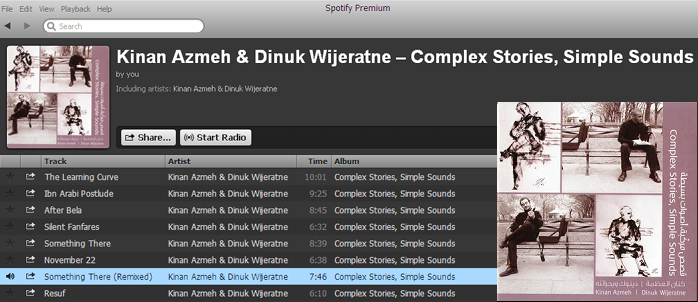
One final housekeeping item? To your computer the V2's PC input is visible only when selected. It's not permanently live to sever the connection when not in use. This mandates proper protocol. Launch for example Spotify+ whilst you listen to another input. You'll get the "something's wrong with your soundcard" error notice. That's because the program can't see the Aura. Since it won't attempt another handshake even if you now select PC, you must relaunch Spotify. Then it'll properly latch onto the already live connection. Switch between sources when those include PC and the latter drops the moment you leave it.
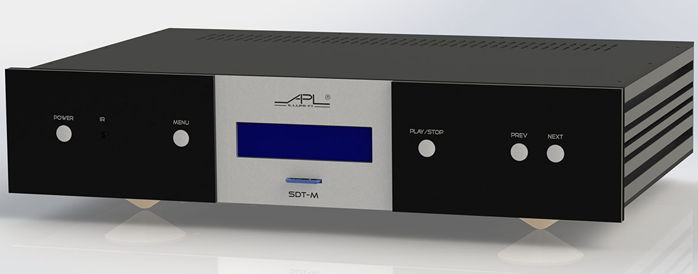
To now jump into the deepest end of the sonic pool, I thought that I enjoyed the most translucent sound from antique 16/44.1 PCM—99.9% of my collection—with my humble card reader. I'd seen this already in my friend's system. There a super-tweaked Japanese card reader module installed in a full-size APL Hifi box had completely trounced a €10'000 Philips CD-PRO2 top-loading transport with RJ45-based I²S feed to the same DAC. Legacy disc spinning is so utterly finished. Eliminating spinning hard drives next—even copious memory play RAM buffers—could lead us to high-speed SDXC cards which are accessed without any PC involvement whatsoever.
Others seem to think likewise. The card reader of Resonessence Labs' Invicta DAC is the preferred feed. Its display is simply too small.
The Aura Note's is better. But anyone used to tablet-style remotes still confronts very basic navigational limits. For sound meanwhile this could be your ultimate playback option over inputting the same files with USB from the PC or via USB/Toslink from portable devices. Having options like the big boys is swell.
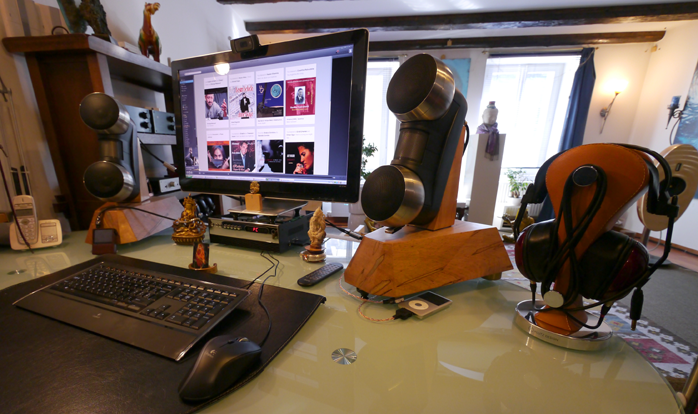
Final setup streaming Spotify+, up to 24/192 off the AK100 or 16/44.1 off the iPod
A first drive over this sonic terrain with my time-tweaked ultra-resolved Gallo Strada2 monitors showed it already. Simon's take on 250ASX2 ICEpower had banished the thicker darker slightly opaque mode I've heard in a number of competing implementations. In my desktop milieu I also had more top-end openness and consequently more liquid staging than with Pascal S-PRO2/M-PRO2 variants. Yet the sound was also warmer and meatier than with E.J. Sarmento's friskier mINT or Tommy O'Brien's lit-up Maraschino monos I'd tried. Anyone believing that class D is a neat narrow folder everything slots into like stale white bread is badly mistaken. That's true even for dealing with identical modules. There's plenty of room for a gifted designer to bend off-the-shelf boards to his will. And Simon not only has will. He has ability and history. A bank's loan officer would be very happy. So was I. V2 delivered on its designer's project brief to tone down excess detail whilst improving the upper registers and anchoring everything on a solid four-square bass foundation. Like Nelson Pass, Mr. Lee could write his own reviews.